Abodu Site Prep & Utilities: The Los Angeles Owner’s Guide
Abodu site prep and utility work in Los Angeles typically runs $18,000 to $45,000 depending on trenching distance, panel capacity, and soils. We stock the common utility connection parts for Abodu units and can usually start site work within two to three weeks of a signed scope. Most owners discover a site prep or utility problem when the Abodu delivery date is already on the calendar and the DWP, SoCalGas, or LADBS flags something that was never addressed in the original bid.
What we see most often in Los Angeles: a foundation pad that was poured without accounting for the Abodu chassis anchor pattern, a sewer lateral that is 14 feet from where the unit actually lands, or an electrical panel that cannot carry the added load. These are not Abodu manufacturing issues. They are site readiness issues, and they are fixable before the unit arrives on the truck.
Which Abodu Models This Applies To
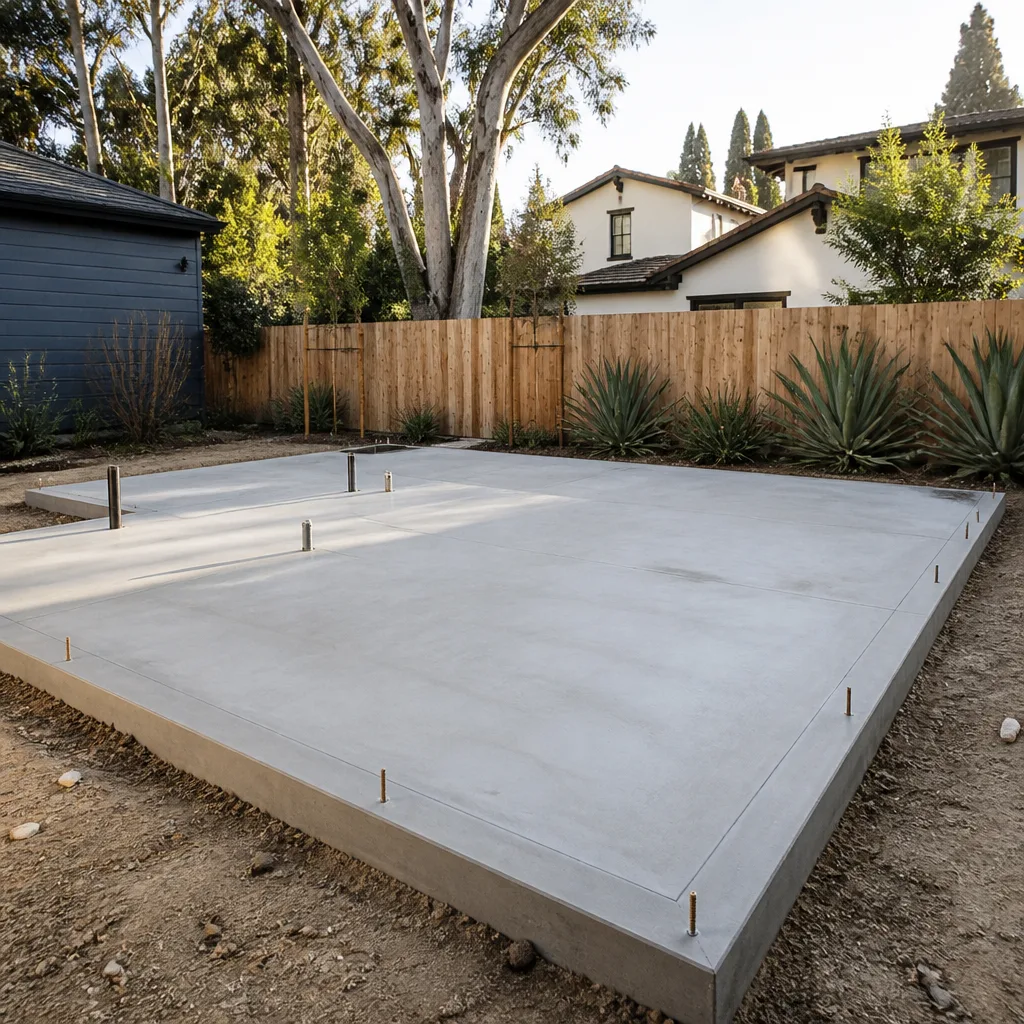
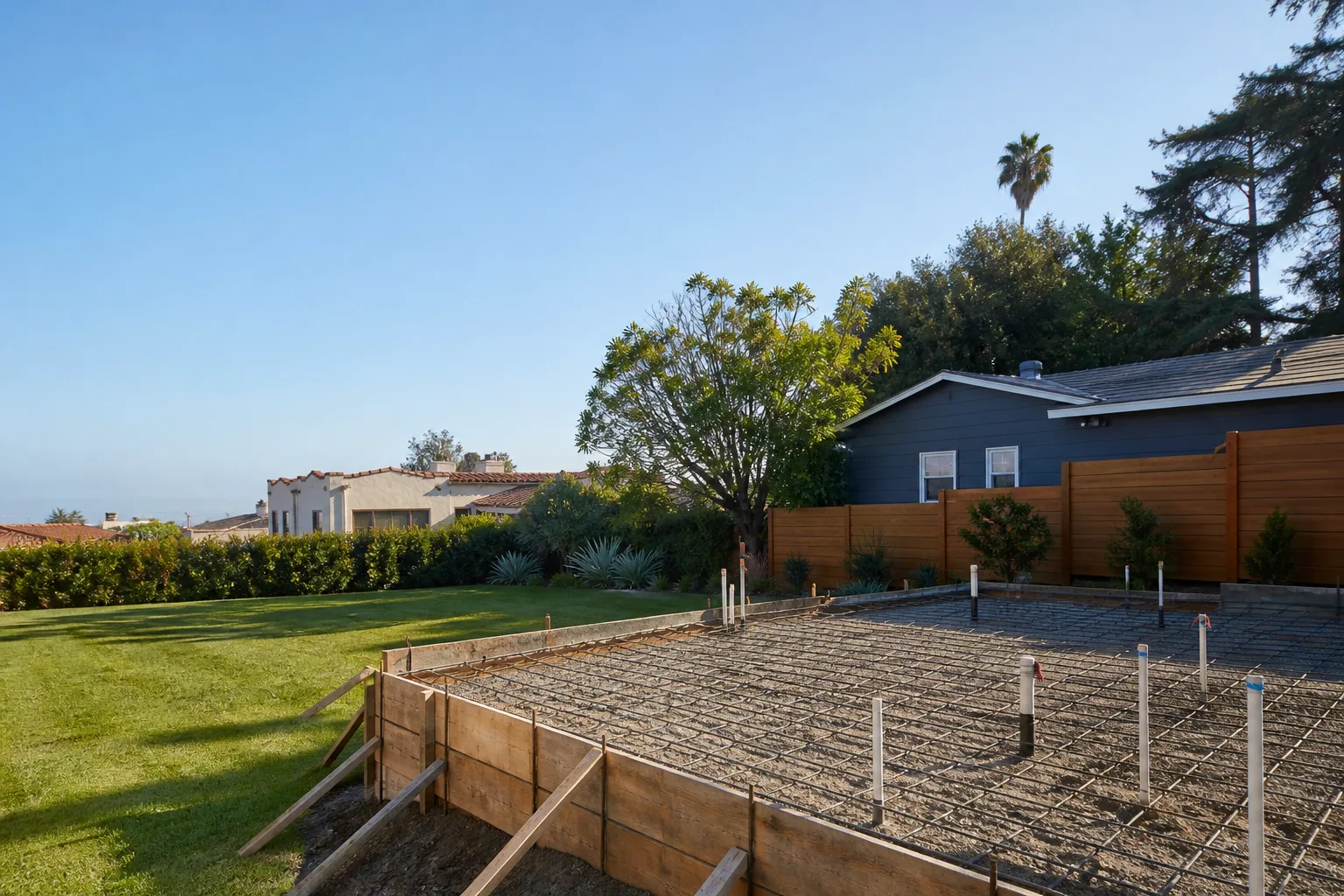
The site prep and utility scope is essentially the same across Abodu’s Studio, One Bedroom, and Two Bedroom series. What changes is the electrical service size, the sewer invert depth, and the number of plumbing stubs you need. Abodu units are delivered on a steel chassis. That means the foundation is typically a slab-on-grade or pier system matched to the unit’s anchor points, not a conventional stem wall.
The compatibility gotcha most owners hit in Los Angeles is clearance. Abodu’s chassis sits lower than many prefab units, which means the sewer lateral needs enough fall to reach the city main without a lift station. In flat parts of the San Fernando Valley, that sometimes means a deeper trench or a pump. Before you sign anything, check the sewer invert depth against the Abodu discharge point. We do that during the first site walk. On the OEM-versus-aftermarket question for utility components: use the OEM spec for the anchor bolts and chassis connectors. For conduit, wire, and piping, spec-grade materials from local supply houses do the job and often clear LADBS faster because the inspectors see them every day.
Signs Your Abodu Site Prep & Utilities Is Failing
- Foundation pad settles or cracks at the anchor points. This usually means the subgrade was not compacted correctly or the pad thickness does not match Abodu’s load requirements. In expansive clay soils like parts of Reseda and Northridge, even a four-inch slab will move.
- Electrical panel trips when the mini-split and water heater run together. Abodu units are all-electric. If the original panel was sized for a garage or shed, you are over capacity. The fix is usually a subpanel or a service upgrade to 200 amps.
- Sewer backs up into the shower or kitchen sink. This means the lateral either has insufficient fall or a belly. In Los Angeles, root intrusion from mature ficus and camphor trees along the property line is the second most common cause we find.
- Water pressure drops to a trickle when any second fixture opens. Abodu units run on a single 3/4-inch or 1-inch supply line. If the feed is tapped off an old galvanized line, pressure will never recover. LADWP pressure in the Valley varies block to block, so we test this before plumbing rough-in.
- Gas line for the tankless unit was stubbed in the wrong location. Some Abodu models use a tankless gas water heater. If the gas stub is off by even a foot, the flex line gets kinked and the inspector will flag it. We see this on retrofit sites where an old patio gas line was repurposed.
Replacement Cost & What’s Included
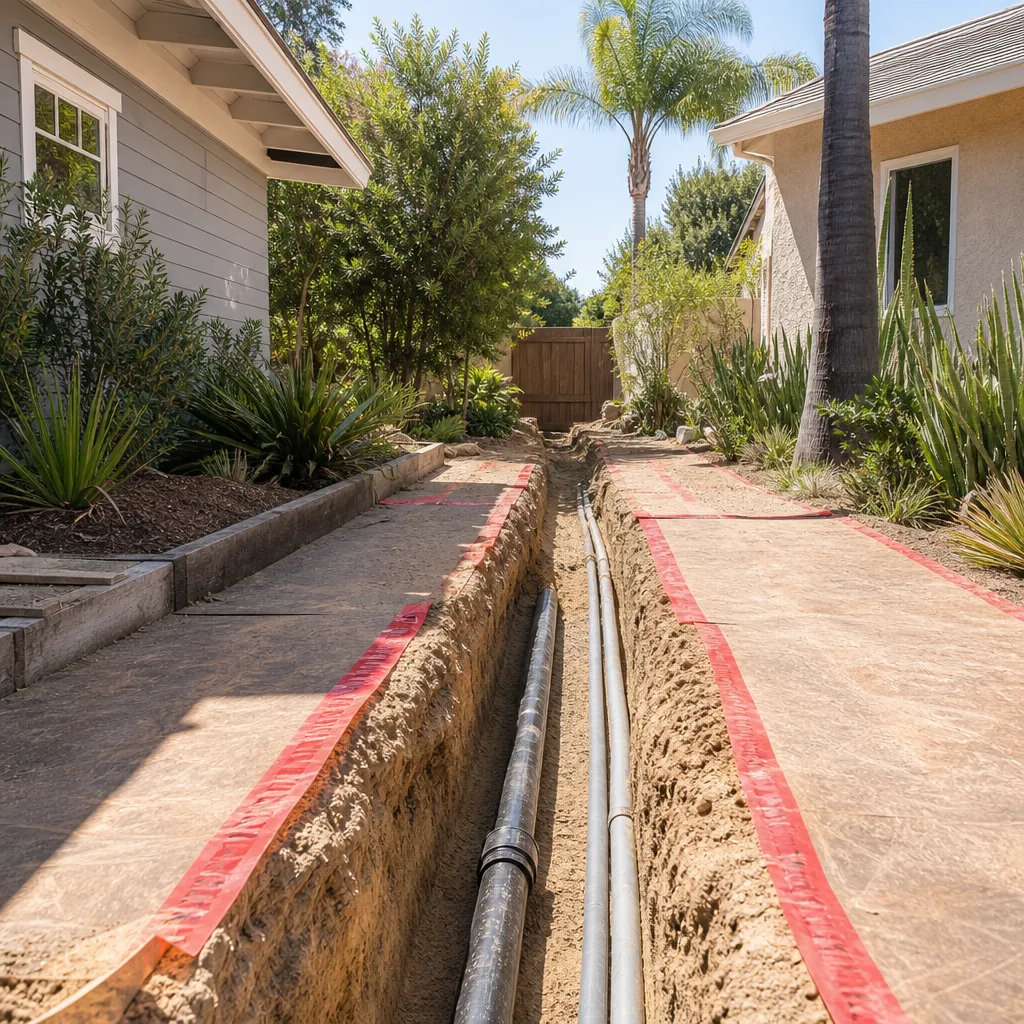
For a typical Los Angeles Abodu site prep and utility package, you are looking at $18,000 to $45,000. The spread depends on three things: trenching distance from the main house or street, whether the existing panel can take the added load or needs an upgrade, and whether the sewer needs a lift or can gravity-flow. A short run from an existing 200-amp panel with a 20-foot sewer tie-in on flat ground sits at the low end. A 60-foot trench through tree roots with a panel upgrade and a new water line sits at the high end.
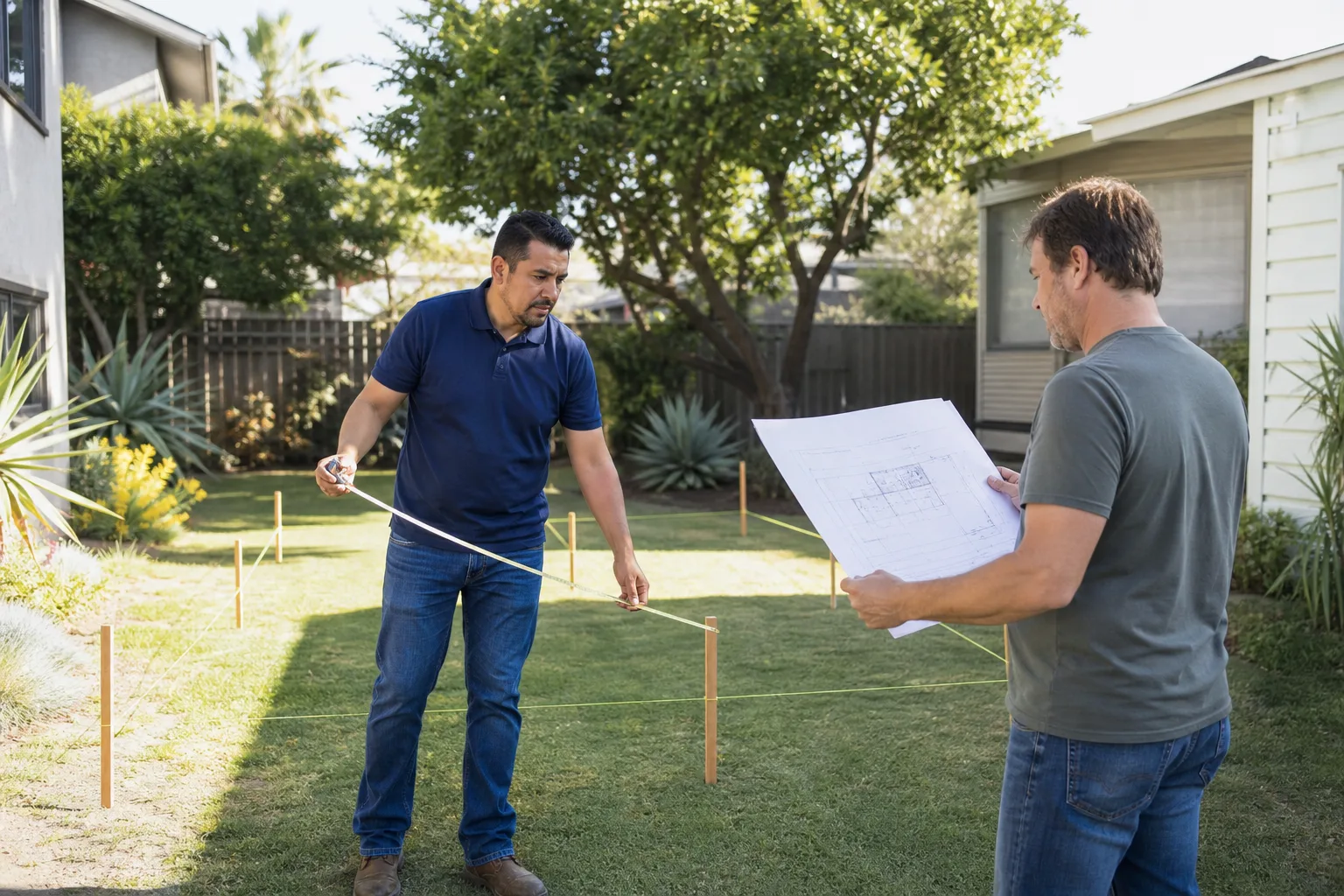
Our price goes in writing before we move any dirt, and it includes the site survey, trenching, conduit and wire, plumbing rough-in, sewer connection, backfill and compaction, and the LADBS inspection coordination. If the scope changes because the city asks for something different, we hand you an addendum in writing. The Garrison Standard covers the workmanship for 365 days. If something fails in that window, we come back and make it right at no charge.
DIY or Call Us?
You can check three things yourself: read the Abodu site packet and confirm your pad dimensions match, look at the panel label and see if it says 200 amps, and walk the trench path to see if tree roots have been lifted anywhere. That tells you whether you have a real problem or just a paperwork gap.
What you should not do is dig. Los Angeles has one of the densest underground utility networks in the country. Gas, electric, and telecom lines cross residential backyards all the time, and a wrong shovel strike can kill you or knock out a block of service. LADBS also requires a permit for utility trench work on an ADU, and an unpermitted utility rough-in means the unit cannot legally be occupied. If your site prep is failing or was never done right, call us at (361) 315-4177. We will tell you what is wrong, put the fix in writing, and go build it.
FAQs
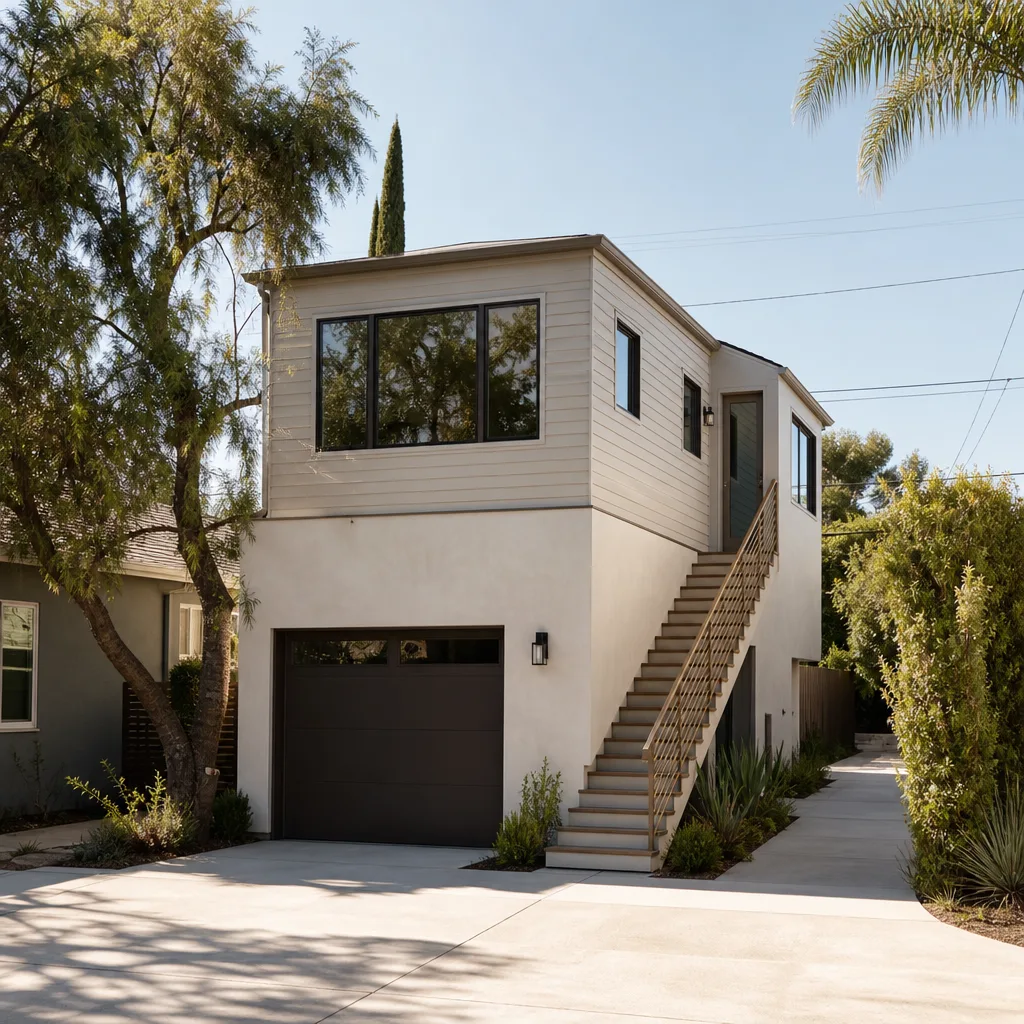
A properly compacted pad and permitted utility connections should last the life of the unit, which is 50 years plus with normal maintenance. What shortens that in Los Angeles is un-compacted fill, root intrusion into sewer lines, and undersized electrical service that gets overloaded.
Sewer and electrical issues can usually be repaired without tearing out the whole pad. A cracked or settled foundation pad for an Abodu chassis generally means removing and re-pouring that section. The real answer depends on what we find when we open it up. Call (361) 315-4177 and we will give you a straight read.
Most full site prep and utility installations in Los Angeles take 10 to 18 working days from first dig to final inspection. That includes trenching, rough-in, backfill, and the LADBS sign-off. Weather delays are rare here; permit queue delays are not.
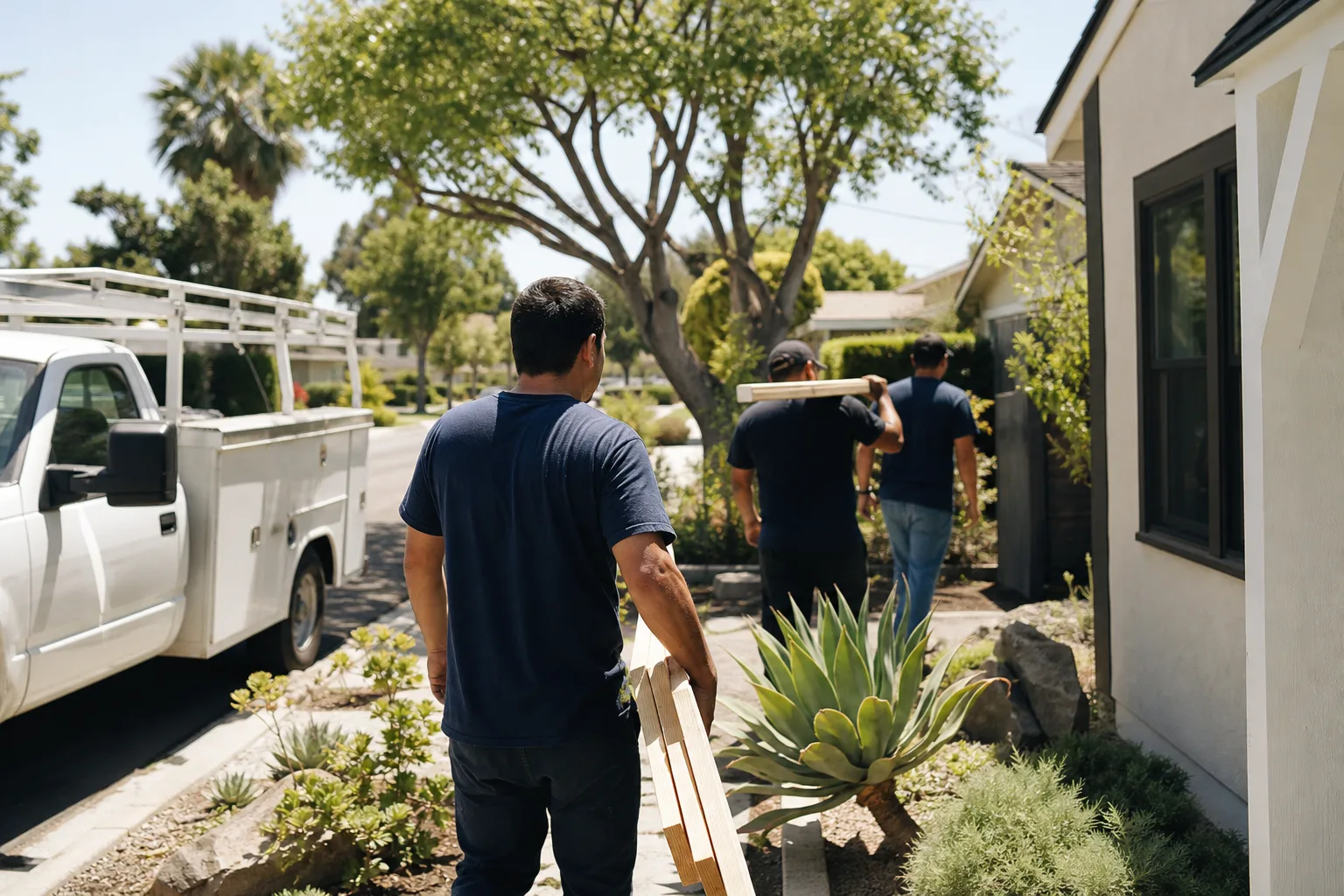
We keep the common components on the truck: anchor bolts, chassis connectors, conduit, subpanel kits, and spec-grade piping. Anything specific to your Abodu model is ordered before we start, so there is no mid-job pause.
Written by Reed Calloway, Owner, Fielding ADU Builders at Fielding ADU Builders, serving Los Angeles and nearby areas.