Cover Room Addition Contractor in Los Angeles: What to Know First
Cover room addition work here means diagnosing how a prefab panel system performs once it’s tied into an existing Los Angeles foundation, roofline, and permit record. Most Cover owners reach us after a general contractor has stared at the panel seams for an hour and admitted they don’t know how the connection details work. We do. Fielding ADU Builders is an independent Cover service provider, not affiliated with or authorized by Cover. We handle additions, tie-ins, and structural corrections on Cover units across Los Angeles, and we put the price in writing before any work starts.
If you own a Cover unit and you’re planning a room addition or trying to fix one that’s already gone wrong, call (361) 315-4177 and ask for Reed. You’ll get a straight answer, not a sales pitch.
How Cover Products Fail – and How We Fix Them
- Seam separation at panel joints (Cover S and Cover One models). Los Angeles temperature swings push and pull prefab panel joints, especially on south-facing walls where daily solar gain hits hardest. Panels expand during a 90-degree August afternoon and contract overnight. Over two or three seasons, the factory seal at vertical panel joints starts to shear. Symptom: hairline cracks running top to bottom at regular intervals. The fix is not caulk. We pull the joint trim, inspect the gasket, replace it where needed, and re-flash with a mechanical fastening schedule rather than adhesive alone.
- Improper sill plate connection to existing slab. Cover panels sit on a perimeter steel channel, but several Los Angeles additions we’ve inspected were set on slabs poured by a previous contractor who didn’t hold the anchor bolt tolerance Cover’s install spec requires. Symptom: a unit that’s level at the corners but sags a quarter inch mid-span. The repair means cutting in new epoxy-set anchors, shimming the channel, and re-torquing. We’ve done this on units in Eagle Rock, Reseda, and Culver City.
- Roof membrane punctures from unflashed conduits. The Cover panel roof is a single-ply membrane, and the quickest way to wreck it is running a bathroom fan vent or mini-split line set through the roof without a proper flashing boot. We see this on room additions where a handyman added electrical later. Symptom: water staining on the interior ceiling panel, always downhill from the penetration. We replace the boot, seam the membrane correctly, and fix the stain.
- Undersized beam pack at addition transitions. When a room addition ties into a Cover unit, the new roof loads have to transfer across a beam at the interface. Some contractors size the beam for the addition only and ignore the existing panel loads. Symptom: drywall cracking at the transition wall within the first year. We re-engineer the beam pack, often adding a flitch plate, and retrofit the connection before drywall goes back up.
- Panel fastener overdriving causing face damage. Prefab panels don’t tolerate the same fastener depth as conventional wood framing. Overdriven screws crack the fiber cement face, and once water gets behind the face layer, it travels. We see this more on Cover units installed by framers new to prefab. Our crew sets torque-limited drivers and checks depth on every panel before it’s called done.
Our Cover Room Addition Contractor Process
- 1
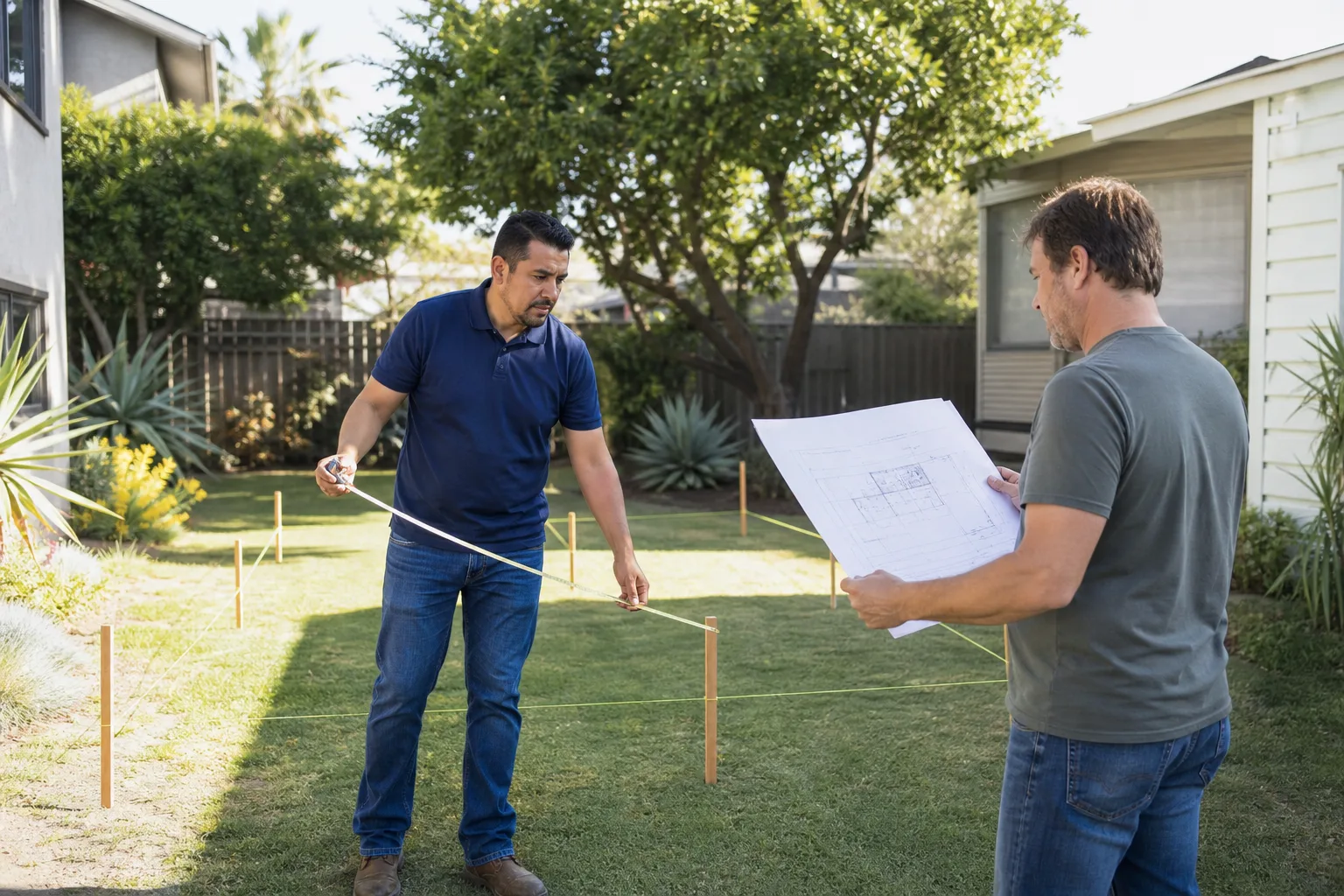
We walk the unit and the addition site together. Reed Calloway or a senior lead does this. No office estimator who’s never touched a panel. We look at the existing Cover foundation, the panel conditions, the roofline, and the permit history. You tell us what’s been done and what’s been promised.
- 2
We pull the permit record. Los Angeles building records show what was filed and what wasn’t. If your Cover unit was permitted as a guest house and you’re converting it to a conditioned addition, that changes the framing inspection requirements. We handle it.
- 3
We write the scope and the price. Every line item, every material, every allowance. The number you approve is the number you pay. No change orders unless you ask for something new.
- 4
We source parts factory-first. For structural components, we order from Cover’s supply channel when it’s available in Los Angeles. If lead times are long, we’ll tell you honestly and offer a quality aftermarket alternative that meets the same spec. You decide, with our recommendation in writing.
- 5
We do the work, inspect it, and document it. Photos at every stage. Permit sign-offs if required. The site is cleaned daily, not just at the end.
- 6
We hand you the written guarantee. The Garrison Standard: 365 days, in writing, covering workmanship defects. If something fails inside that year, we return and correct it at no charge. That’s not a sales line. It’s the same guarantee Garrison Partners has been building under since 2006.
What Cover Room Addition Contractor Costs in Los Angeles
Honest numbers help you self-qualify before you call. Here’s where Cover addition work typically lands in Los Angeles:
- Panel joint repair on a Cover unit: $1,800 – $4,600, depending on how many joints and whether scaffolding is required.
- Sill plate re-anchoring to an existing slab: $2,400 – $5,800, depending on access and the number of anchors being replaced.
- Roof membrane repair with new flashing boots: $650 – $2,200, one or two penetrations typical.
- Interface beam retrofit where an addition meets a Cover unit: $5,000 – $12,000, driven by beam span, load calculation, and whether the existing header has to come out.
- Full room addition tied into existing Cover structure: $140,000 – $260,000, before permit fees, depending on square footage, finishes, and foundation requirements.
What moves the price: access, whether the unit was installed correctly the first time, and whether Los Angeles permit corrections are needed. If the previous contractor skipped a framing inspection, we include that cost in your written quote. Call (361) 315-4177 for a free estimate and a number you can plan around.
Why Los Angeles Homeowners Call Fielding ADU Builders for Cover Work
Most room addition contractors in Los Angeles learn on the job, and that’s fine for stick framing. It’s not fine when the wall panels arrive on a truck already fabricated, with tolerances measured in millimeters. We’ve spent the last eleven years focused on ADU and prefab work across Los Angeles, including units built on the Abodu, Cover, and Dvele platforms, plus conventional additions with James Hardie siding and Tuff Shed-style structures. That matters because it means we can compare a Cover unit’s connection details to what works on other prefab systems and tell you what’s normal and what’s wrong.
The way we operate comes from The Garrison Code: show up in the window, price in writing, build by the book, leave it clean, stand behind it for a year. Every crew member is background-checked and uniformed. You’ll know who’s on your property and why they’re there. And when you call, a live person answers. Twenty-four hours a day, seven days a week. No voicemail queue at noon, no unanswered ring at midnight. We’ve been building to that standard since 2006.
FAQs
In most cases, yes. Structural work done by a licensed contractor following the manufacturer’s published connection details does not void the Cover factory warranty. Where the previous work was done incorrectly, we correct it to spec. We keep documentation of every repair so you have a paper trail if a warranty claim ever comes up.
Factory panel components typically take two to six weeks from order to delivery in Los Angeles. Non-structural items like flashing, sealants, and fasteners are available locally, usually within days. We’ll give you a parts timeline in writing when we quote the job, and we’ll flag any long-lead items before you commit.
If the panel system is sound and the problems are connection-related, repair almost always makes more sense than replacement. Full teardown becomes the right call only when water has penetrated behind the panel faces and compromised the structural skins. We’ll tell you which situation you’re in, with photos, before we recommend a dollar figure.
No. The price goes in writing before any work starts. If we open up a wall and find concealed damage that could not have been seen during the estimate, we’ll stop, show you the issue, and put the corrected scope in writing before proceeding. You approve the number before another dollar is spent. That’s the way Reed Calloway has run projects in the San Fernando Valley and across Los Angeles for over a decade.
Written by Reed Calloway, Owner, Fielding ADU Builders at Fielding ADU Builders, serving Los Angeles and nearby areas.