Tuff Shed Site Prep & Utilities: The Los Angeles Owner’s Guide
Tuff Shed site prep and utility work in Los Angeles typically runs $3,800 to $9,500 installed, depending on whether you need a simple gravel pad or a full concrete foundation with electrical and water run. We stock the site-prep materials and utility components on our trucks for most Tuff Shed models, and we can usually start within three to five business days. The way owners usually discover this stage failed is when the shed doors start binding, water pools at the base after a rain, or the county flag comes back on a permit inspection because the pad wasn’t engineered to Los Angeles soil standards.
At Fielding ADU Builders, we see this every month across the Valley, the Westside, and down into South LA. A shed gets dropped on a pad that was never compacted right, or the electrical was run with the wrong gauge, or nobody thought about drainage until the first winter storm. By then, the fix costs more than doing it right the first time. We’re an independent contractor, not affiliated with Tuff Shed itself, but we work with their structures often enough to know exactly what their installation specs require before the shed ever arrives on site.
Key Takeaways
- Site prep for a Tuff Shed in Los Angeles means more than leveling dirt. LA County and city building departments require engineered pads for anything with utilities.
- Most failed site prep we see is compaction and drainage, not the shed itself.
- We carry the utility boxes, conduit, pressure-treated lumber, and fasteners specific to Tuff Shed base plate dimensions.
- Every job gets a written price before we move dirt. The number you approve is the number you pay.
Which Tuff Shed Models This Applies To
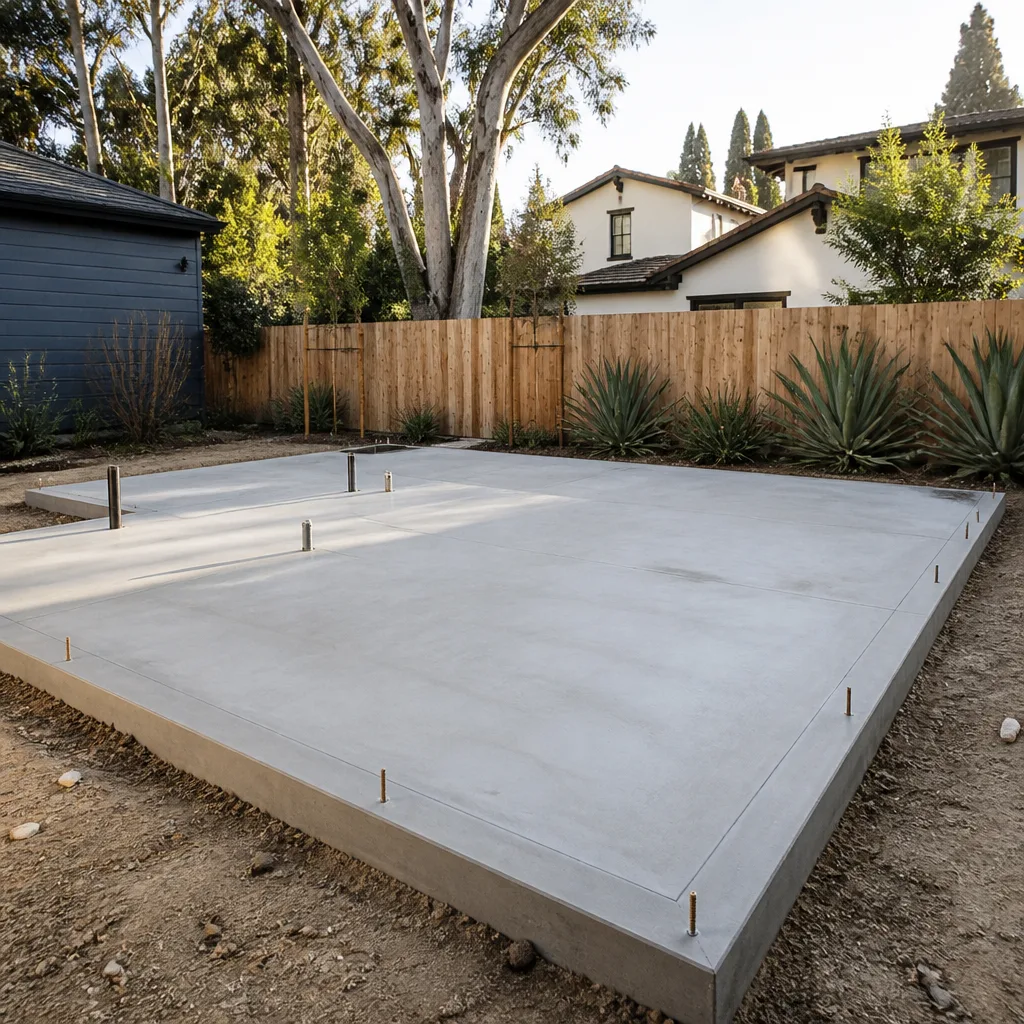
Tuff Shed sells two main lines in Southern California: the Premier series (larger, often with lofts, gable roofs, and wider door openings) and the Ranch series (smaller, lean-to style, single-slope roof). Site prep and utilities apply to both, but the foundation specs change with the model. Premier sheds in the 10×12 to 16×20 range need a pad that can carry 40 to 60 pounds per square foot live load. Ranch models are lighter, but if you’re on a hillside in Mount Washington or Baldwin Hills, even a Ranch shed needs piers or a retaining edge. That’s a Los Angeles soil reality, not a Tuff Shed recommendation.
The compatibility gotcha we run into constantly: the base plate on a Tuff Shed sits flush with the foundation edge, which means your pad dimensions have to match the shed’s exterior footprint exactly. Not two inches bigger, not an inch smaller. Tuff Shed specs their Premier 10×12 at 120 inches by 144 inches outside to outside. If your pad is 122 by 146, water channels into that gap and rots the bottom plate. When an owner calls us because the pad is “close enough” and the shed is wicking moisture, that’s the conversation we have first.
OEM versus aftermarket matters less on site prep than it does on parts like door hardware, but it still matters. Tuff Shed specifies pressure-treated lumber rated for ground contact on the perimeter. Big-box aftermarket PT lumber is often treated for above-ground use only. We order our lumber from suppliers that carry UC4A-rated stock, which is what any Los Angeles inspector will look for when the foundation ties are exposed for sign-off.
Signs Your Tuff Shed Site Prep & Utilities Is Failing
- Water pooling at the base after light rain. Los Angeles gets maybe 12 to 15 measurable rain days a year, so when water stands around a shed after a drizzle, the pad wasn’t graded for drainage. The fix involves re-sloping the perimeter or cutting a French drain. Both are cheaper before the bottom plate starts showing black rot.
- Doors that stick only in certain seasons. That’s the pad heaving. Clay-heavy soils in places like Reseda and parts of the east Valley expand and contract with moisture. A pad poured without reinforcement or proper base rock will lift and settle, throwing the shed frame out of square. The door is the canary. The foundation is the coal mine.
- GFCI breakers tripping on the shed circuit. Underground conduit that wasn’t buried to the right depth or installed with the correct schedule gets nicked by roots, rats, or a shovel. Los Angeles has all three. The breaker trip is the symptom; the nicked wire is usually somewhere between the house panel and the shed.
- Shed bottom plate showing white chalky residue or dark staining. That’s the lumber telling you the foundation edge is trapping water. Once the bottom plate starts to degrade, the shed’s structural tie-down anchors lose their grip. In a wind event, which Los Angeles does get in the canyons, that becomes a real problem.
- Permanent foundation anchors that wiggle by hand. If you can rock any of the tie-down bolts or brackets even a fraction of an inch, the anchor has pulled loose from the concrete. It was either set too shallow, the concrete wasn’t cured before the shed was dropped, or the hole was over-drilled. This one is not a cosmetic issue. Call us at (361) 315-4177 before the next Santa Ana wind event.
Replacement Cost & What’s Included
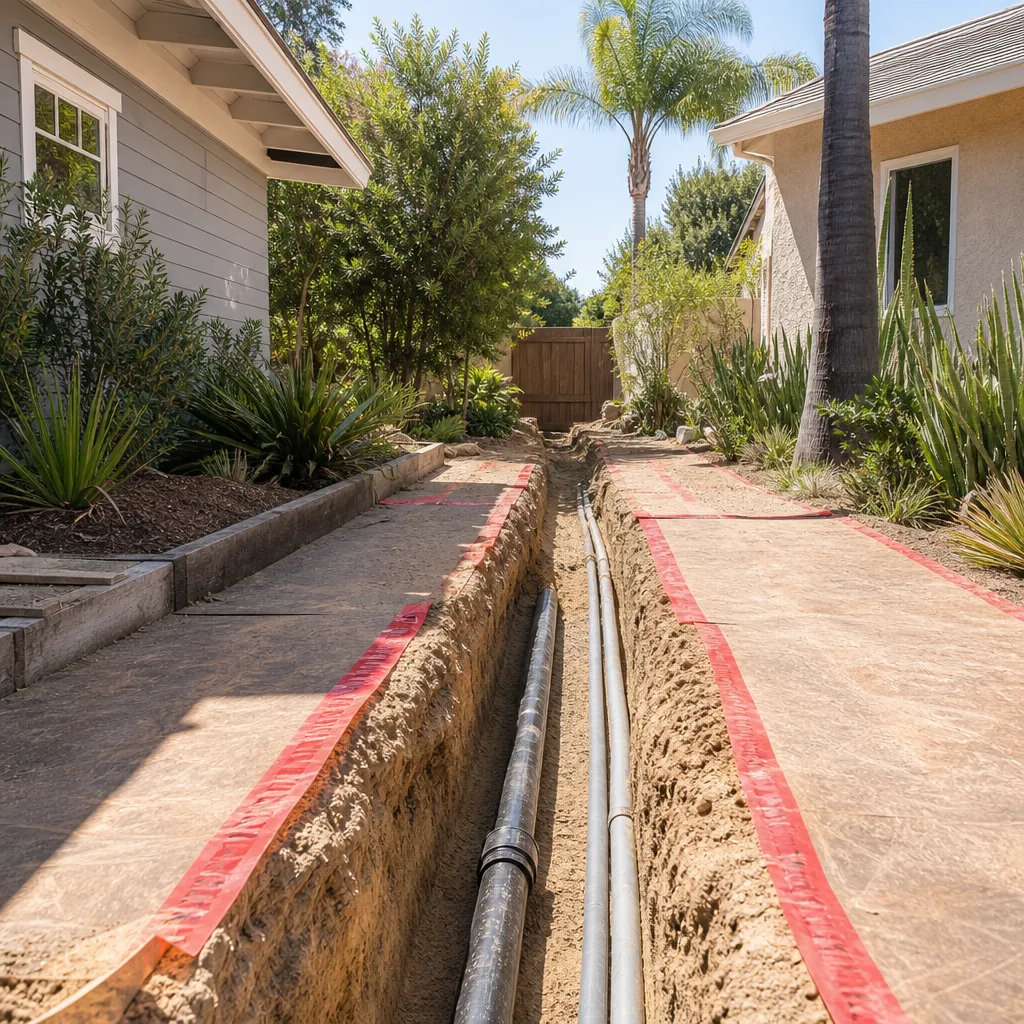
In Los Angeles, full site prep for a Tuff Shed runs these ranges before permit fees:
- Gravel or decomposed granite pad, no utilities: $1,200 to $2,800. Compaction, base rock, weed barrier, perimeter edging.
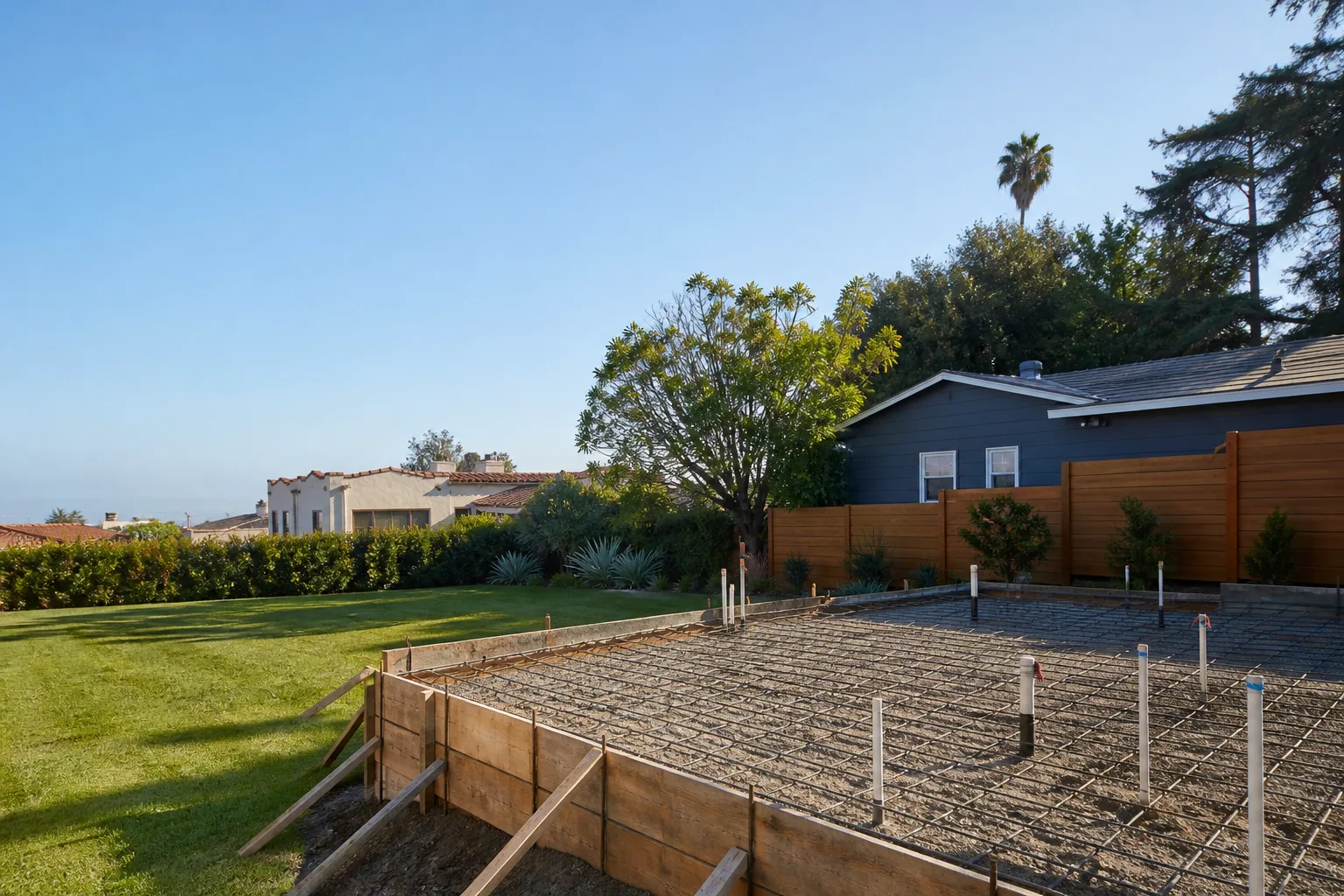
- Concrete slab with rebar, no utilities: $2,500 to $5,500. Form work, base, pour, finishing, anchor bolts set to spec.
- Slab plus electrical rough-in (one 20-amp circuit): add $1,400 to $2,600. Conduit from the house panel, pull box, GFCI outlet, trench and backfill.
- Slab plus water line rough-in: add $900 to $1,800. Trench, PEX or copper from the nearest source, shutoff valve, stub-out.
- Full utility package (electric + water + sewer or greywater line): add $2,800 to $5,000 total. This is where Los Angeles Department of Water and Power and LA County Public Works both get involved, and the inspection schedule drives the timeline.
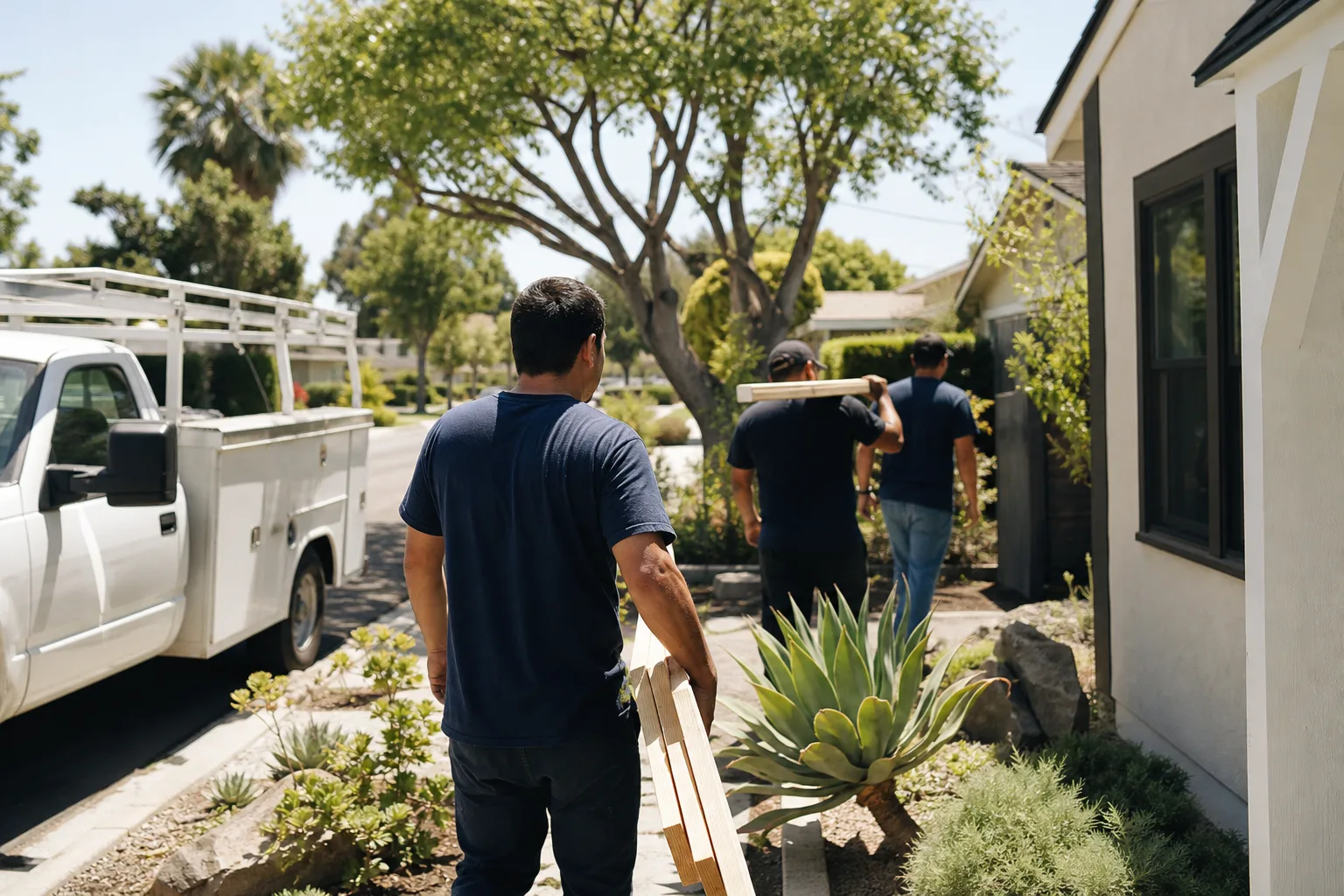
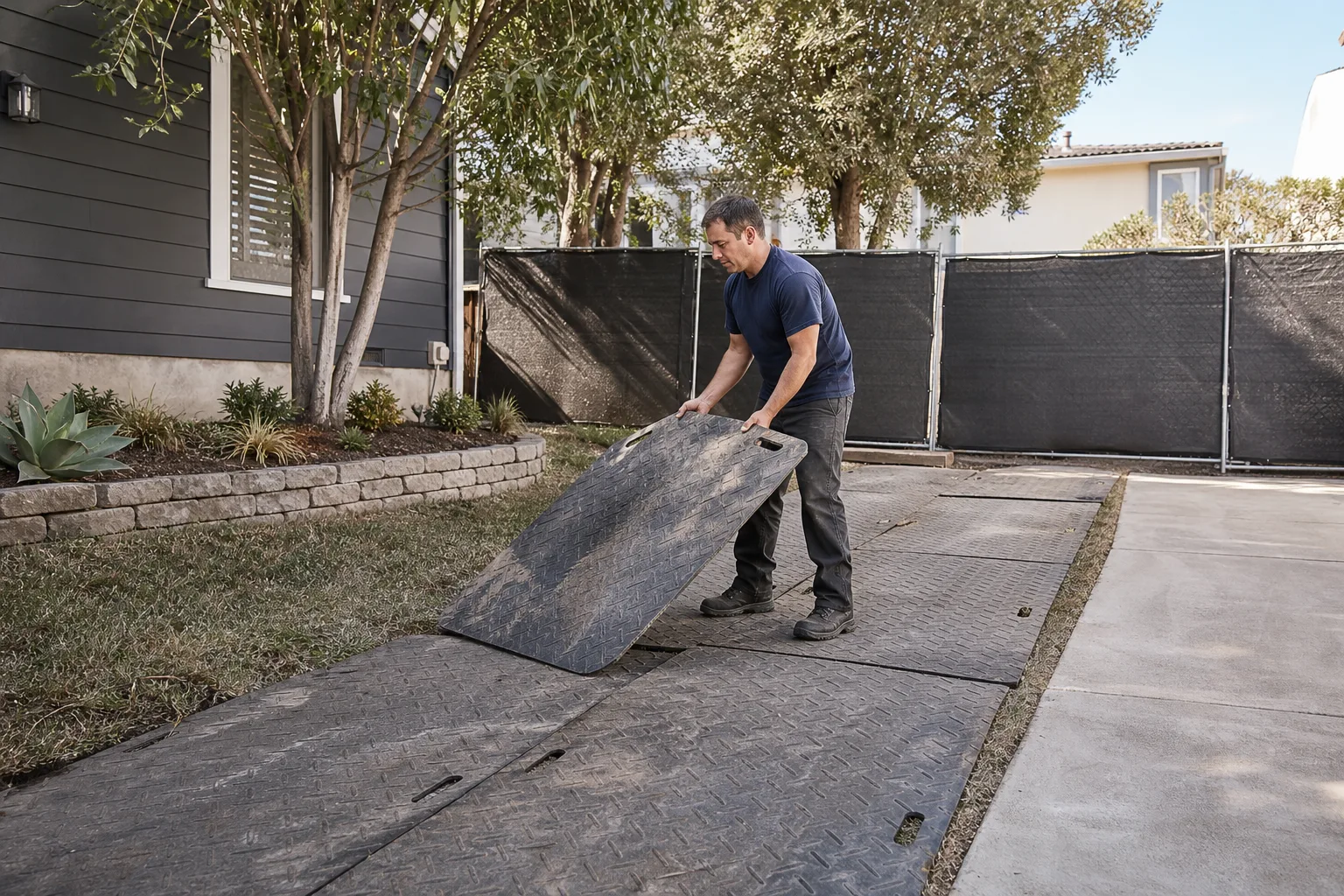
The range is driven by access. A backyard shed off a wide side yard in Westchester is a straightforward machine-in, machine-out job. A shed up a hill behind a retaining wall in Silver Lake is hand-carrying material and digging by hand, and that labor shows up in the price. What doesn’t change: the price goes in writing before we start, and the workmanship is covered for a full year under the Garrison Standard. If something in our site prep fails inside those 365 days, we come back and correct it at no charge.
DIY or Call Us?
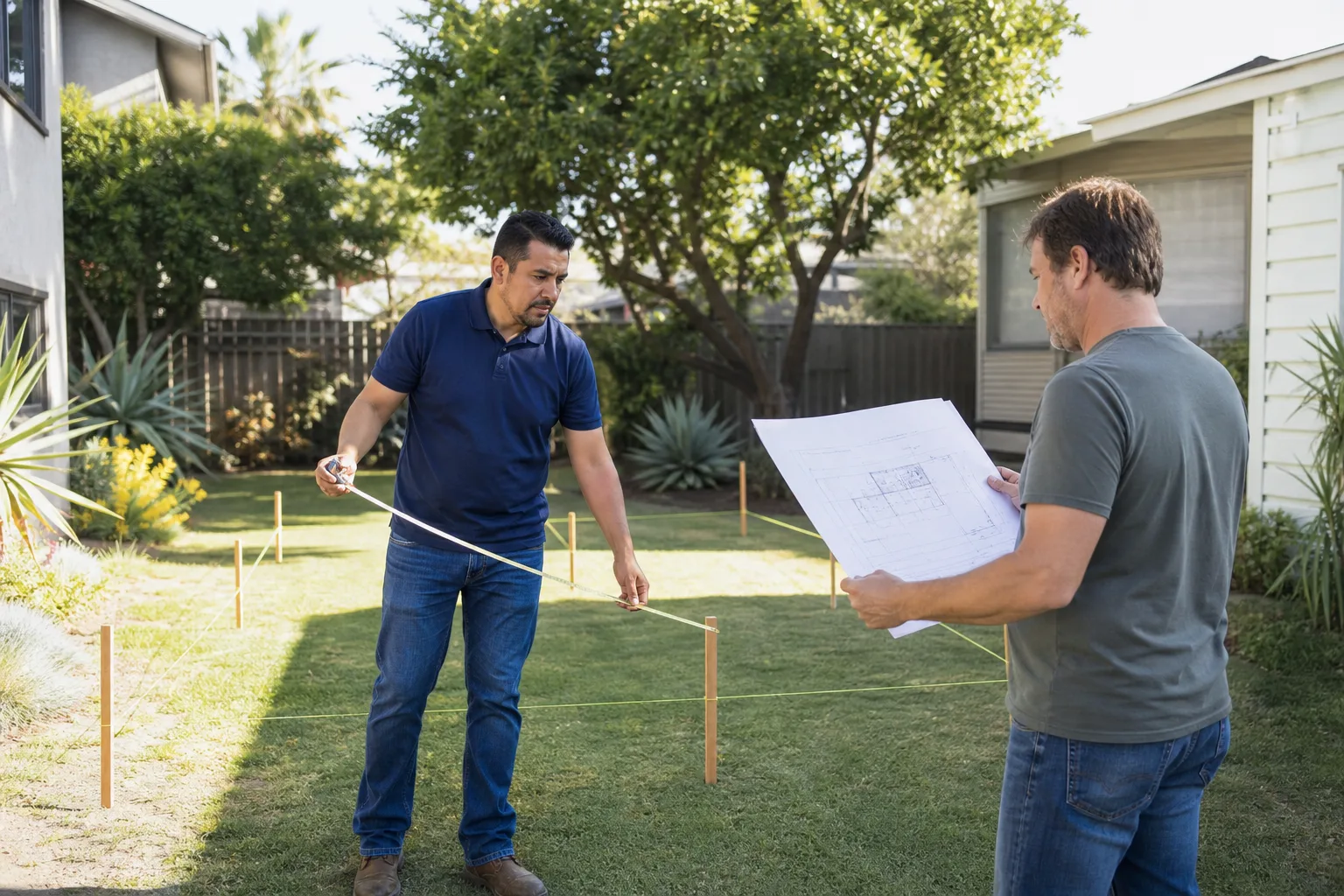
You can safely handle two things yourself: clearing the site of brush and debris, and marking out the footprint with stakes and string so you can visualize the pad. That’s honest reconnaissance work and it saves time on the estimate. What you should not DIY is the compaction, the pour, or any electrical run. A pad that isn’t compacted to 90% relative density will settle unevenly within two years. Hand-tamping a 10×12 pad with a rental plate compactor might get you to 70%, and the shed will tell you where you fell short within the first rainy season. Los Angeles soil doesn’t hide mistakes; it amplifies them.
Electrical is simpler to say: don’t do it yourself. Trenching code in unincorporated Los Angeles County requires buried conduit at 18 to 24 inches depending on the circuit type, a permit, and an inspection. Miss any of those and you now own a code violation that affects your home sale down the road. If the breaker is already tripping, or the pad has visibly settled, call us at (361) 315-4177 for a free estimate. Reed Calloway will put the scope in writing before we break ground.
FAQs
A properly compacted and poured concrete pad for a Tuff Shed in Los Angeles should last 30 to 40 years before showing meaningful cracking or settlement, assuming the drainage around it is maintained and no major seismic event interferes. Gravel pads last 8 to 12 years before the base rock needs re-topping and re-compaction. The wildcard in Los Angeles is always water: where it runs, where it pools, and whether the perimeter drains were installed correctly on day one. Call (361) 315-4177 if you want one of our techs to look at what’s already in place before you spend money on repairs.
Sometimes, yes. A pad with minor edge spalling or a low corner can often be corrected with a re-grade and a French drain, or with polyurethane foam injection to lift the low area. But a pad where the shed anchors have pulled loose, or where the concrete has cracked through the full depth, usually means a full re-pour. We will tell you which one you have, and we will put the difference in writing before any work starts. Estimates are free, and the price on the estimate is the price you pay.
For a standard 10×12 or 10×16 Tuff Shed with a slab and one electrical circuit, plan on three to five working days for the actual site work, plus Los Angeles permit and inspection wait times. The permit office is the variable. If utilities are already permitted from a previous structure, the work itself usually wraps in less than a week. If we’re starting from scratch with LADBS, the whole process from application to final sign-off can run four to eight weeks, most of it waiting on the city. We handle the permits, by the book, every time.
We keep the common consumables on the truck: pressure-treated lumber rated for ground contact, anchor bolts, conduit and pull boxes for 20-amp circuits, PEX stub-out kits, and the compactors we need for a standard pad. What we don’t stock is anything model-specific that sits on a warehouse shelf for months, because those parts are ordered per job with the exact dimensions from your Tuff Shed order sheet. Tell us the model and size when you call, and we’ll confirm what’s on hand and what gets ordered for your build date.
Ready to Get the Pad Done Right?
If your Tuff Shed is already on a failing pad, or you’re planning a new one and want it prepped correctly the first time, call Fielding ADU Builders at (361) 315-4177. We’ll walk the site with you, measure what’s there, and hand you a written price before any work starts. Put it in writing, then go build it. That’s how we operate, and it’s how your shed should have been done the first time.
Written by Reed Calloway, Owner, Fielding ADU Builders at Fielding ADU Builders, serving Los Angeles and nearby areas.