James Hardie New Detached ADU: The Los Angeles Owner’s Guide
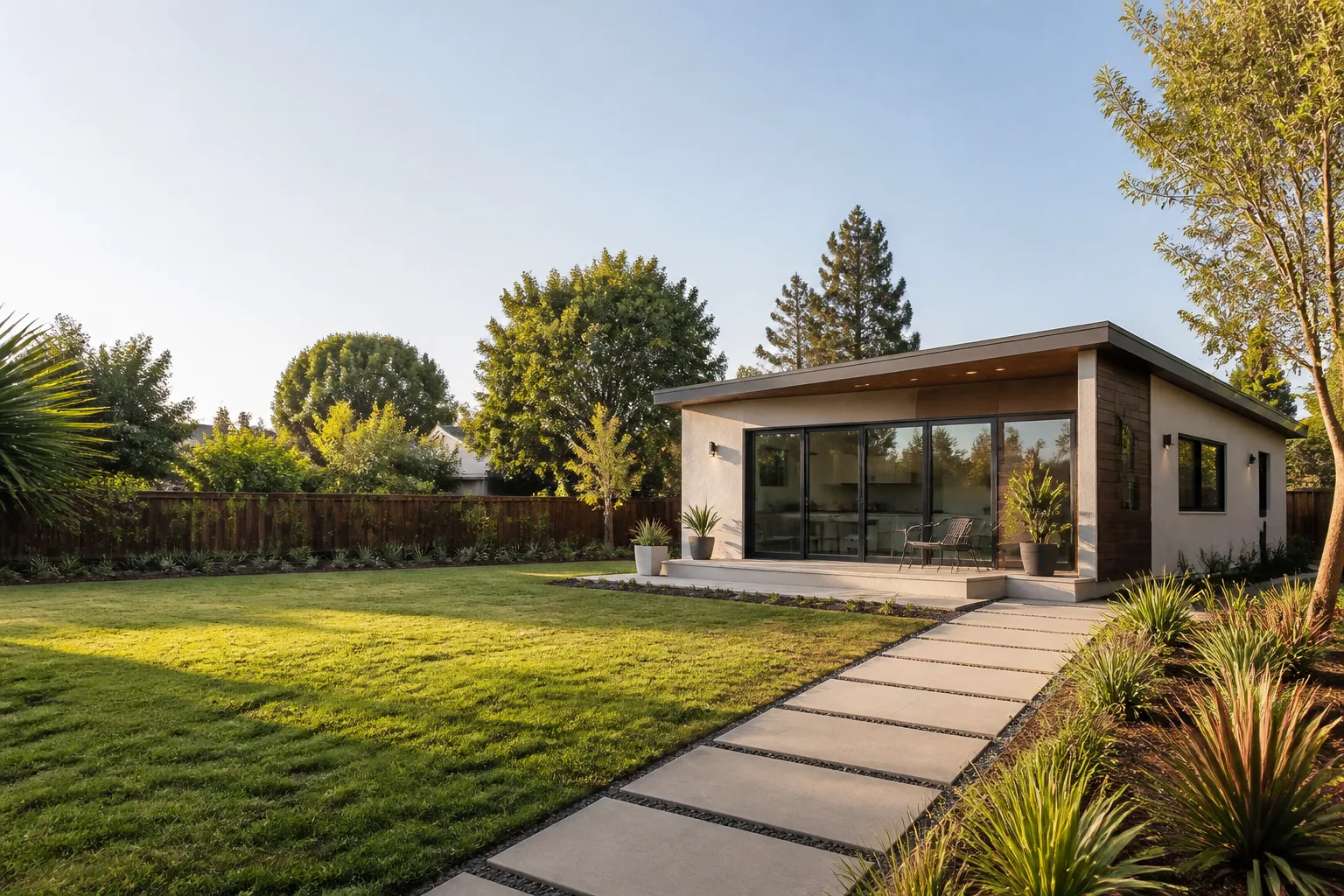
We install James Hardie siding and trim on new detached ADUs across Los Angeles, and we stock the specific HardiePlank lap siding, HardiePanel vertical siding, and HardieTrim boards that most Los Angeles builds call for. A full Hardie-clad detached ADU with siding, trim, and soffit typically runs $22,000 to $41,000 installed in Los Angeles, depending on square footage, height, and lot access. Most owners call us after seeing siding that has swelled at the bottom edge, trim that has pulled away from corners, or fastener heads that have popped through the face of the board.
If you already have a James Hardie-clad ADU and a section of siding or trim has failed, the fix is usually faster and cheaper than you expect. We will match the existing profile, replace the damaged section, and get the joints detailed correctly so water stops getting behind the board. Reed Calloway has been working with James Hardie products on ADU and addition projects in the San Fernando Valley and greater Los Angeles for over a decade, and the failure patterns are predictable once you know what to look for.
Which James Hardie Models This Applies To
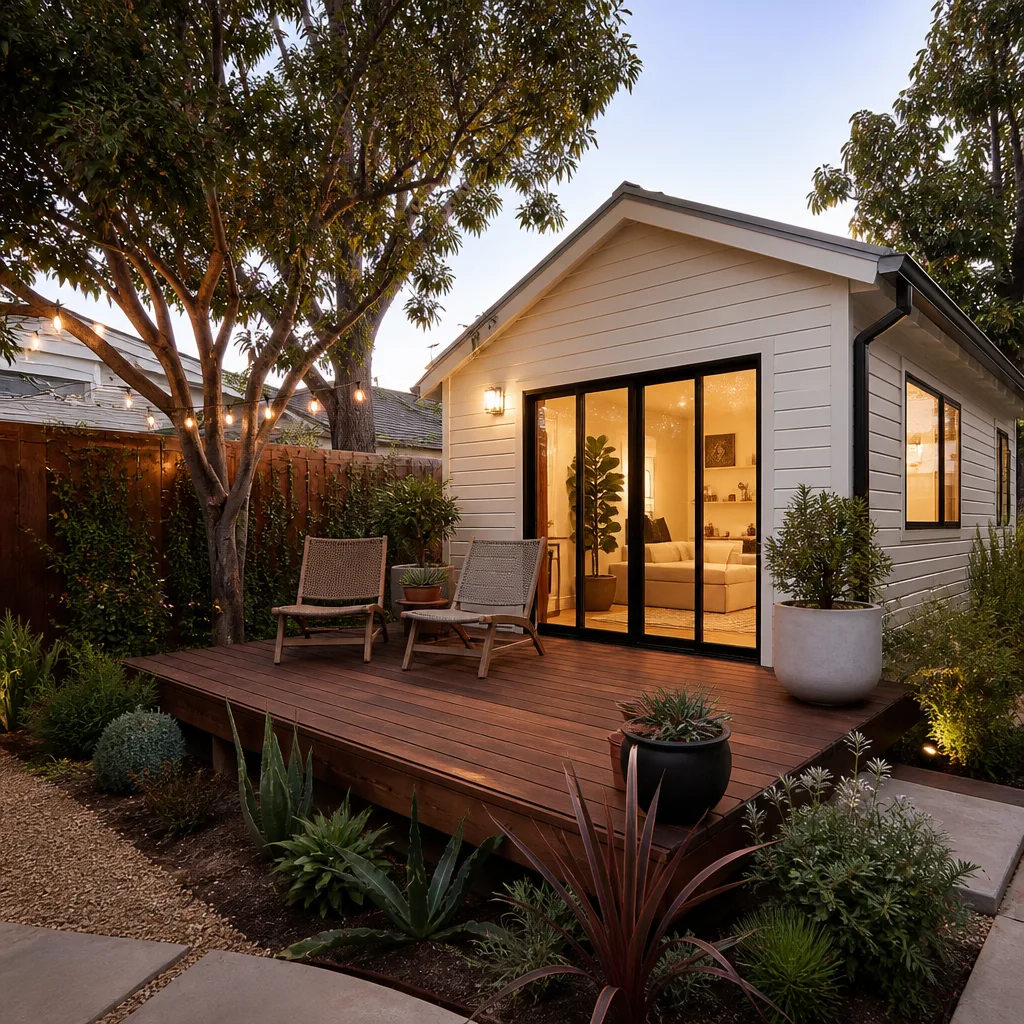
Most detached ADUs in Los Angeles use HardiePlank lap siding in either a 4-inch or 5.25-inch exposure, HardiePanel vertical siding at 4×8 or 4×10 sheets, and HardieTrim boards in 3.5-inch, 4.5-inch, or 5.5-inch widths at corners and windows. The critical thing to check before ordering a replacement is the texture, because James Hardie offers three distinct surface finishes: Smooth, Select Cedarmill (the standard wood-grain texture), and Beaded Cedarmill (wood grain with a beaded edge). If you put a Smooth board next to a Cedarmill board, you will see the difference from the street.
OEM James Hardie boards are the default for a reason: the paint finish we apply on site bonds predictably, and the board dimensions are exact. There are aftermarket fiber cement products out there, but we have seen enough oversize quarter-inch discrepancies on cheap imports in Los Angeles that we do not recommend them. We are an independent contractor, not affiliated with James Hardie, but we spec their boards because the cut lines, fastener depth, and joint flashing details line up every time. Fielding ADU Builders also works with Abodu, Cover, and Dvele prefab platforms, and when those units arrive with Hardie panels already factory-installed, we know how to match them.
Signs Your James Hardie New Detached ADU Is Failing
- Swelling or flaking at the bottom edge of lap siding. This is almost always a clearance problem. HardiePlank needs a minimum 6-inch gap between the bottom of the board and grade, or 2 inches above a hard surface like a walkway. Los Angeles yards with concrete pads poured too high against the wall will wick water into the cut edge and the board will start to delaminate within a few seasons.
- Fastener heads popping through the face of the board. The fiber cement was not pre-drilled and the nail gun drove the fastener too deep, breaking the surface. This is a workmanship issue on the original install, and it lets water sit in the divot.
- Gaps opening at corner trim joints. HardieTrim expands and contracts across the long axis more than most people expect, especially on south-facing walls in Los Angeles where surface temperatures swing 80 degrees between day and night. If the original installer didn’t leave a proper gap and caulk the joint, the trim pulls itself apart.
- Vertical cracks at window corners. HardiePanel sheets will crack at the corner of a window opening if the installer cut a square notch instead of a radiused one. The sharp inside corner concentrates stress and the panel fractures along the cut line.
- Paint failure in a defined band along the bottom third of the wall. This means sprinkler overspray or irrigation water has been hitting the board repeatedly. James Hardie does not approve extended water contact on the face, and once the paint film fails, the board absorbs moisture and swells.
Replacement Cost & What’s Included
For a James Hardie siding or trim replacement on an ADU in Los Angeles, most jobs run between $1,800 and $6,500 depending on how much board has failed, whether we are working at height, and how much of the surrounding paint needs blending. Replacing one to two dozen lap boards on a single wall usually falls around $2,200 to $3,400. A full re-side of a 400-square-foot ADU wall runs $7,500 to $11,000. The price includes the new Hardie boards, priming and paint matching, proper flashing at butt joints, and haul-away of the old material.
We give you a written price before any work starts, and the number on that sheet is the number on the final invoice. No change orders, no discovery fee. The Garrison Standard covers the replacement work for a full year, in writing. If the repair fails inside 365 days, we come back and correct it at no charge. That includes the flashing details, which is where most replacements go wrong.
DIY or Call Us?
You can safely inspect the siding yourself. Check the clearance between the bottom edge and the ground, look for popped fasteners, and run a hose along the wall to see where sprinkler water lands. Do not pull off a damaged board if you do not have experience cutting fiber cement. The silica dust from cutting Hardie products is a respiratory hazard, and incorrectly reinstalled flashing will funnel water behind the building paper and start rotting the framing underneath. That is a repair that costs more to undo than the original fix would have cost.
Fiber cement is not a spring or an electrical panel, but it can still hurt you if you rush it. We bring the right saws, the right dust control, and the right flashing tape. If you want a written quote before deciding, call (361) 315-4177 and we will get you a number.
FAQs
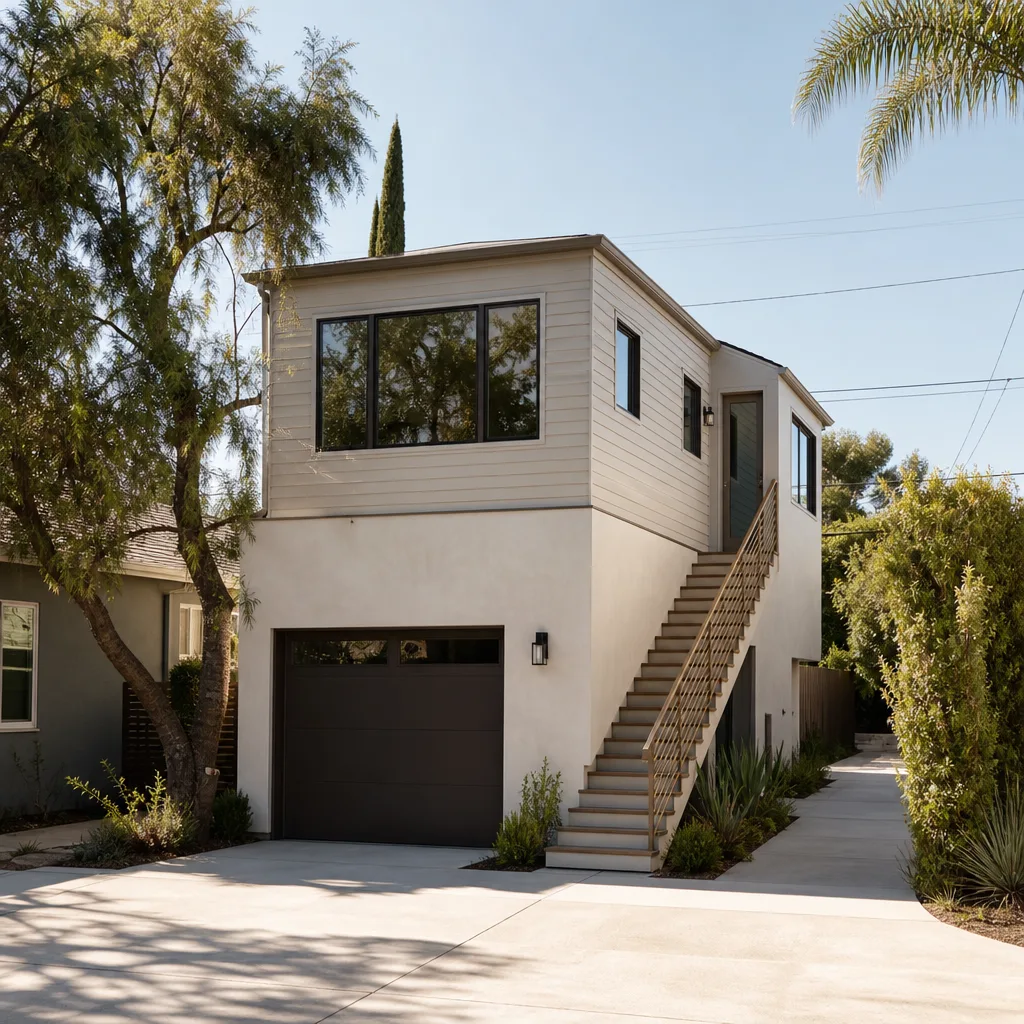
James Hardie siding generally lasts 30 to 50 years in Los Angeles when installed with proper clearances and painted on schedule. The failure we see is not usually the board itself; it is the install details around it. Boards with ground clearance problems can fail in under ten years.
Small chips and cracks can sometimes be patched with an approved exterior filler and repainted, but if the board has swelled, flaked, or separated at the core, patching will not hold. Swelling means water has entered the board, and the only fix is a cut-out and replacement. Call (361) 315-4177 and describe what you are seeing, and we will tell you straight whether it is repairable before we ever schedule a visit.
Most single-wall replacements take one day on site. A full ADU re-side takes two to three days depending on height and access. Paint matching adds a day for cure time, but we can usually match the color close enough to blend without repainting the entire wall.
We carry smooth and Cedarmill lap siding, HardiePanel sheets, and standard HardieTrim widths on our truck. Specialty profiles and Beaded Cedarmill have to be ordered, which usually takes two to three business days in Los Angeles. The truck stock covers most of the ADU repairs we see in a typical week.
Written by Reed Calloway, Owner, Fielding ADU Builders at Fielding ADU Builders, serving Los Angeles and nearby areas.