A free site visit, a check of what your lot allows and a written, line-item price.
Get your free estimateAnswer First: What ADU Work in Koreatown Actually Costs and Involves
ADU construction in Koreatown typically runs $180,000 to $320,000 for a detached unit before permit fees, and a garage conversion lands between $95,000 and $160,000. Those are real numbers for this neighborhood, not statewide averages. Koreatown’s R-4 and R-5 lots, narrow alleys, and pre-1940 apartment buildings push costs higher than what you’d see in single-family zones elsewhere in Los Angeles, because utility upgrades and alley-access logistics are usually part of the job from day one. If you’re pricing an ADU in Koreatown, start with the lot access question before the floor plan question. Call (361) 315-4177 and we’ll walk you through what your specific site can actually support.
Key Takeaways
- Detached ADUs in Koreatown run $180K – $320K; garage conversions $95K – $160K, before permits.
- Alley width on Koreatown’s 25-foot residential alleys often decides whether a prefab unit can be delivered at all.
- R-4 and R-5 multi-family lots usually require rear-yard placement behind existing apartment buildings.
- Pre-1940 buildings frequently need electrical panel and sewer lateral upgrades before an ADU can tie in.
- Every Fielding ADU Builders project gets a written price before work starts and a 365-day written guarantee.
Fast, Reliable ADU Builders Across Koreatown
If you own property in Koreatown, you already know the blocks around Wilshire Boulevard, Vermont Avenue, and Olympic Boulevard don’t build like the rest of Los Angeles. We work those blocks every week. Our crews know the difference between an R-4 lot off Harvard Boulevard where a crane can squeeze through the alley and a 5th Street property where the only rear access is a footpath. That kind of local knowledge is what keeps a Koreatown ADU project from stalling at delivery. When you call (361) 315-4177, a live person answers, not a voicemail, and we’ll schedule a site visit to measure your alley before we quote anything.
We coordinate scheduling from our Los Angeles office, and crews serve Koreatown locally, so the person who walks your lot knows the neighborhood’s permission and easement patterns. Reed Calloway runs the team, and he holds every project to the Garrison Standard: show up in the window, put the price in writing, build by the book, leave it clean, and stand behind it for a year. If the work fails inside that year, we come back and fix it at no charge. That’s not a sales line. It’s written into the contract.
Why Koreatown Property Owners Call Fielding ADU Builders
Most of the Koreatown homeowners and building owners we meet have already been burned once. They got a verbal estimate, then a change order two weeks in. They watched a crew disappear for a month. They found out the permit was never pulled. That’s why the Garrison Code matters here: price in writing before any work starts, permits pulled by the book, a uniformed background-checked crew on site, and a one-year written guarantee on every project. No exceptions.
Our reputation in Koreatown comes from doing what we said we’d do on properties where the site itself fights back. Rear yards behind 1920s apartment buildings, sewer laterals that were never sized for a second unit, electrical panels buried in a basement with no clearance. We quote the real number up front, including those upgrades, so the price you approve on day one is the price on the final invoice. That’s the written-price-first policy, and it applies to every Koreatown job.
ADU Builders from our team work in Koreatown every week, and our phone is answered by a human around the clock. Call at midnight if you’re up reading zoning code. Someone picks up.
ADU Construction in Koreatown
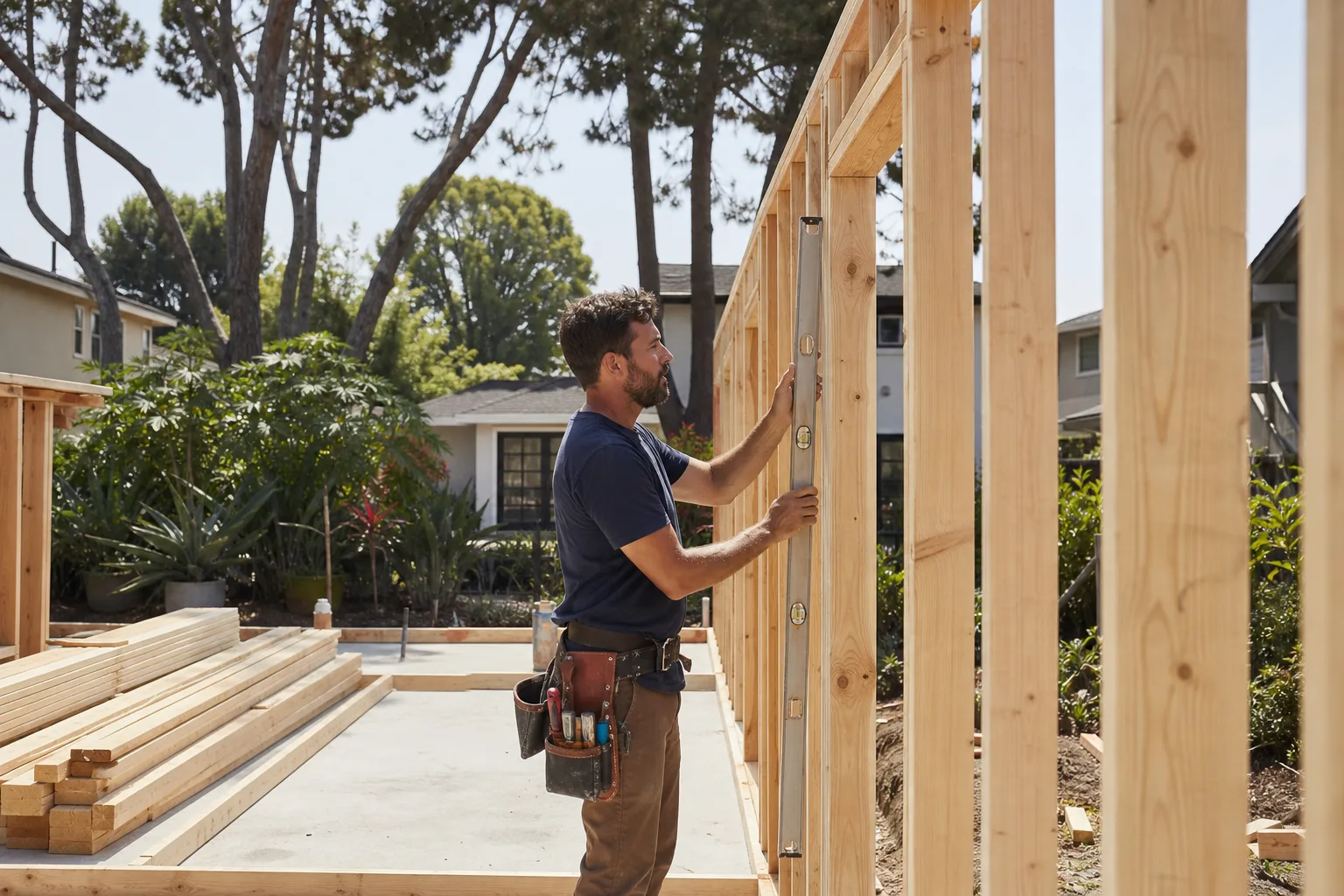
ADU Construction in Koreatown rarely means building on an empty single-family lot. More often, it means adding a unit behind a 12-unit apartment building on an R-4 lot, where the rear yard is the only buildable space and the alley is the only delivery route. That’s the job: confirming setbacks, checking whether the alley can take a crane or module truck, upgrading the main building’s electrical and sewer so the new unit can tie in legally, and then building the shell, systems, and finishes. A realistic budget for ADU Construction in Koreatown starts around $180,000 and climbs with site conditions.
What Happens Before the First Nail
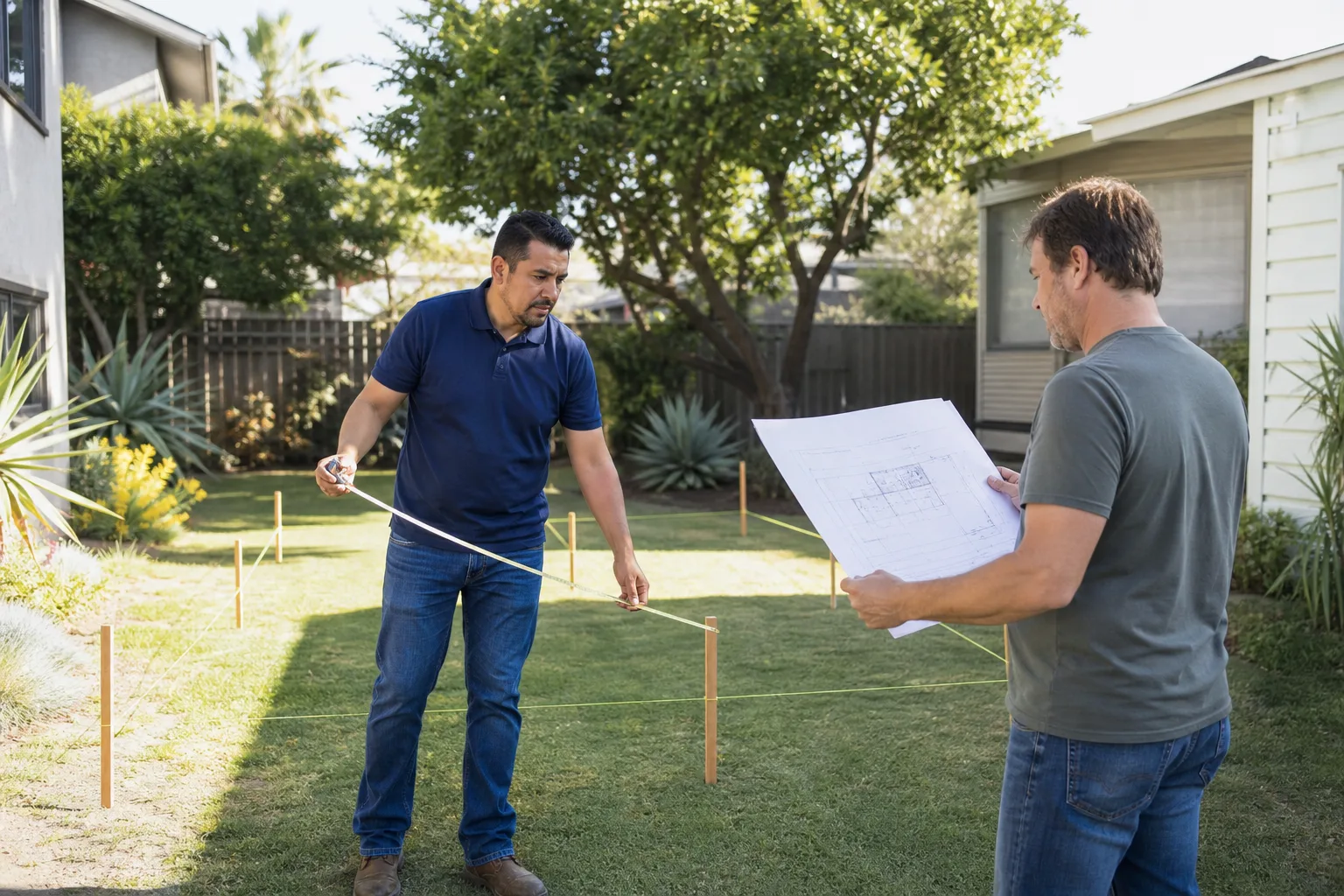
The permit path in Koreatown starts with a site survey and a title report showing any easements or lot-line quirks. On older blocks near Normandie Avenue or Western Avenue, some lots have irregular setbacks that differ from the citywide baseline. We confirm those before quoting, not after.
Utility Tie-Ins and Panel Work
Koreatown’s pre-1940 housing stock means the main building’s electrical service is usually 60 or 100 amps. A new ADU needs its own subpanel, and the sewer lateral often needs replacing because it was sized for one unit, not two. We put those upgrades in the written price up front.
Detached ADU in Koreatown
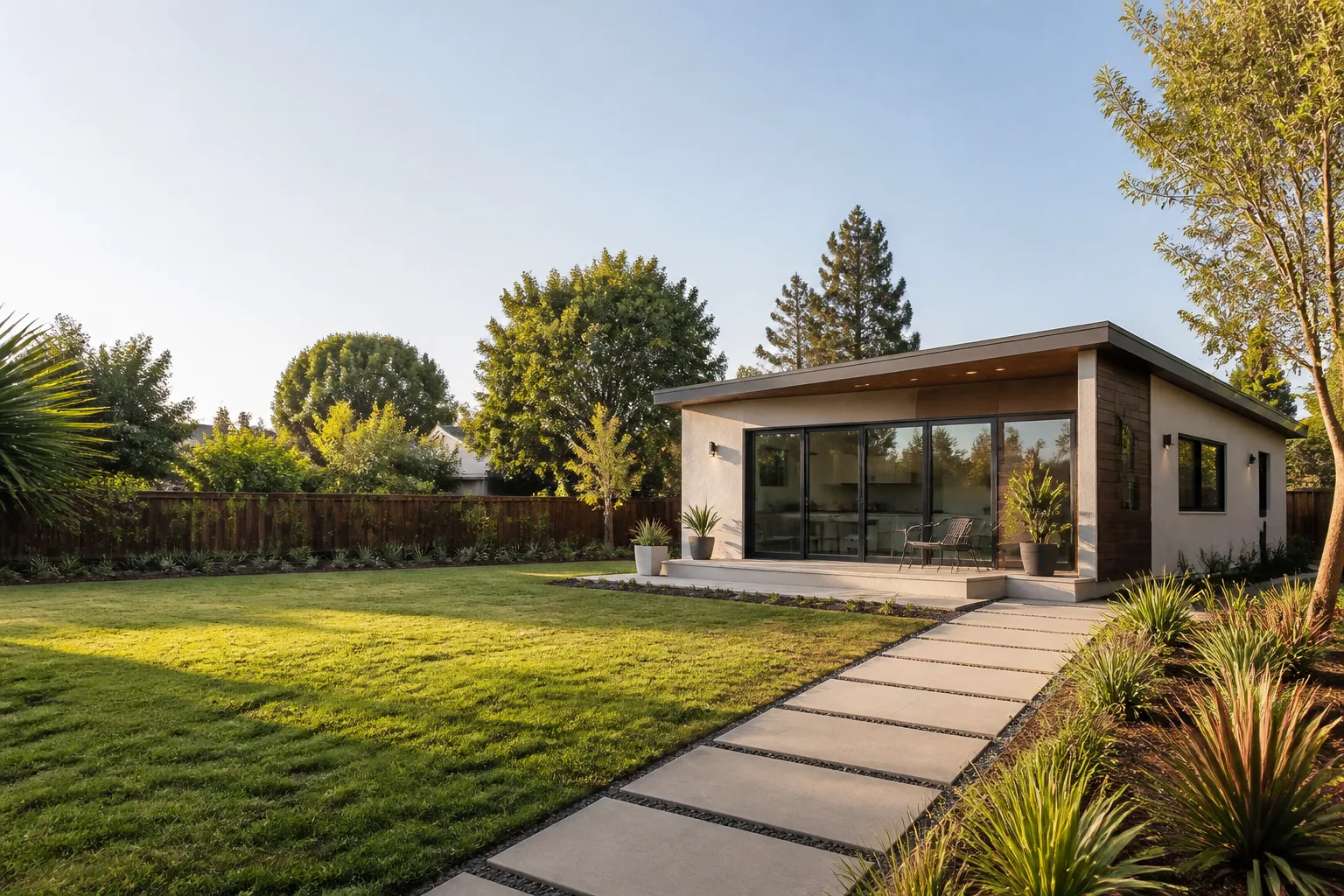
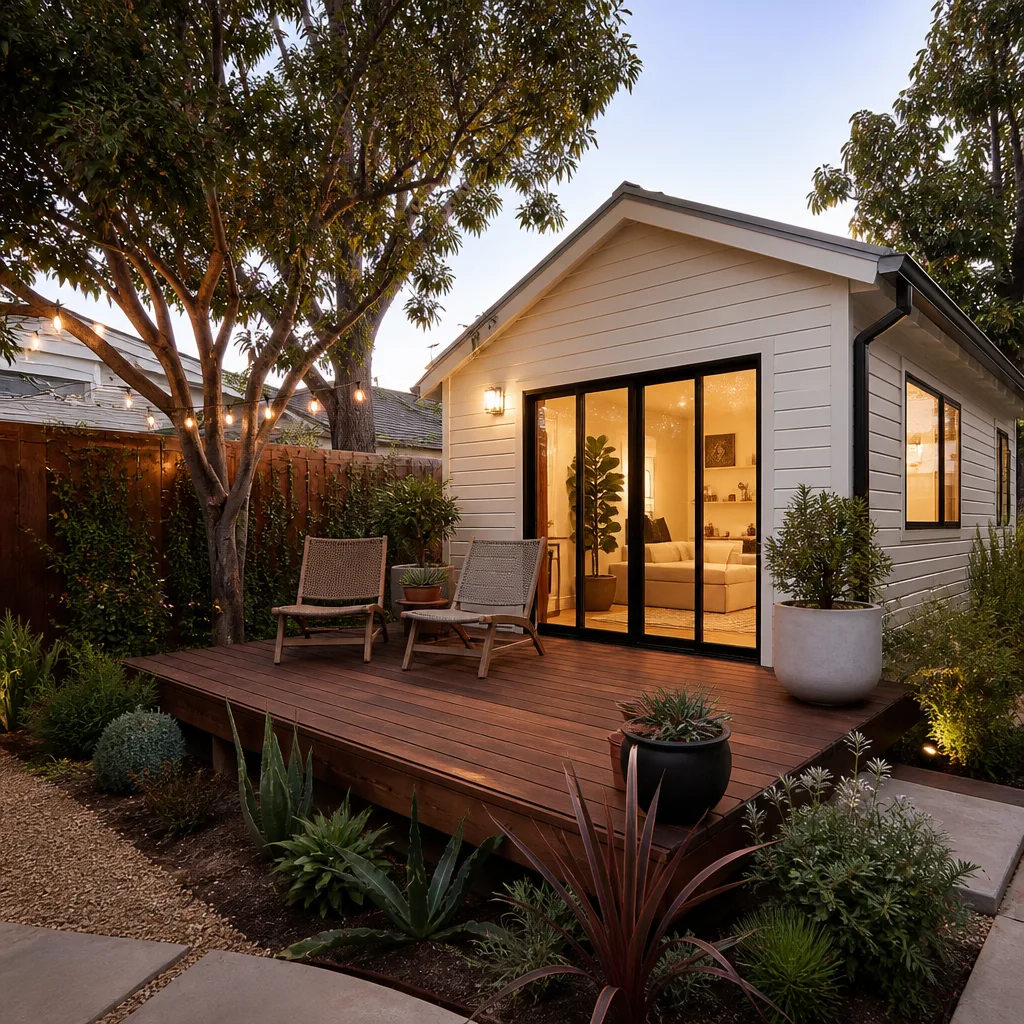
A Detached ADU in Koreatown is a standalone unit in the rear yard, typically 400 to 800 square feet, and it’s the most common project we build on R-4 and R-5 lots where the existing building fills most of the parcel. Detached units run $220,000 to $320,000 here, with prefab and modular options at the lower end when the alley can deliver the module. The first question on every detached ADU quote is alley width, because a 25-foot alley with overhead wires can make a crane pick cost thousands more than the same build would in a single-family zone.
Studio and Junior ADU Options
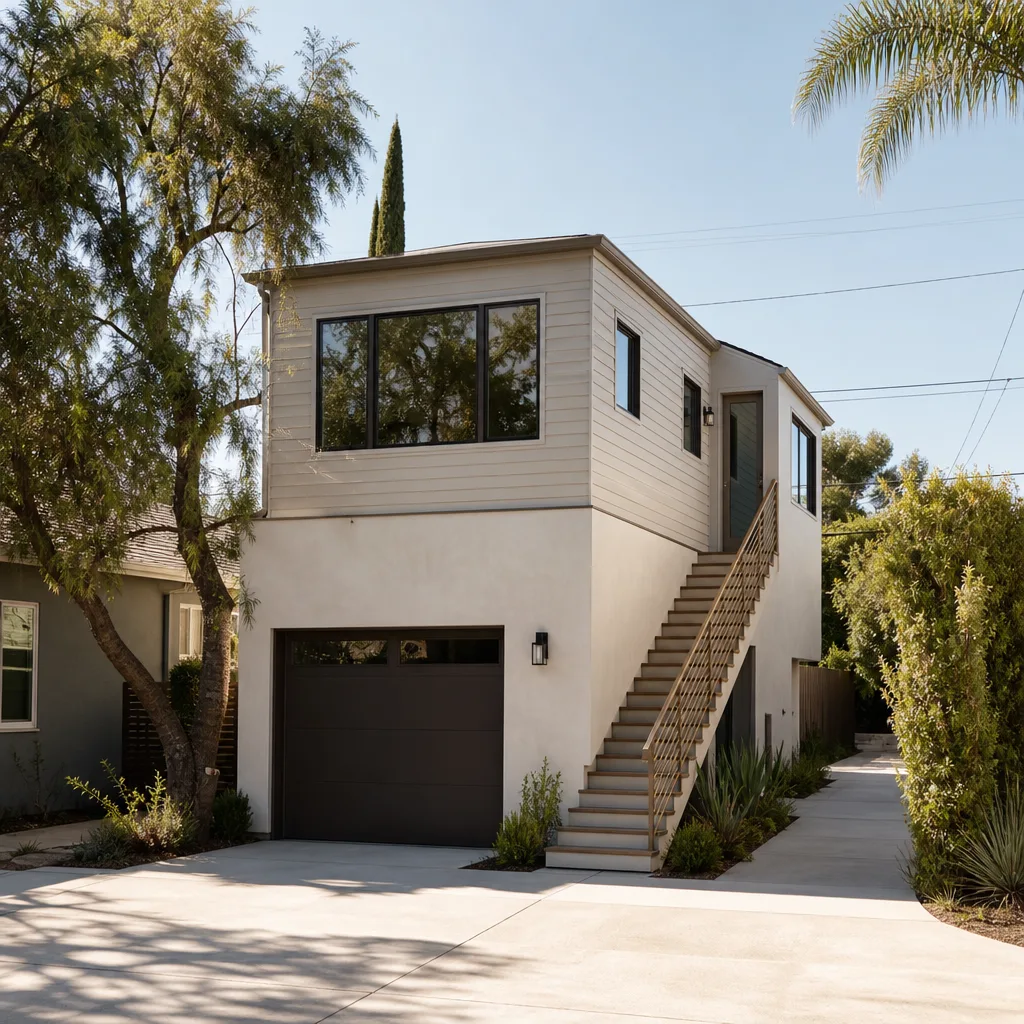
A studio ADU under 500 square feet can work on a tighter Koreatown lot, especially if the rear yard already has a garage you’re willing to lose. A junior ADU, which converts space inside the existing building, often avoids the alley problem entirely because there’s no new structure to deliver.
Prefab vs. Stick-Built on a Koreatown Rear Lot
Prefab units from Dvele or Boxabl look great on paper, but the module has to physically reach the rear yard. If the alley can’t take the truck, we shift to partial on-site assembly with a Tuff Shed shell and Mighty Buildings interior panels. That keeps the schedule moving without pretending the road conditions don’t exist.
The Alley Problem Most Koreatown Quotes Ignore
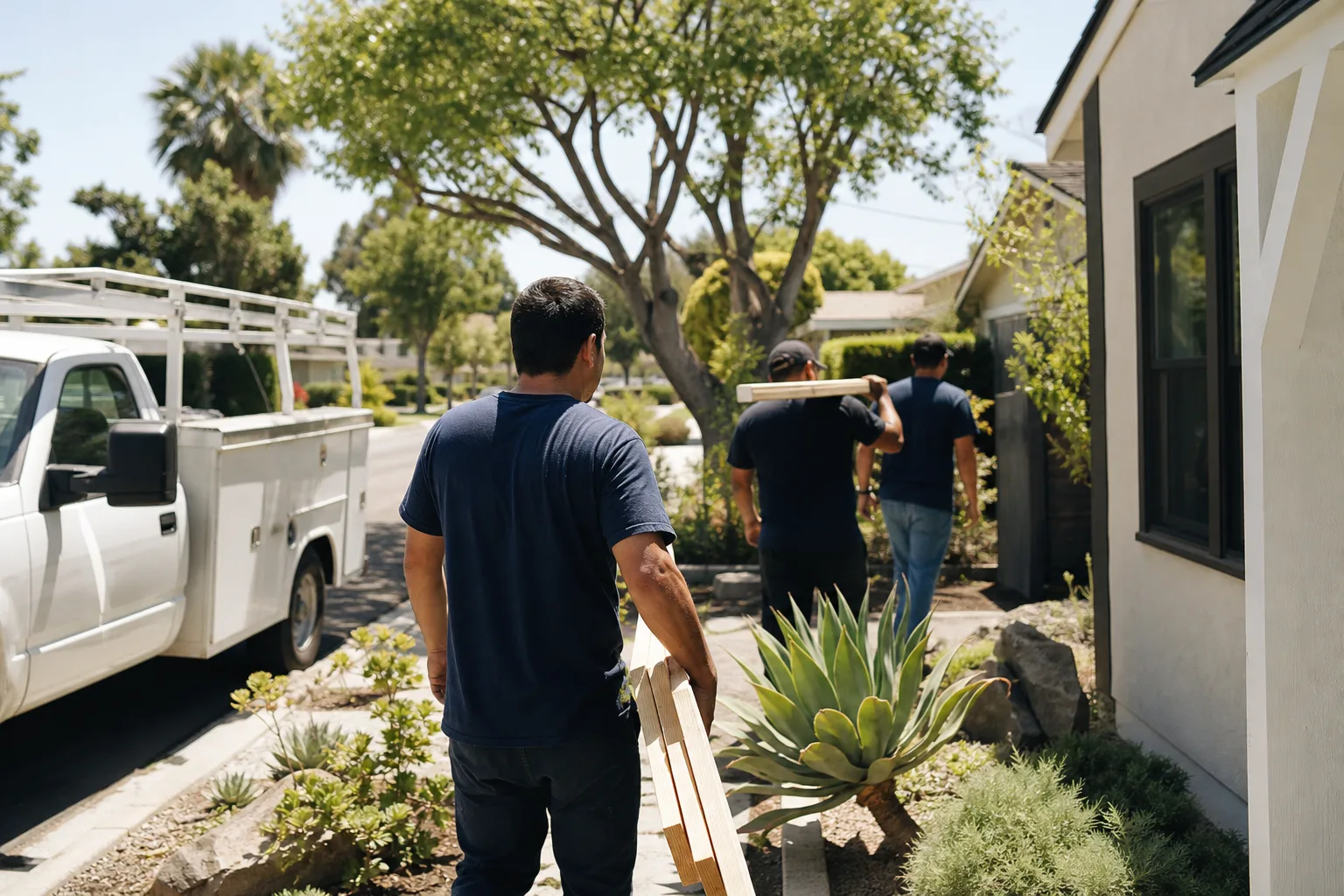
Koreatown’s residential alleys are 25 feet wide on paper, but parked cars, dumpsters, and overhead wires routinely cut that to under 20 feet in practice. The 2023 update to LA’s ADU ordinance removed most parking minimums near transit, which helps on the permit side, but it doesn’t change the physical reality of getting a module to the back of the lot. A prefab unit that fits the plan might not fit the alley, and a crane pick can run $4,000 to $9,000 depending on the block and time of day. We check alley clearance on the first site visit, before we quote, because it’s the single biggest reason a Koreatown ADU quote turns into a change order. If you’re evaluating bids, ask every builder how they’ll handle delivery. If they don’t mention the alley, they haven’t looked at your lot.
We were hired to build a 600-square-foot detached ADU behind a 12-unit apartment building on Manhattan Place near 8th Street. The client wanted a Cover or Abodu prefab unit. Our team coordinated a 6 AM crane pick from the alley because the street was blocked by a food truck and a Metro bus stop, and the James Hardie siding had to be cut on-site because the module width exceeded the alley clearance by four inches. We ended up doing a partial on-site assembly with a Tuff Shed shell and finished the interior with Mighty Buildings panels, which kept the project on a 9-month timeline instead of the 14 months a full stick-build would have taken. That’s what Koreatown ADU work actually looks like.
Local Failure Modes: What Goes Wrong on Koreatown ADU Jobs
Most Koreatown ADU problems trace back to quoting before looking. These are the three we see most often, and all three are avoidable.
- Bidding without checking alley width and overhead wires. A prefab module that can’t physically reach the rear yard means a crane change order, a delivery surcharge, or a complete redesign. On Koreatown’s narrow alleys, this is the number one cause of a price changing after work starts.
- Assuming standard setback and rear-yard coverage rules apply on R-4 lots. Some blocks in Koreatown have lot-line and easement conditions that differ from the citywide baseline. We pull the site survey and title report before we quote, so we know what the city will actually approve.
- Quoting a flat price without factoring in the main building’s age. Koreatown’s 1920s-era apartment buildings often need electrical panel and sewer lateral upgrades before the ADU can tie in. If the quote doesn’t include those, the price changes mid-job. Ours does, in writing, on day one.
Trusted Brands We Service in Koreatown
We work with the platforms Koreatown property owners are already researching, including Cover, Dvele, and Boxabl. We also build conventional with James Hardie siding and Tuff Shed shells when the lot or budget calls for it. Our crews keep common parts and materials staged for Koreatown jobs, so a siding panel or interior module doesn’t sit on a truck for a week while the project idles. Matching the build method to the lot, not the brochure, is the whole job. Call (361) 315-4177 and we’ll tell you which method fits your site and budget.
Pricing for ADU Builders in Koreatown, CA
Detached ADUs in Koreatown run $220,000 to $320,000. Garage conversions run $95,000 to $160,000. Interior junior ADUs run $60,000 to $110,000. Permit fees add roughly $8,000 to $18,000 depending on the scope and any utility work. Site conditions are the real driver: alley access, electrical panel replacement, sewer lateral work, and rear-yard grading all move the number. Our written price includes those conditions, because we saw them on the site visit. You approve a number, and that’s the number on the final invoice. Call (361) 315-4177 for a free estimate, and we’ll give you a real range for your specific lot, not a brochure number.
We Also Serve Cities Near Koreatown
Our crews work across the Los Angeles basin. In addition to Koreatown, we serve Los Angeles, Long Beach, Anaheim, and Riverside. If your property sits near the Koreatown boundary, call (361) 315-4177 and we’ll confirm coverage before you drive anywhere.
Serving Koreatown, CA - Our Local Coverage Area
We’re based in the Koreatown area and know this community well. Use the map below to see our service coverage - if you’re nearby, we can almost certainly help.
FAQs About ADU Builders in Koreatown
Maybe, but the alley is the deciding factor. A 25-foot Koreatown alley with overhead wires and parked cars often can’t take a full prefab module truck. We check alley clearance, overhead obstructions, and turning radii during the first site visit, then recommend either a crane pick, a smaller module, or partial on-site assembly. If the alley won’t work at all, a junior ADU inside the existing building often bypasses the problem entirely. Call (361) 315-4177 and we’ll measure your alley before we quote.
Usually no. The 2023 update to LA’s ADU ordinance removed most parking minimums for ADUs located within a half-mile of major transit, and most of Koreatown qualifies. Some specific sub-areas still have conditions attached, so we confirm parking requirements with the Department of Building and Safety during the permit review. Call (361) 315-4177 and we’ll check your specific address.
A detached ADU in Koreatown typically takes 8 to 14 months from permit application to final inspection, depending on site conditions and utility work. Prefab or partial prefab builds can land at the shorter end if the alley cooperates. A garage conversion runs 5 to 9 months. We put the schedule in writing with the price, so you know what you’re approving.
On most Koreatown projects, the builder handles site survey, title review, permit drawings, alley-access planning, utility tie-ins, and coordination with the city on setbacks and inspections. Framing and finishing are the visible part. The invisible part, which is where most projects fail, is confirming the rear-yard placement works, the electrical panel can carry the load, and the sewer lateral meets code. We include all of that in the written scope. Call (361) 315-4177 for a quote that covers the whole job, not just the nails.
Because the builder didn’t check the site before quoting, or didn’t include known site conditions in the written price. Alley clearance, panel upgrades, sewer lateral replacement, and rear-yard grading are all knowable before work begins. We quote them up front. If something truly unforeseen appears after demolition, we document it and put the change in writing before proceeding. But the number you approve on day one is the number on the final invoice. That’s the Fielding ADU Builders policy, and it’s enforced by Reed Calloway on every Koreatown project.
Call (361) 315-4177 to schedule your free estimate. We’ll walk your lot, check the alley, and put a real price in writing.
Written by Reed Calloway, Owner at Fielding ADU Builders, serving Koreatown and the surrounding Los Angeles basin since 2006.