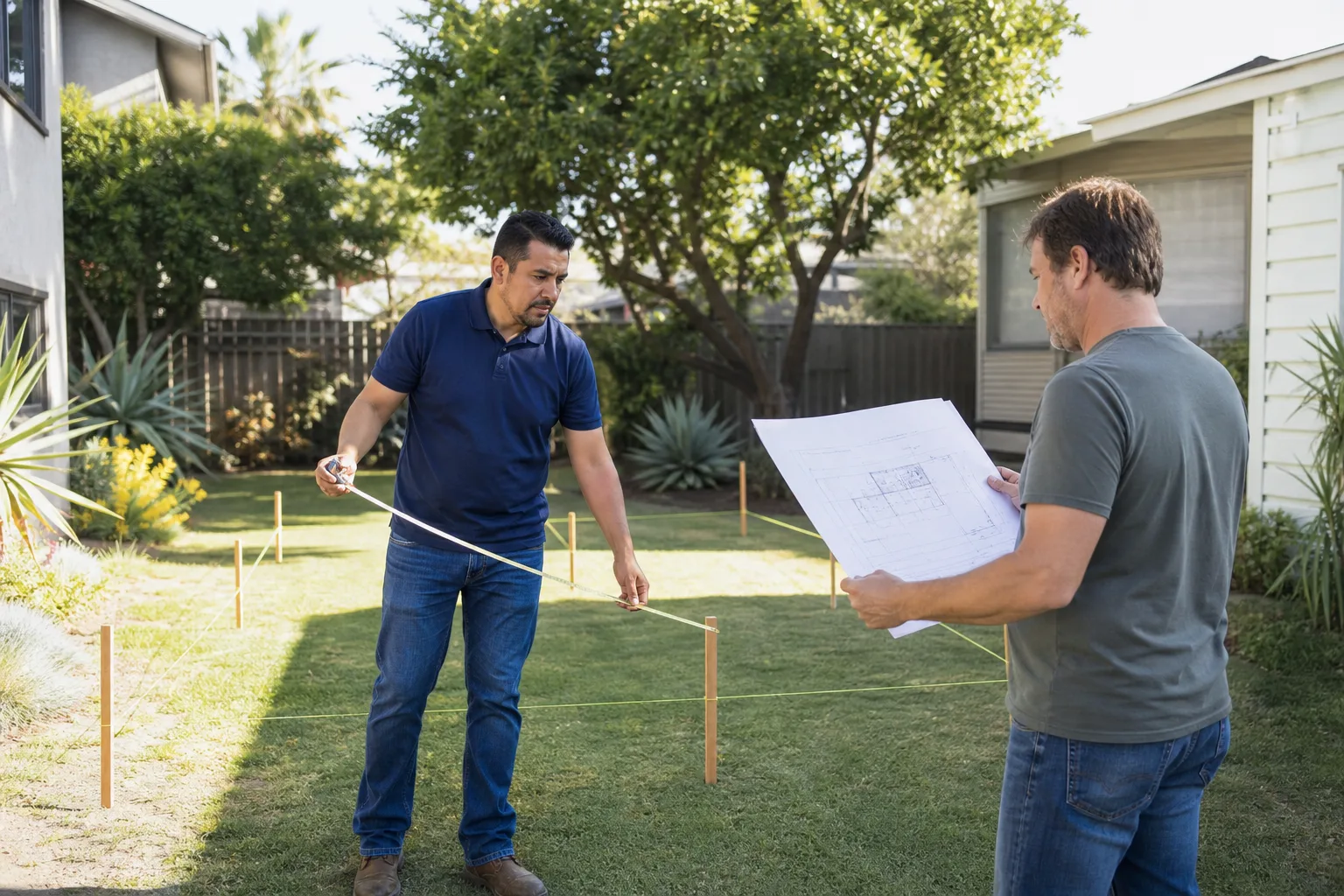



A free site visit, a check of what your lot allows and a written, line-item price.
Get your free estimateADU Builders Stopped Working
When your ADU builder goes quiet – stops returning calls, stops showing up, or flat-out abandons the project – it almost always means one of three things: the contractor ran into financial trouble, they took on more work than they could handle, or the job hit a snag they don’t know how to solve. None of those are your problem to absorb. The project is yours, the contract is yours, and the work needs to get finished.
A builder who has gone dark is not the same as a builder who is running slightly behind. If you haven’t heard from your contractor in more than a week, if crews stopped appearing on site, or if calls are rolling straight to voicemail with no callback, you are likely dealing with an abandonment situation – not a scheduling delay. That distinction matters, because the steps you take in the next few days will affect how quickly you can get the project moving again and what legal options stay open to you.
Why It Happens
The Contractor Ran Out of Money
Some builders front-load draws – they collect a large deposit or early payment, spend it on other jobs or overhead, and then can’t fund yours when the work reaches the expensive middle stages. If materials stopped arriving on site around the same time crews disappeared, this is likely what happened. You’ll often see partial framing, rough plumbing stubbed in, or a foundation poured with nothing on top of it.
The Contractor Got Overextended
A builder who said yes to too many projects at once will start triaging – sending crews to the jobs closest to final payment and pulling them from jobs that are mid-stream. If your project is stalled but you occasionally see the contractor’s truck at a neighbor’s house or on social media, overextension is the probable cause. The work isn’t abandoned in their mind; it’s just deprioritized, which is a distinction that matters only to them.
Permit or Inspection Problems
ADU projects move through a series of inspections – framing, rough mechanical, insulation, and final among them. If the project failed an inspection and the contractor doesn’t have a clear path to correcting it, some will simply go quiet rather than deliver bad news. Look at whether a building inspection was scheduled around the time the site went cold. If you can access your local permit portal, check whether any inspection was failed or flagged.
Scope or Contract Disputes
Sometimes a contractor stops working because they believe the scope changed and they haven’t been paid for it, or because a disagreement about materials or finish details escalated. If you had a heated exchange about a change order shortly before the slowdown, that may be the trigger. This doesn’t make the work stoppage acceptable – a legitimate contractor surfaces disputes in writing and keeps working on uncontested scope while the disagreement gets sorted out.
What to Do Right Now
- Stop making payments. Do not transfer any additional funds to the original contractor until you have a written plan for how the project gets completed. Continuing to pay a contractor who has abandoned work rarely results in the work resuming.
- Document everything on site today. Walk the property and photograph every unfinished area – framing, exposed sheathing, open trenches, uncapped plumbing, anything that is mid-work. Date-stamp the photos. This record protects you if there’s a licensing board complaint or a legal proceeding later.
- Secure the site. If the structure is open to weather – no roof, no housewrap, open window frames – cover what you can with tarps to prevent water intrusion and wood damage. If the site has open trenches, cord them off. Do not enter partially framed structures alone, and do not touch any rough electrical wiring, gas stub-outs, or structural connections that are mid-install. Those components carry real risk and need a licensed professional to assess before anyone works near them.
- Pull your contract and all payment records. Find every document: the original contract, all change orders, every payment receipt or wire confirmation. You’ll need these when you bring in a new contractor to establish what has been built, what has been paid for, and what remains.
- Call a builder who can assess the current state of the project before committing to anything. A competent contractor will want to walk the site, identify what was done correctly, flag what needs to be corrected or redone, and give you a written price for completion before any new work starts.
How We Fix It

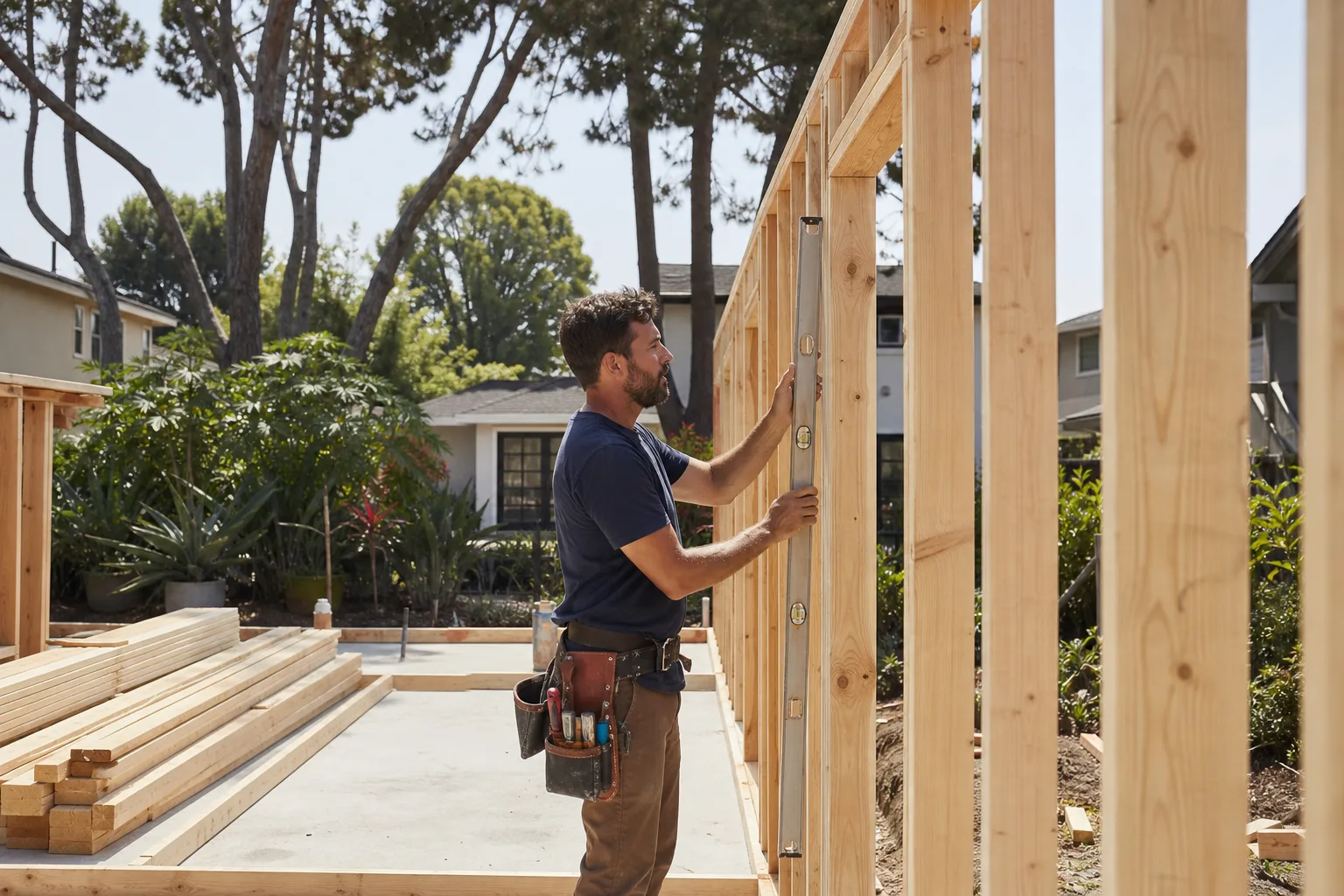
When your local Fielding ADU Builders team arrives on a project takeover, the first thing we do is a full site walk – not a quick glance, a methodical review of everything that’s been built so far. We check framing square and plumb, look at how rough-in work was staged, review the permit status with the local jurisdiction, and identify anything that will need to be corrected before new work can be permitted and inspected.
After that walk, we put together a written scope and a written price. That’s how every Fielding project starts – the number goes on paper before a single nail is driven by our crew. You’ll know exactly what completion costs before you commit.
The work that follows falls squarely within our ADU Builders service and, depending on what remains, may involve elements of our Room Addition Contractor work as well. Once we start, the job is covered by The Garrison Standard and our 365-Day Done Right Promise: if something we built isn’t right within a full year of completion, we come back and correct it at no charge. Call (361) 315-4177 to get a free written estimate on completing your project.
Frequently Asked Questions
Yes, it can be. Partially framed structures are vulnerable to wind loading, and open electrical rough-in or uncapped gas lines are genuinely dangerous – do not attempt to close up, extend, or move those yourself. Secure the perimeter, keep people out of the structure, and get a qualified contractor on site to assess before any new work begins. Call (361) 315-4177 and your local Fielding team can schedule a site assessment.
It shouldn’t wait. Every week a mid-construction ADU sits exposed to weather, you risk moisture damage to framing, sheathing, and any rough-in materials already installed – damage that may require tearing out and rebuilding work you already paid for. The longer the site sits unattended, the higher the completion cost tends to be. Call (361) 315-4177 to get eyes on the project before the damage compounds.
We can get to a site assessment quickly, and we’ll give you a written price for completion as soon as that assessment is done. What we won’t do is skip steps – the site walk and the written price come first, every time, without exception. That’s not a slowdown; that’s how you avoid the same situation you’re already in. Call (361) 315-4177 to get the assessment scheduled.
Not necessarily, but some of it may need to go. If framing is out of square, if rough-in work doesn’t match the permitted drawings, or if inspections were failed on work that was buried, corrections are required before the project can move forward legally. We’ll tell you exactly what has to come out and why – in plain language, before we ask you to spend anything. The written estimate will break it out line by line.
Get It Fixed
Your local Fielding ADU Builders team handles project takeovers – site assessment, written scope, written price, and a clear path to a finished, permitted ADU. Call (361) 315-4177 any time, day or night, and a live person will pick up. Or book your free site assessment online and we’ll be in touch to confirm.
Written by Reed Calloway, Owner at Fielding ADU Builders, part of the Garrison Partners family building to The Garrison Standard since 2006.
What Our Customers Say
"Honest feedback on what the lot could fit. Told me up front what would fit on the lot and what the setbacks would allow."
- Rita C."Clear price breakdown. Change orders were all in writing."
- Hal P."Solid job. Cabinet delivery was a week behind but they worked around it."
- Ben G.