
Abodu Room Addition Contractor in Los Angeles: A Homeowner’s Guide
Abodu sells a prefabricated ADU with a published timeline that assumes your Los Angeles lot is ready for delivery. Most aren’t. Fewer than 30% of residential lots in this city are site-ready without grading, utility upgrades, or setback variances, and none of that shows up in Abodu’s base price. What a local contractor handles between Abodu’s factory and your final inspection is where the real schedule and the real cost live.
This guide breaks down what Abodu does, what it doesn’t, and what to ask the local contractor who will be doing the part that isn’t in the brochure. If you’d rather not sort through all of it yourself, call (361) 315-4177 and we’ll walk you through it.
What Abodu’s Scope Actually Covers
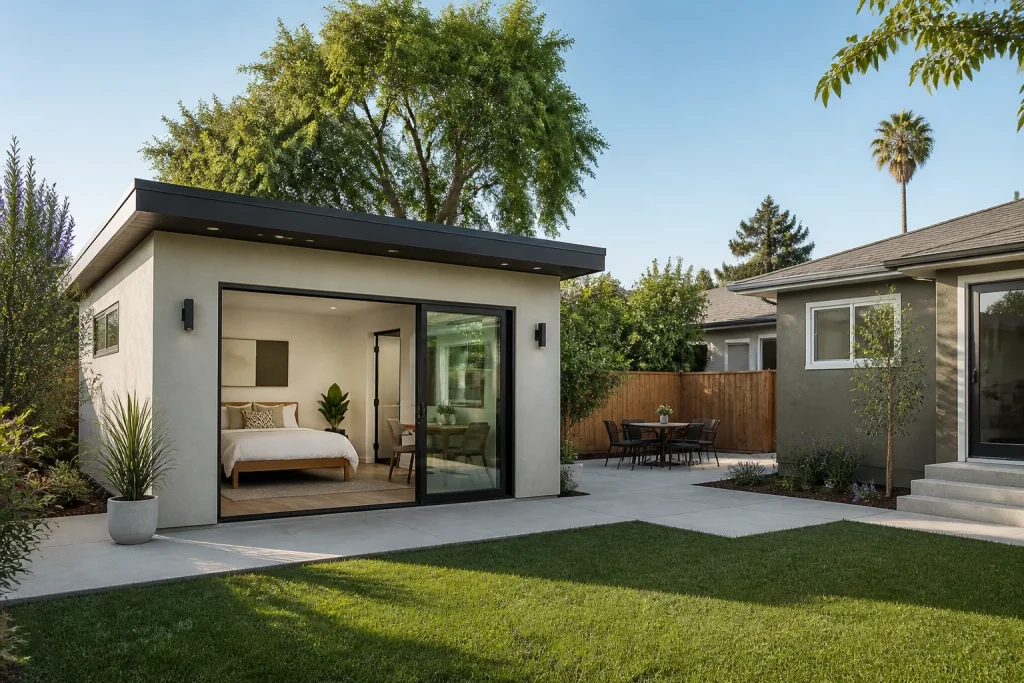
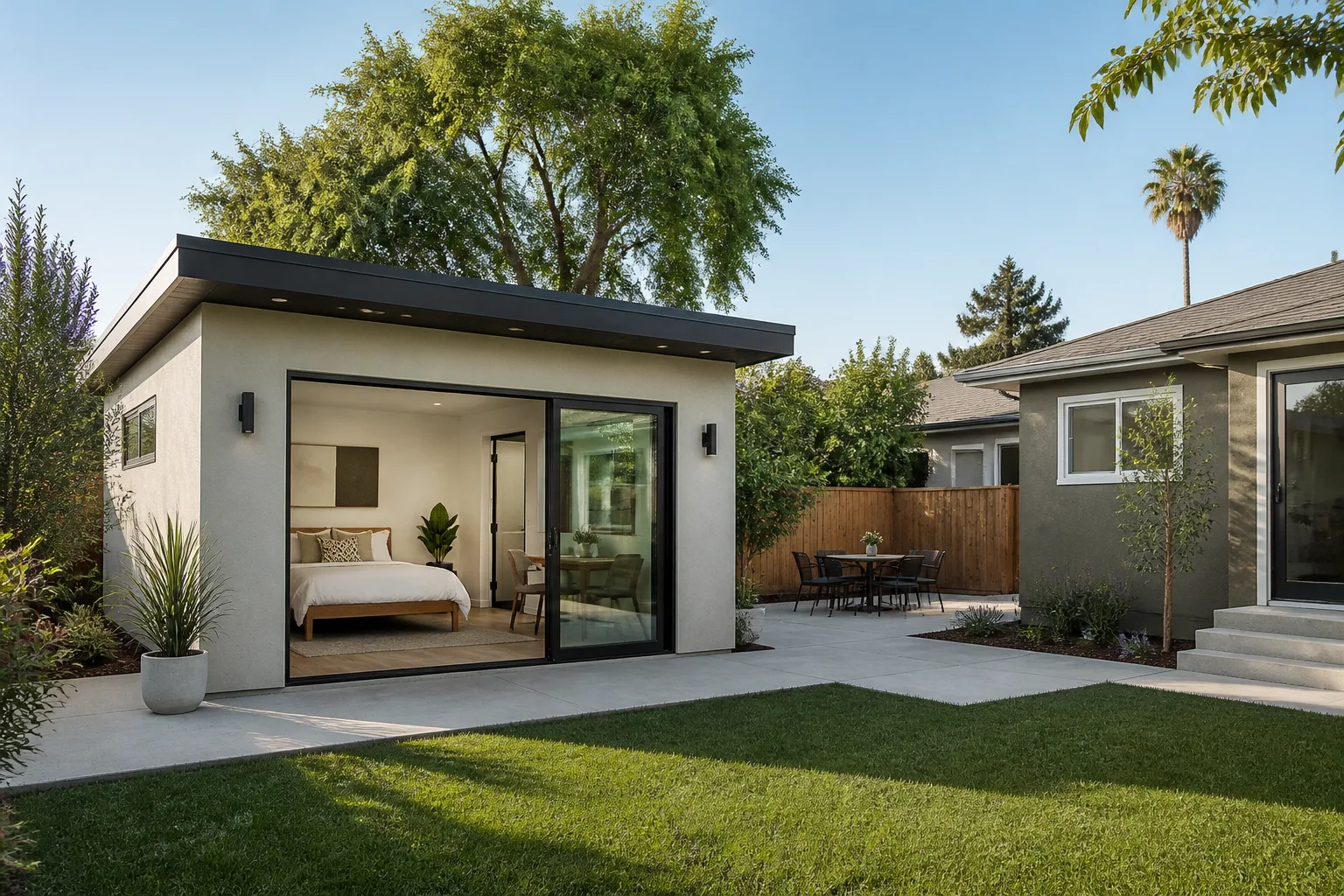
Abodu manufactures the unit in a factory and delivers it to your lot. The unit arrives with walls, roofing, windows, doors, and interior finishes largely complete. That part is real. It’s also the part homeowners focus on, because it’s visible and it photographs well.
What Abodu does not cover is the site work that makes a Los Angeles lot legal and buildable before the unit ever shows up. A licensed general contractor typically handles:
- Lot clearing, demolition of existing structures, and tree removal
- Grading and drainage corrections required by the Los Angeles Department of Building and Safety (LADBS)
- Foundation pad construction: leveling, formwork, reinforcement, and concrete pour
- Utility trenching from the street or main house to the ADU site, including sewer, water, and electrical
- Electrical service assessment, possibly requiring a panel upgrade or a separate meter
- Setback variance applications where the unit sits closer to the property line than the zone allows
In our work as ADU Builders in Los Angeles, we’ve seen the same pattern repeatedly. A homeowner orders the unit, the factory schedule confirms, and then the soil report comes back and the foundation scope changes. That’s not a failure of Abodu’s product. It’s just the part of the job that lives outside the factory, and it belongs to whoever holds the local license.
What the Site-Ready Statistic Means in Real Terms
Abodu’s published timeline, like every prefab manufacturer’s, assumes a flat lot with existing utility capacity and a clear permit path. Los Angeles has steep hillside zones, expansive clay soil in pockets from Woodland Hills to Eagle Rock, and a patchwork of Community Plan overlays. Each one can trigger requirements that a flat-lot delivery schedule doesn’t plan for.
Los Angeles-specific items that add time and cost before the unit arrives:
- Soils reports: Required by LADBS for many foundation permits. In hillside zones, expect a geotechnical engineer, not just a standard compaction test.
- Grading permits: If your lot slopes more than a minimal grade, a grading permit is separate from the building permit and has its own review queue.
- Utility capacity: Older Los Angeles neighborhoods, including much of the Valley and Mid-City, have underground service that may need a trench to the street, not just a tap from the house.
- Meter upgrades: LADWP reviews and installs on their own schedule. This is not a contractor delay, but it will hold up final sign-off if no one coordinates it early.
What that means: the part of the timeline Abodu controls is predictable. The part the site controls is not, until someone puts eyes on the lot and a level on the grade. We do that before a homeowner commits, because it’s cheaper to know on day one than to discover it after the crane is scheduled.
Permit Pathway: Prefab vs. Site-Built in Los Angeles
Here’s a comparison of how permitting actually runs for a prefab Abodu unit versus a conventional site-built ADU in Los Angeles.
| Step | Prefab (Abodu) | Site-Built |
|---|---|---|
| Plan check | Factory plans submitted with site-specific foundation and utility drawings | Full architectural and structural set drawn for the specific lot |
| Zoning review | Same as site-built; no shortcut | Same as prefab; no shortcut |
| Foundation permit | Local contractor draws and pulls this separately | Included in the main permit set |
| Factory inspection | State HCD approval substitutes for some field checks | Not applicable |
| Final inspections | Local contractor schedules LADBS sign-offs on foundation, utilities, occupancy | Same local contractor schedules all LADBS sign-offs |
The honest answer: a prefab unit can save weeks in framing and interior work, but it does not skip the Los Angeles entitlement process. Zoning review, setback checks, and site-specific foundation approval move at the same speed either way. Where prefab genuinely saves time is after the foundation is in and the unit is set: you skip months of trades cycling through.
But that only works if the local contractor has already handled the front half correctly. We’ve watched a homeowner wait three months for a meter upgrade that could have been ordered the same week the plans went in. Coordination, not the build method, is what determines whether prefab is actually faster in practice.
Questions to Ask the Local Contractor Abodu Assigns or Refers
Abodu works with a network of installers in Los Angeles. Wherever your contractor comes from, ask these before signing anything:
- How many Los Angeles permits have you pulled in the last 24 months? Not California, not Southern California. Los Angeles specifically. LADBS has its own plan check culture, and a contractor who mainly works Orange County or the Inland Empire is learning the LA process on your lot.
- What is your Los Angeles first-pass inspection rate? Good contractors track this. If they can’t answer, that’s an answer.
- Who pulls the foundation and utility permits, and whose license number is on them? It should be the same contractor who signs the contract and appears on site.
- Do you include the LADWP meter coordination in your contract, or is that the homeowner’s job? If it is the homeowner’s job, budget your own time or find another contractor.
- What does the handoff from Abodu’s delivery crew to your site crew look like in writing? If there is no written handoff, you are the handoff.
The permit history shows you what will happen on your project. The marketing shows you what happened on someone else’s.
Structuring the Contract for the Handoff
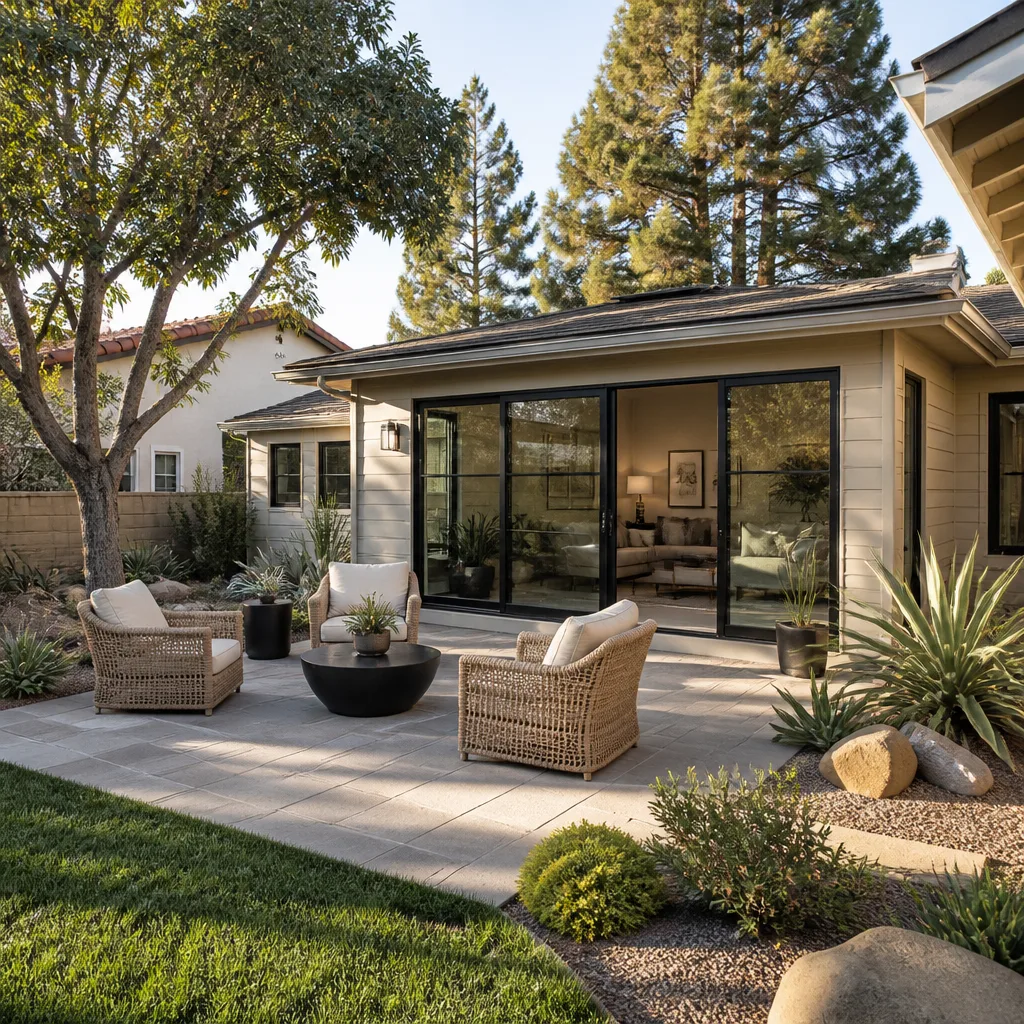
The point where an Abodu project stalls is almost never the factory. It’s the seam between the unit arriving and the site being ready to receive it. That seam belongs on paper.
Your contract with the local contractor should include:
- A written site readiness date that matches Abodu’s delivery window, with a defined remedy if the site misses it
- A written list of who handles each utility: electrical, plumbing, sewer, gas, data
- A written line item for LADWP fees and the contractor’s coordination of the meter
- A written schedule for foundation cure time before the unit is set
- A written inspection sequence that runs through LADBS final, not to “substantial completion”
This is where Fielding’s approach lines up with what an Abodu project actually needs. Our written price goes in front of the homeowner before any work starts, and it lists what we are handling on the site side: foundation, utilities, permits, coordination, final sign-off. The Garrison Code is the shorthand we use internally. Show up in the window, price in writing, by the book, leave it clean, stand behind it for a year. Every line item in the contract maps to one of those. If it doesn’t, it shouldn’t be in the contract.
The Garrison Standard is the one-year written guarantee on workmanship. If the foundation settles or a utility connection fails inside 365 days, we come back and fix it at no charge. That’s in writing, not implied. Most contractors won’t put a calendar number on their guarantee, because calendars are checkable.
Real Costs to Budget in Los Angeles
A homeowner comparing Abodu’s unit price to a site-built ADU needs to add the site work back in to make a fair comparison. Based on our recent bids across Los Angeles:
- Foundation and grading: $15,000 to $45,000 depending on slope and soil, before any retaining walls
- Utility trenching and connections: $8,000 to $25,000 depending on distance from the main house and whether the service is overhead or underground
- LADWP electrical service upgrade: $3,000 to $8,000 plus LADWP’s own fees, which vary by service size
- Setback variance: $2,000 to $6,000 in filing costs, engineering, and response time, plus several months of schedule if the city requires a public hearing
- Permit fees: LADBS and related departments typically run 2% to 4% of total project valuation, but hillside and overlay zones add surcharges
These numbers are ranges because Los Angeles lots vary more than the prefab product does. The unit is consistent. Your lot is the variable. Anyone who quotes a fixed site-work number before seeing the lot is guessing.
If you want a written price that reflects your actual lot, not an average one, call (361) 315-4177.
When to Call a Pro
If your lot is flat, your panel is modern, and your property has no zoning overlays, an Abodu unit with a competent local installer can work well. If you have a slope, an old panel, a distant sewer line, or a property in a hillside zone or historic overlay, this is not a good project to learn on. The mistakes are expensive, they happen in concrete, and they delay a unit you have already paid for.
We’ve pulled a foundation pad out of a hillside lot in Silver Lake where the neighbor’s ADU had been sitting unpermitted for two years because someone poured before the grading plan cleared. The concrete was fine. The city’s paperwork wasn’t, and the homeowner paid for the same foundation twice. That’s the kind of thing site experience in Los Angeles is for.
Related services in Los Angeles: Room Addition Contractor in Los Angeles and Garage Conversion Contractor in Los Angeles.
The Bottom Line
Abodu builds a good unit. But in Los Angeles, the unit is roughly half the project. The other half is site work, utilities, permit coordination, and final sign-off, and that half lives with the local contractor, not the factory. Get that part in writing before the delivery date is set, with a real Los Angeles permit history behind it.
If you’re in Los Angeles and need help sorting out the site side of an Abodu project, or you want a comparison against a site-built ADU on your actual lot, Fielding ADU Builders home is where that starts. We offer free estimates and a written price before any work begins. Call (361) 315-4177 and we will come look at the lot, not at a rendering.
Frequently Asked Questions
Total cost generally runs $130,000 to $220,000 with site work, utility connections, permits, and the unit included, depending on lot conditions and the model selected. The unit itself is a fixed price from Abodu. The variable is your Los Angeles lot: slope, soil, utility distance, and zoning overlays. Call (361) 315-4177 for a written estimate on your specific property.
No. Abodu supplies factory plans and HCD approval documents, but the local contractor pulls the Los Angeles permits with LADBS and coordinates LADWP. The zoning review, setback check, and foundation approval are handled locally, and they move at the same speed for a prefab unit as for a site-built one. Estimates are free if you want to talk through it.
Not if the contract is written correctly. Site work is where prices shift, because a lot can hide conditions that are not visible until grading starts. Our price goes in writing before any work begins, and the line items are explicit enough that no one has to guess what the final invoice says. Call (361) 315-4177 if you want to see how that looks on paper before you commit.
Yes, but only after the foundation and utilities are complete. The prefab process saves weeks or months on framing and interior finish work, because the unit arrives largely built. It does not shorten the Los Angeles entitlement, zoning review, or foundation inspection process. Those run on LADBS time regardless of build method. If you want an honest read on your lot’s timeline, call (361) 315-4177 and we’ll tell you what we see, not what a brochure says.
Written by the team at Fielding ADU Builders.
Need ADU Help?
Call Fielding ADU Builders - licensed & insured, here with fast after-hours help in Los Angeles.
(361) 315-4177