James Hardie Junior ADU Conversion: The Los Angeles Owner’s Guide
A completed junior ADU (JADU) conversion using James Hardie siding and trim typically runs $85,000 to $145,000 in Los Angeles before permit fees, depending on whether you’re converting attached garage space or building within an existing footprint. We install HardiePanel, HardiePlank, and HardieTrim on JADU conversions across LA and the San Fernando Valley, and we can usually start within three to four weeks of permit approval. Most owners who call us have already discovered the hard way that a JADU is not a simple garage finish-out: the window sizing, fire separation, and venting details are where cheap conversions fail, and where James Hardie materials get installed wrong the first time.
What usually brings people to this page is a specific problem: the HardieTrim board around the JADU’s new egress window has started to separate, or the HardiePanel seams have opened up along the south-facing wall, or the siding was cut too tight around the new exterior door and now moisture is getting behind it. Those are the calls we take every week in Los Angeles, and they’re almost always repairable if caught before water reaches the framing.
Which James Hardie Models This Applies To
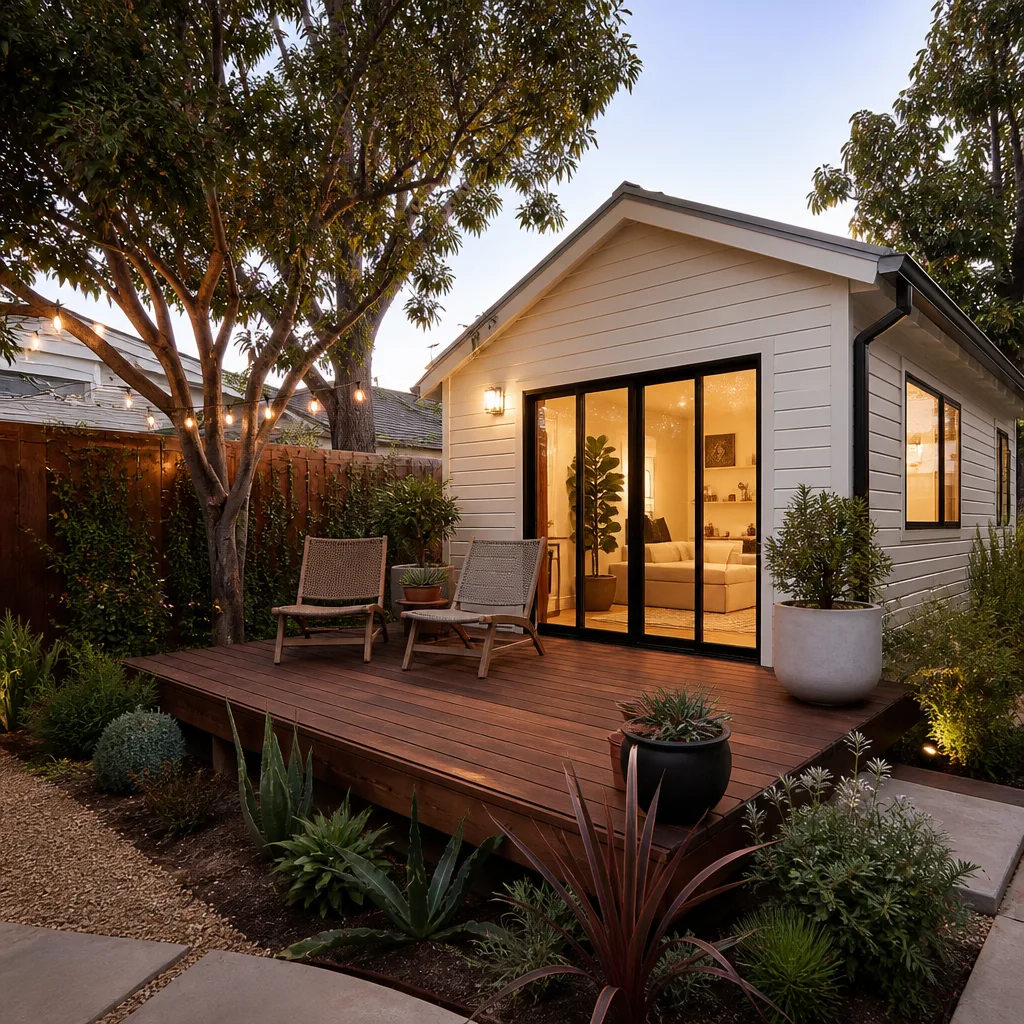
Our JADU conversion work with James Hardie materials covers the full residential line: HardiePlank lap siding (available in 4-inch, 5-inch, and 7-inch exposures), HardiePanel vertical siding (4×8, 4×9, and 4×10 sheets), HardieTrim boards (5/4 and 4/4 thickness), and HardieSoffit panels. The specific pieces you’ll need depend on what was used on the original structure, because a JADU conversion in Los Angeles has to match or coordinate with the primary residence under most municipal design guidelines. If your existing home was built with stucco, matching HardiePanel’s smooth finish with proper flashing at the transition is the detail most contractors miss. If the original siding is wood lap, HardiePlank’s 5-inch exposure usually reads as the closest match; 7-inch looks modern but can trigger a permit comment from a design review board in neighborhoods like Mar Vista or Sherman Oaks.
James Hardie identifies each product with a code printed on the back of the board: HZ5 for Zone 5 (HardiePlank lap siding), HZ10 for panel products, and the nominal dimensions follow. When we do a JADU conversion, we spec HZ5 5/16-inch thick boards for lap siding, not the 1/4-inch, because the thicker board holds fasteners better at the cut edges where JADU walls meet window bucks. Aftermarket trim board that says “fiber cement” without the Hardie marking is not the same product, and in Los Angeles, where we get thermal swings and morning marine layer moisture, untreated aftermarket fiber cement delaminates faster than anything Hardie makes. We install OEM James Hardie boards and trim, not substitutes, and we order them in the color-plus finish rather than painting in the field when the project schedule allows it.
Signs Your James Hardie Junior ADU Conversion Is Failing
- Seam separation at panel joints: HardiePanel seams should sit tight against the H-channel flashing. When they open up even an eighth of an inch, water rides the seam straight into the sheathing. In Los Angeles, this shows up most often on west-facing and south-facing walls that bake in afternoon sun and then cool fast at night, causing the panel to move more than the framing behind it.
- Trim board pulling away from the window corners: HardieTrim cut with tight butt joints at egress window corners leaves no room for expansion, so it cracks or the fasteners pull through. We see this on JADU egress windows constantly, because the window was added to an existing garage wall, and the trim was installed by a crew that treated it like wood.
- Fastener heads showing through paint, or rust streaks: James Hardie requires corrosion-resistant fasteners with specific minimum embedment. Plain drywall screws or roofing nails rust inside the board and telegraph through the finish. We replace them with stainless steel ring-shank nails or approved exterior screws, and we do it before the board itself fails.
- Soft spots where siding meets the ground plane: Hardie requires a minimum 6-inch clearance between the bottom edge of the siding and finished grade. In LA, where gravel or pavers often run right up to the JADU wall, this gets ignored, and the bottom of the board wicks moisture like a sponge. The board swells, the edge frizzes, and paint peels in sheets.
- Water stains on interior drywall below the top plate: When James Hardie is installed without proper flashing at the roof line or eave transition, especially on a flat-roof JADU addition, water runs down behind the siding and collects at the top plate. By the time you see the stain on the interior, the damage behind the siding is usually worse than the stain suggests.
Replacement Cost & What’s Included
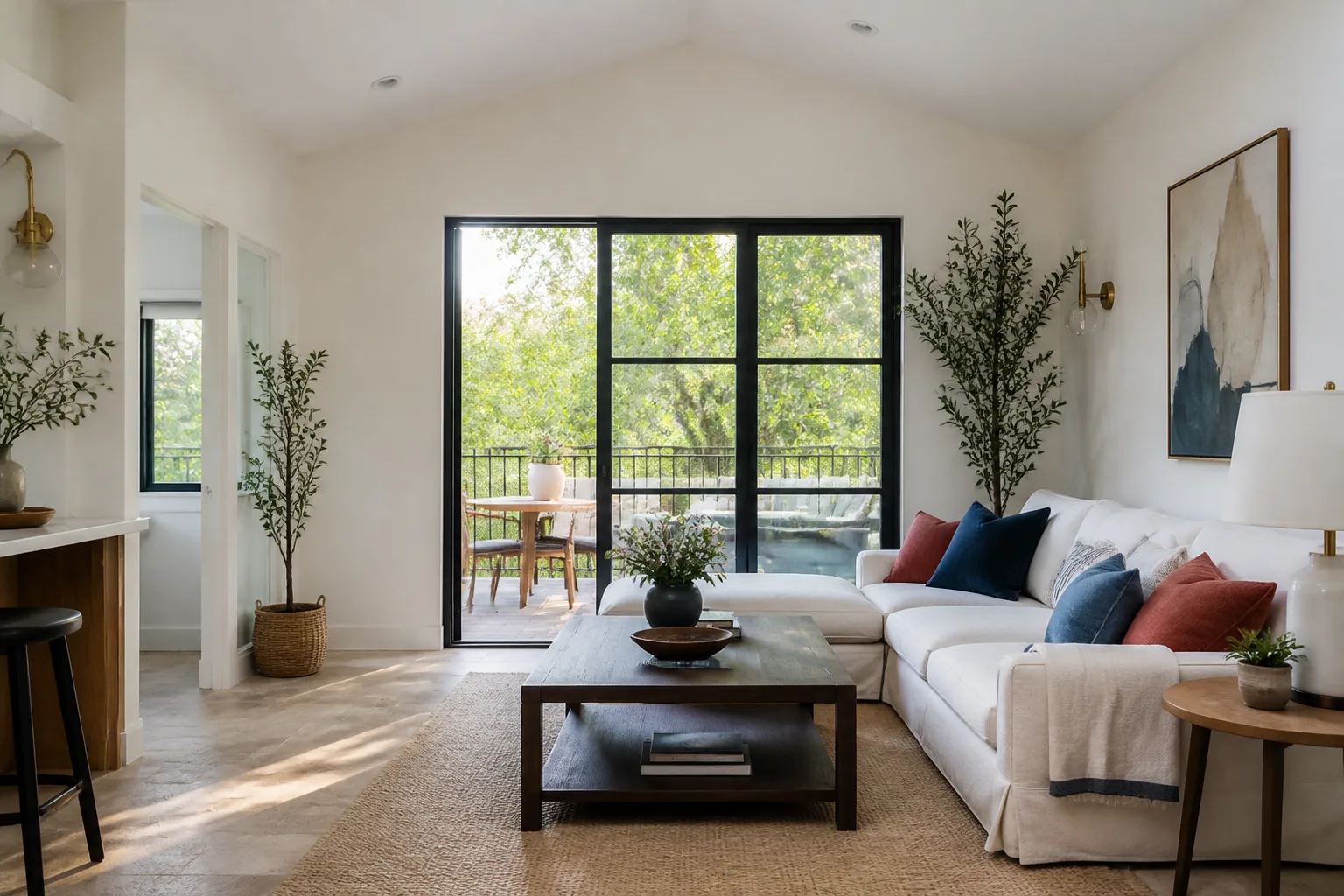
Replacing failed James Hardie siding or trim on an existing JADU in Los Angeles usually runs $1,800 to $6,500 depending on the wall size, the number of window and door openings, and whether we’re doing a repair or a full re-side. A simple trim replacement around one egress window starts around $1,800. Re-siding an entire 200-square-foot wall with HardiePlank and new flashing runs $4,000 to $6,500 including paint-grade surface prep. If we’re doing the full JADU conversion from a bare garage or unfinished space, the Hardie siding, trim, and installation is typically $18,000 to $32,000 of the overall project cost, depending on lineal feet and finish choices like ColorPlus pre-painted versus primed-and-field-painted.
What’s included in every James Hardie repair or JADU conversion we do: written price before work starts, no change orders without your signature, James Hardie’s product warranty passed through to you, plus our 365-Day Done Right Promise covering our installation workmanship for a full year. Reed Calloway has been doing ADU work across Los Angeles for eleven years, and the pricing structure reflects what he learned the hard way: the written quote is the floor and the ceiling, and if the work fails in the first year, we come back at no charge. That is the Garrison Standard, and it applies whether we’re replacing two trim boards or converting a full attached garage.
DIY or Call Us?
You can safely inspect your James Hardie siding yourself: look for the seam gaps, fastener rust, and ground clearance issues described above. You can also safely remove a loose trim board to see what’s behind it. What you should not do is attempt a full siding repair or JADU conversion on your own, especially anything involving the wall framing, window installation, or flashing details. Fiber cement is heavy, the dust from cutting it is a silica hazard, and the fastening schedule has enough specific requirements that a wrong move means redoing the whole wall. In Los Angeles, any JADU conversion also requires permitted work with a plan check; doing the work unpermitted creates a disclosure problem when you sell and can trigger a code enforcement action. You can check screws and clean gutters and call us with what you find. If you find wet sheathing, call (361) 315-4177 and we will put the repair scope in writing before the first board comes off.
FAQs
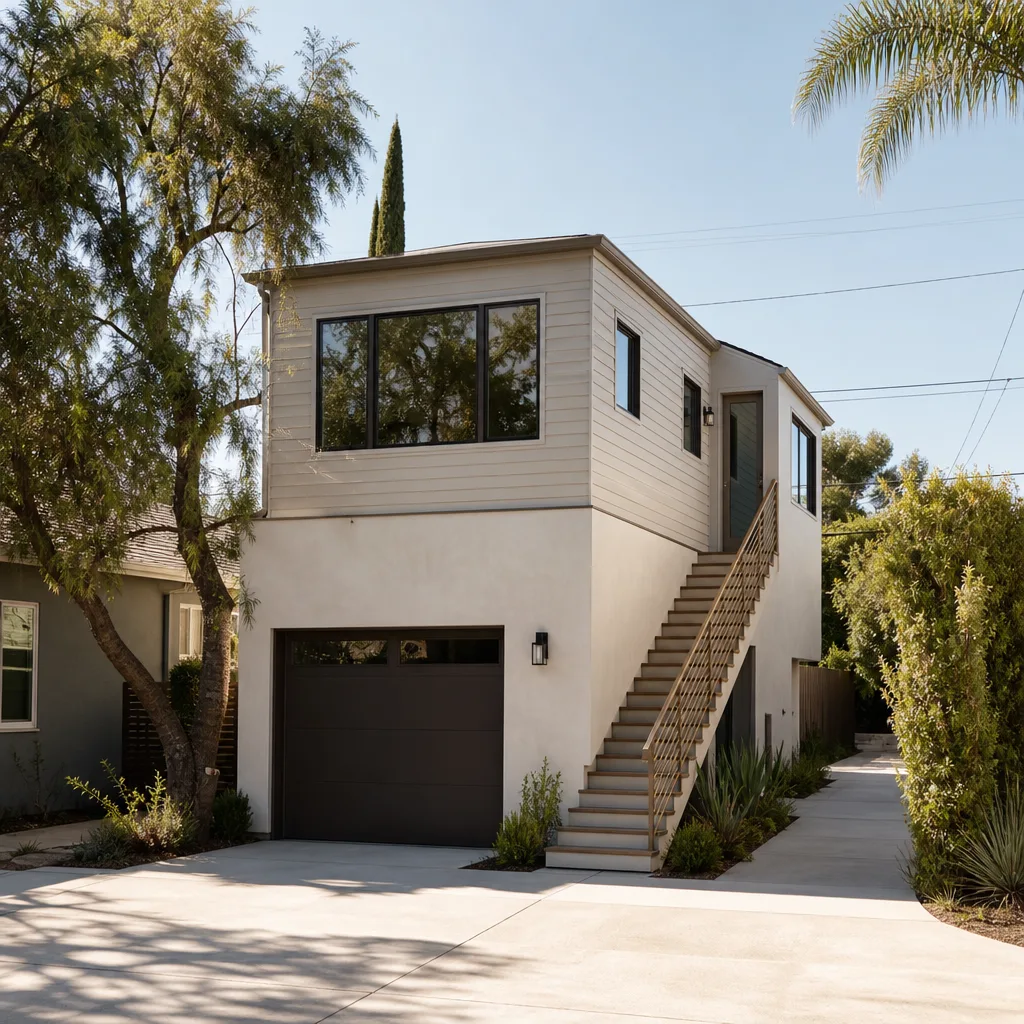
James Hardie fiber cement siding has a 30-year non-prorated limited product warranty, and in Los Angeles’s dry climate, with proper installation and clearance from grade, it commonly lasts 40 years or more before board replacement becomes necessary.
Individual trim boards can sometimes be replaced in-kind without opening the wall, but if the failure is at the window flashing or if the sheathing behind the trim has rotted, the repair scope expands to include the flashing and substrate; call (361) 315-4177 and we will tell you after seeing photos or doing a site visit what the repair actually requires.
A single-wall repair with new flashing, siding, and trim typically takes two to three working days, while a full JADU conversion with new Hardie siding, egress windows, and finishes usually runs ten to sixteen weeks including permit time in Los Angeles.
We keep common HardiePlank lap boards, HardiePanel sheets, and trim stock in our yard, but ColorPlus pre-finished boards are ordered per-project to match the original color batch, so color-specific repairs take a few extra days for material delivery.
Written by Reed Calloway, Owner, Fielding ADU Builders at Fielding ADU Builders, serving Los Angeles and nearby areas.