James Hardie Site Prep & Utilities: The Los Angeles Owner’s Guide
If you’re planning a James Hardie siding installation or replacing failed siding on an ADU, garage conversion, or room addition in Los Angeles, site prep and utility rough-in for Hardie board typically runs $2,800 to $6,400 depending on lot conditions, access, and what’s already in the ground. We stock the full line of James Hardie trim, flashing, rainscreen components, and the utility materials required to bring water, power, and drainage to the work area, and we can usually be on site within a week of your written estimate. Most owners discover there’s a problem when siding starts to fail at the bottom edge, when water pools at the foundation after rain, or when the existing stucco or wood behind their Hardie panels has rotted and the whole wall assembly needs to come apart before new siding goes up.
Here’s what you need to know before you call anyone: James Hardie siding fails early in Los Angeles almost never because of the product. It fails because the wall behind it was prepped wrong, the flashing was skipped, the weep screed was buried in concrete, or the water intrusion at the foundation line was never addressed. The siding is the last thing to go on. The prep work underneath it is what decides whether you’re doing this once or doing it again in seven years.
Which James Hardie Models This Applies To
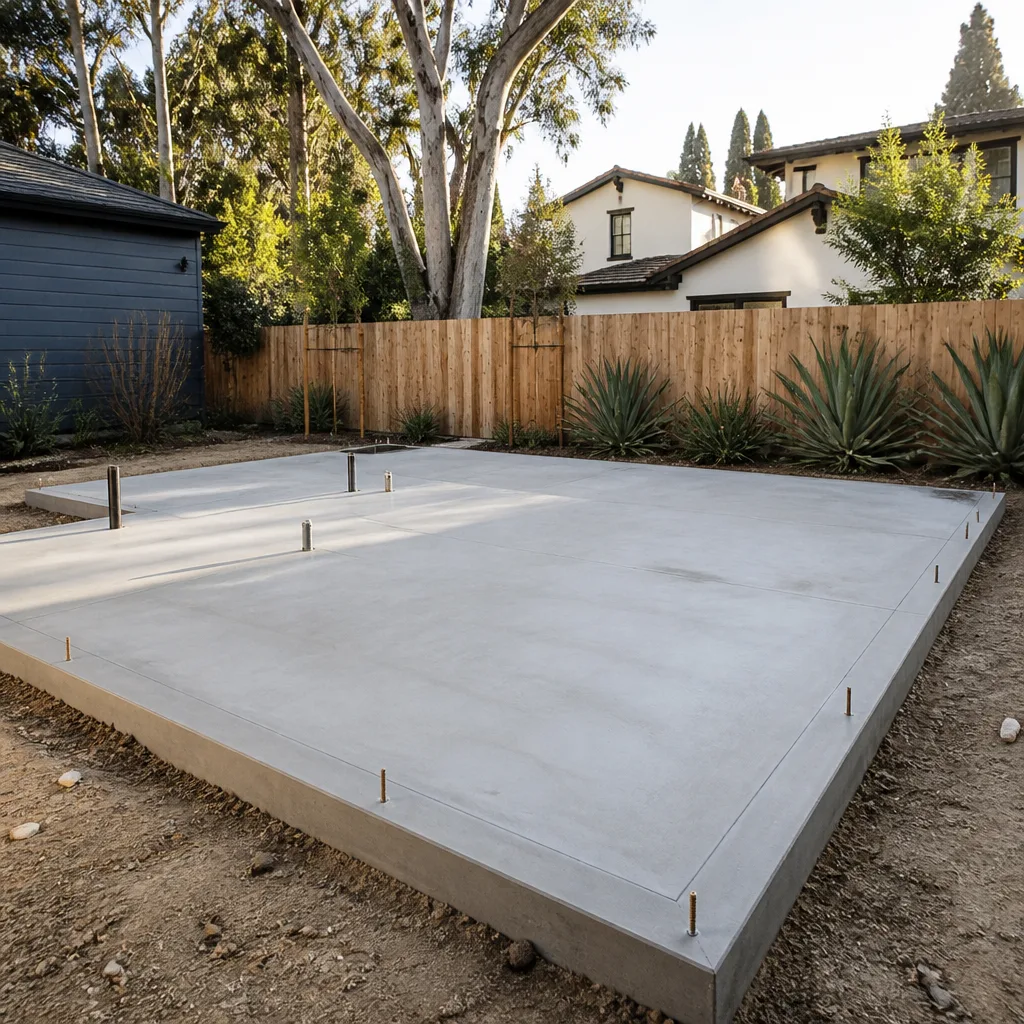
This page covers site prep and utility work for every James Hardie product line sold in the Los Angeles market: HardiePlank lap siding, HardiePanel vertical siding, HardieShingle, HardieTrim boards, HardieSoffit, and the HardieBacker cement board used as a tile substrate on exterior ADU walls and wet areas. The compatibility gotcha most homeowners hit is that HardiePlank and HardiePanel are not interchangeable on the same wall assembly without a plan. Plank laps over plank and needs a flat, properly flashed substrate. Panel butts panel-to-panel and requires a rainscreen gap behind it to dry out. If your contractor tells you they’re the same, stop and get someone else.
OEM versus aftermarket matters less for James Hardie than it does for hardware brands. Hardie products are the OEM, and for warranty validity the trim, flashing, and fasteners all need to meet Hardie’s install spec. We use genuine James Hardie trim and flashing, plus S-5 or equivalent clips where a rainscreen is required by local code. For site utilities, we use standard schedule 40 PVC for drainage, PEX or copper for water rough-in, and Romex or THHN in conduit for electrical, all to current California Building Code and LADBS inspection standards.
Signs Your James Hardie Site Prep & Utilities Is Failing
- Bottom-edge swelling, buckling, or wicking stains on HardiePlank. This means the starter strip or weep screed was installed wrong or buried in stucco. Water is being pulled up into the board from the foundation line. The fix is cutting the bottom course and rebuilding the transition correctly.
- Caulk cracking at butt joints and trim transitions within the first 18 months. Hardie’s spec calls for specific joint treatment and flashing, not a bead of caulk as the only line of defense. When caulk alone fails this fast, water is getting behind the siding and the wall is breathing in ways it wasn’t designed to.
- Soft spots in the wall behind the Hardie panels. Push on the wall between studs. If it gives, the underlying sheathing or framing is compromised. You cannot install new Hardie siding over a soft substrate. Moisture intrusion has been happening for a while, and the repair stops being a siding job and becomes a structural repair job.
- Water pooling against the foundation or at the base of the ADU wall after rain. This is a site drainage and grading problem, not a siding problem. But it will destroy Hardie siding from the bottom up if you don’t fix the grade, add a swale or channel drain, and get water moving away from the wall before new siding goes up.
- Utility rough-in that doesn’t pass inspection because the wall assembly wasn’t prepped correctly. In Los Angeles, LADBS inspectors see Hardie siding on ADUs every day. When the rough-in inspection fails because the wall isn’t ready, that’s usually site prep catching up with the schedule. We’ve corrected a few of those, and every one of them was a sequencing issue, not a material issue.
Replacement Cost & What’s Included
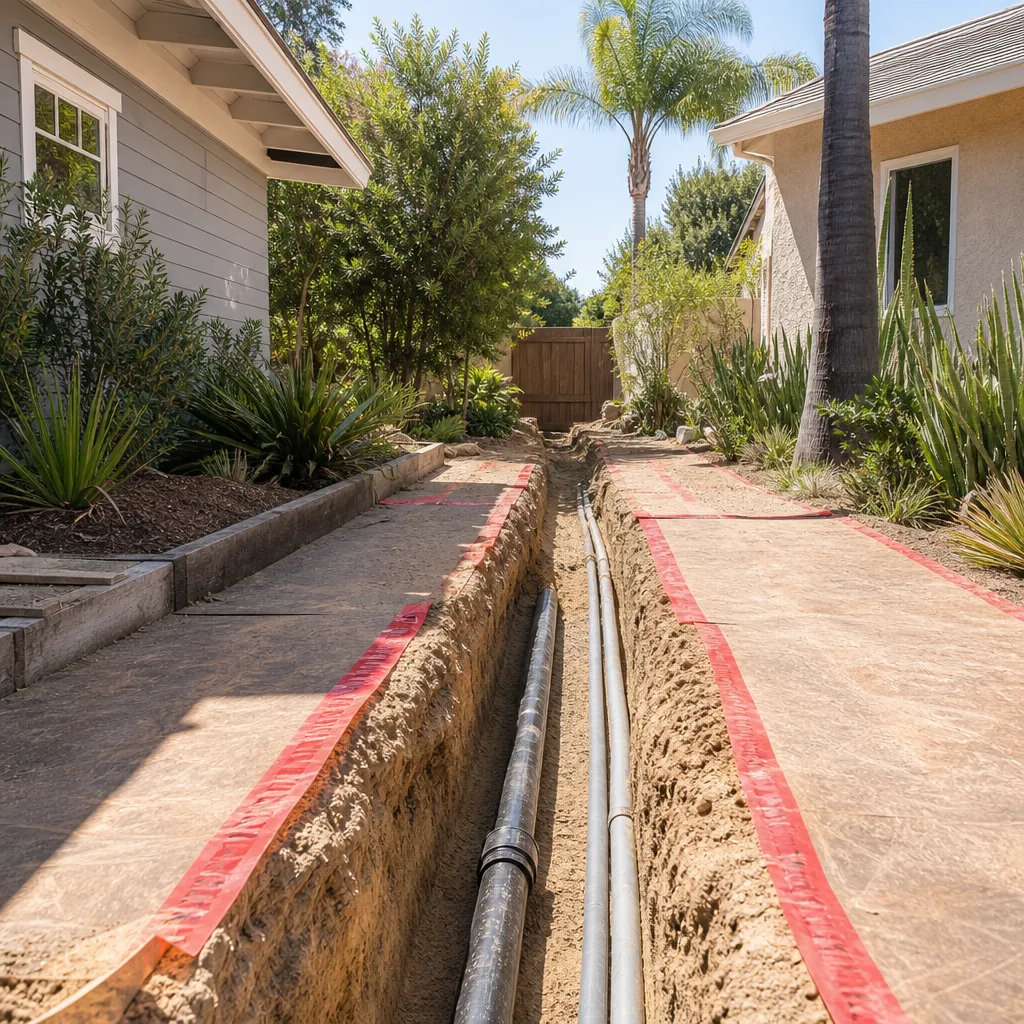
For a Los Angeles site prep and utility rough-in job tied to a James Hardie siding replacement on an ADU or room addition, here’s the honest math:
| Scope | Typical Range |
|---|---|
| Site grading, drainage correction, and utility trenching for one wall | $1,200 – $2,600 |
| Wall assembly repair (sheathing, framing, flashing, moisture barrier) before Hardie install | $800 – $2,100 |
| Utility rough-in (electrical, water, drainage) tied to the wall build | $1,000 – $2,400 |
| Full prep plus Hardie siding and trim on a standard detached ADU | $4,800 – $9,500 |
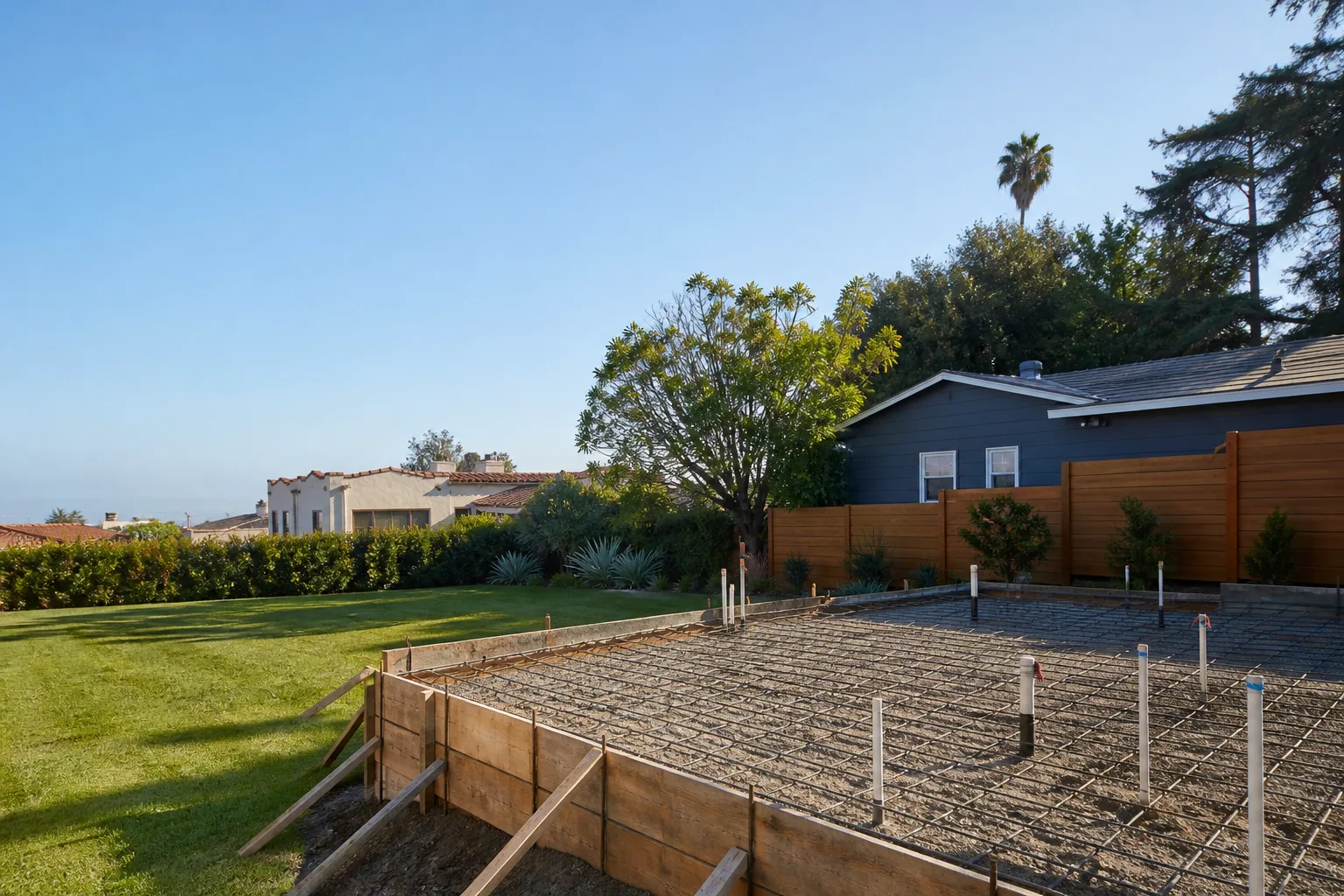
What drives the range is access, slope, soil type, and how much of the existing wall has to come apart. A flat lot in Reseda with easy access is different from a hillside lot in Mount Washington where the trenching is slow and the ground moves. Every price we give is written, line-item, and fixed before work starts. No change orders because we found something we should have seen at the estimate. The workmanship is covered by our 365-Day Done Right Promise: if something fails inside a year, we come back and correct it at no charge.
DIY or Call Us?
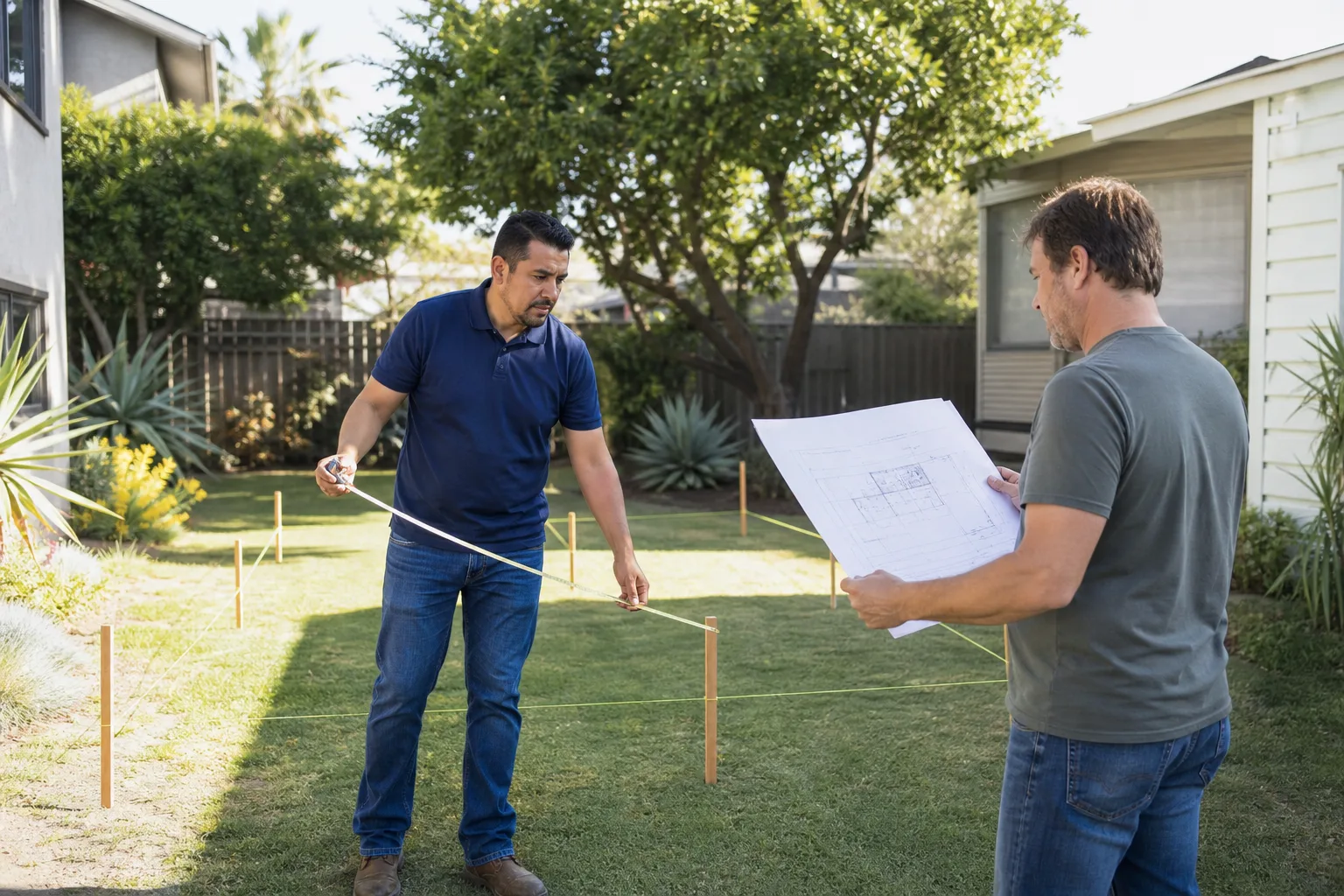
You can do a few things yourself before calling anyone. Walk the wall line. Look at the bottom course of siding. Check the ground slope. See if water is standing or draining. Note where the utility boxes are and whether the wall they’re attached to is straight. That’s useful information for whoever you call, and it helps you avoid a contractor who wants to sell you new siding without fixing what’s underneath it.
What you should not do yourself is cut into a load-bearing wall, run new electrical or gas lines, or tear off old siding on a wall that holds your utilities. In Los Angeles, a siding repair that turns into framing work or utility relocation requires permits and LADBS inspection. That’s not bureaucracy. It’s the difference between a wall that holds and a wall that fails in the next big rain season. If the wall behind your Hardie siding is soft, or the utilities are in the wall, call us at (361) 315-4177. We’ll get on site, look at what’s actually there, and put the fix in writing before any work starts.
FAQs
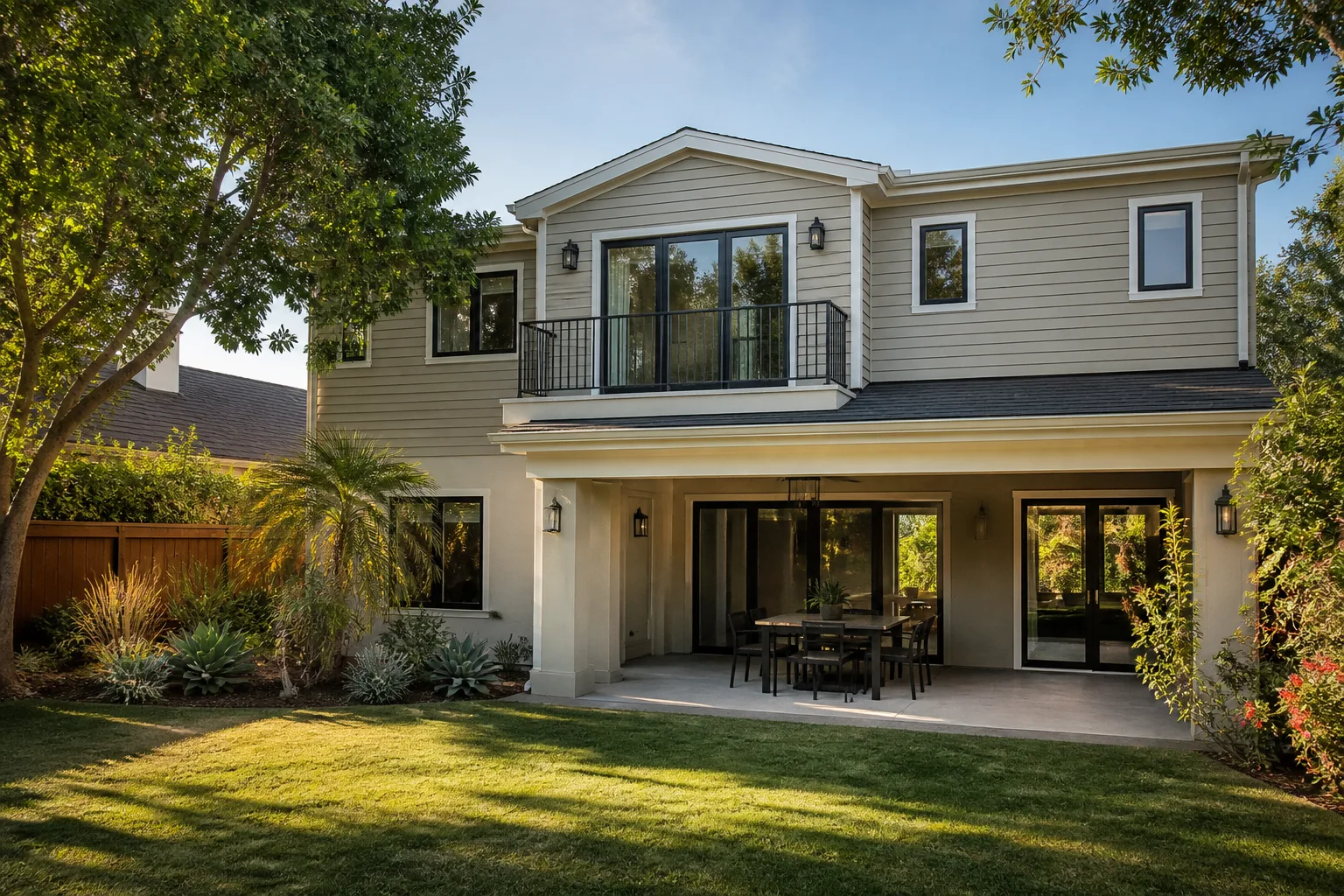
In Los Angeles, properly installed James Hardie siding with correct site prep and flashing commonly lasts 30 to 50 years, though the paint or ColorPlus finish will need re-coating far sooner, typically in the 15 to 20 year range depending on sun exposure. The weak point is almost always the bottom edge and the trim transitions, which is why the site prep and drainage work before installation matters more than the siding itself. Get the prep wrong and you’ll see failure in under a decade. Call (361) 315-4177 and we’ll tell you what’s actually going on at your foundation line.
Yes, in most cases the existing utility rough-in can be left in place if it passes inspection and the wall assembly around it is sound. What gets replaced is usually the drainage, the flashing, the moisture barrier, and any framing that has started to rot. The prep repair is exactly that: a repair, not a do-over. We scope it from what we find, not from a template. For an exact number on your wall, call (361) 315-4177 for a free estimate.
For a single wall on an ADU or room addition, expect 2 to 4 working days for site prep, drainage correction, and utility rough-in, not including LADBS inspection wait times. For a full detached ADU, the prep and utility phase typically runs 4 to 8 working days depending on trenching and access. We give you a written schedule with the written price, and we stick to it as closely as Los Angeles permitting allows.
We keep James Hardie flashing, trim, moisture barrier, rainscreen materials, and standard utility rough-in components stocked and ready for our Los Angeles jobs. Special-order items, like a specific HardieShingle profile or panel color, may take a few days to come in from our supplier. We also work with the major prefab platforms: Abodu, Cover, and Dvele, so if your ADU shell arrived with a Hardie specification and the site prep wasn’t done to match it, we can correct the site and bring the utilities up to code. Call (361) 315-4177 and we’ll check stock while you’re on the phone.
Written by Reed Calloway, Owner, Fielding ADU Builders at Fielding ADU Builders, serving Los Angeles and nearby areas.