Last updated October 9, 2026
How Long Does Garage Conversion Contractor Take? Timelines and What to Expect
Most homeowners in Los Angeles lose more time waiting for permits than they do watching crews build. Los Angeles Building & Safety’s plan-check backlog has stretched beyond 10 weeks in some districts, which means a contractor who files permits the day demolition starts has already burned two and a half months before anyone swings a hammer. This guide walks through the real timeline for a garage conversion, phase by phase, so you know where the weeks actually go and what a legitimate Garage Conversion Contractor services provider does to keep them from stacking up.
Quick Answer
A garage conversion in Los Angeles typically takes 5 to 9 months from initial drawings to final inspection. The construction phase itself usually runs 6 to 10 weeks, but design, structural engineering, Title 24 energy calculations, and city plan check commonly consume 3 to 6 months before a permit is even issued. Working with a contractor who files complete drawings the first time is the single biggest lever for shortening that window.
Table of Contents
- Phase One: Design and Drawings (2 – 6 Weeks)
- Phase Two: Plan Check and Permit Issuance (8 – 20 Weeks)
- How Permit Submission Method Changes the Clock
- Three Contractor-Caused Delays That Get Blamed on the City
- What You Can Do While Permits Pend
- Phase Three: Construction (6 – 10 Weeks)
- What a Real Written Schedule Looks Like
- Common Mistakes to Avoid
- When to Call a Professional
- Frequently Asked Questions
- The Bottom Line
Phase One: Design and Drawings (2 – 6 Weeks)
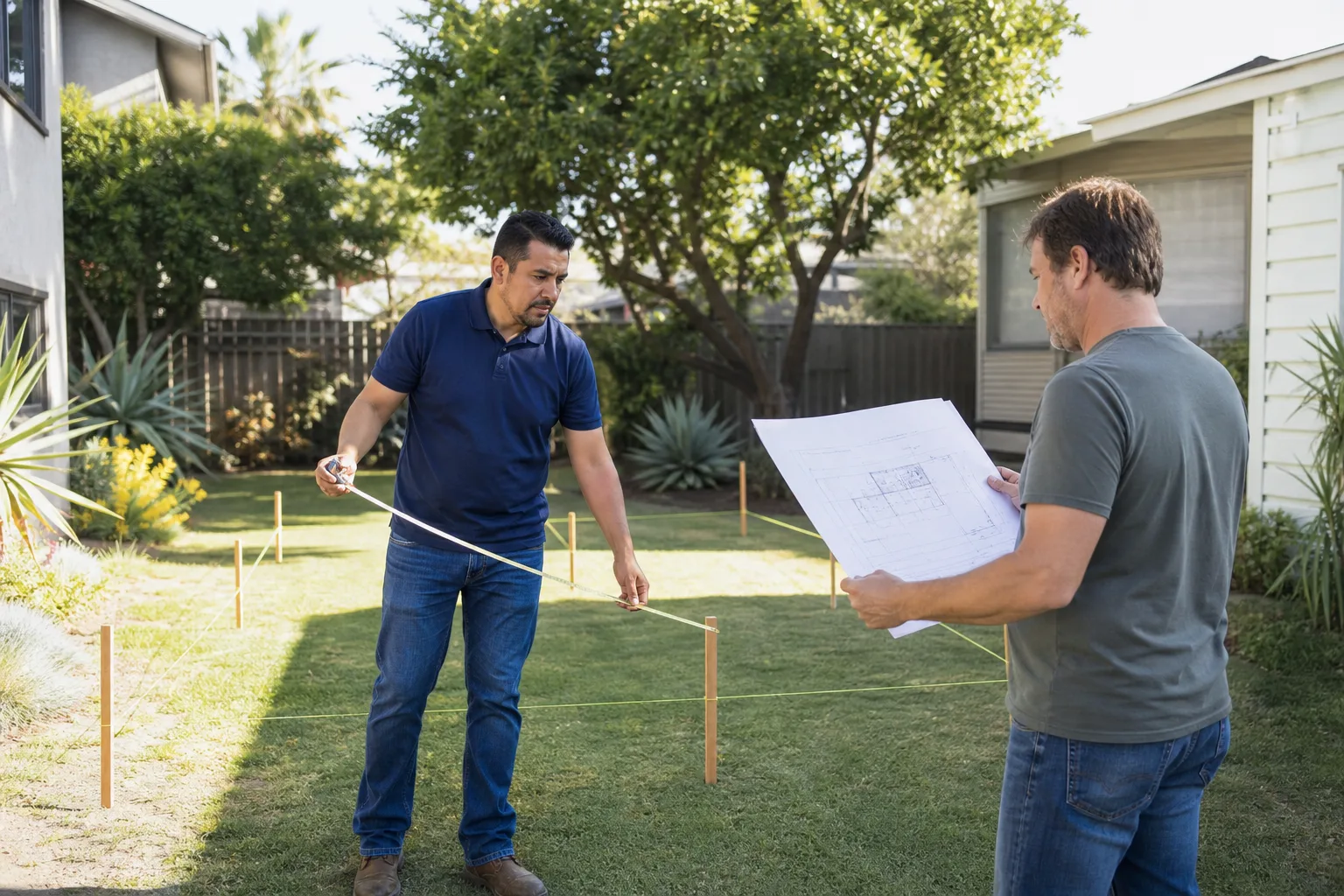
Before a permit application can be filed, someone has to produce a set of drawings the city will accept. That set includes architectural plans showing the existing garage and proposed conversion, a structural engineering package that specifies foundation work, framing, and any beam replacements, and a Title 24 energy compliance report. In Los Angeles, garage conversions also require a site plan that shows setbacks from property lines and compliance with the city’s zoning code for accessory dwelling units.
The duration of this phase depends on how much of the work is being done from scratch. If the garage is a simple rectangle with standard framing and a flat slab, an experienced designer can turn around drawings in two to three weeks. If the homeowner wants to move walls, add a bathroom that requires a new sewer line, or open up the roofline, engineering gets more involved and the timeline stretches toward six weeks.
Prefab and modular options compress this phase. We work with ADU Builders in Los Angeles projects every week, and platforms like Abodu and Cover arrive with pre-engineered structural packages that skip much of the custom drawing time. A homeowner who chooses a prefab garage conversion can sometimes cut design to seven to ten days. A fully custom conversion with a hillside lot condition will sit at the upper end of the range.
Phase Two: Plan Check and Permit Issuance (8 – 20 Weeks)
This is the phase that surprises people, and it is the phase where Los Angeles is unforgiving. Once plans are submitted to the Los Angeles Department of Building and Safety, they queue for review. The city routes most garage conversion permits through electronic plan check, which has improved turnaround to a range of 8 to 16 weeks depending on workload, but some projects still require in-person review at specific district offices.
Plan check is not a rubber stamp. A plan checker reviews the drawings for compliance with the California Building Code, the Los Angeles Residential Code, the city’s Green Building Code, and the specific ADU ordinance that governs garage conversions. If the plan checker finds an issue, the drawings come back with a correction letter, and the project goes back into the queue after resubmission. Each correction cycle adds weeks. A clean first submittal is the difference between a 10-week plan check and a 16-week one.
Permit issuance happens after plan check is approved and fees are paid. In Los Angeles, the permit fee for a garage conversion typically runs $3,000 to $8,000 depending on the valuation of the work, and school district fees can add another $2,000 to $4,000. These are paid before the permit is issued, and the permit must be posted on site before work begins. A contractor who does not include permit fees in the written price is setting you up for a surprise.
How Permit Submission Method Changes the Clock
The way a permit is submitted in Los Angeles changes the timeline by weeks, not days. There are three primary submission paths, and a homeowner should know which one their contractor is using before signing anything:
- Over-the-counter plan check. Available for some smaller, straightforward garage conversions that meet specific criteria. A plan checker reviews the drawings in person, often the same day or within a few days. This is the fastest path in Los Angeles, but it is only available when the project is structurally simple and the zoning is already compliant. If the garage sits on a flat lot with clear setbacks and no hillside overlay, this path can compress plan check to under two weeks.
- Electronic plan check. The default for most Los Angeles garage conversions now. Drawings are uploaded through the city’s ePlanLA portal, and the plan checker reviews them digitally. As of 2026, this path is running 8 to 16 weeks depending on the district and workload. The benefit is that corrections are also handled digitally, which can feel faster than dropping off paper sets, but the queue is real.
- Expedited review. Some Los Angeles projects qualify for expedited processing under the state’s ADU mandates, but qualification is specific – the conversion must meet the state’s definition of an ADU, and not all garage conversions do. If a contractor tells you they are “expediting” your permit, ask what specific program or path they are using. Expedited review done legitimately can cut plan check to 6 to 10 weeks. Claiming expedited review without a qualifying program is a red flag.
Three Contractor-Caused Delays That Get Blamed on the City
In our experience, roughly half of the “city delays” homeowners report to us turn out to be contractor-caused delays that were never disclosed. In our experience across Los Angeles garage conversions, these three show up most often:
- Late structural engineer stamps. Every garage conversion in Los Angeles requires a structural engineering stamp on the drawings. If the contractor uses a third-party engineer and that engineer is slow, the drawings sit. The homeowner hears “the city is backed up” when the reality is that the engineer never returned the set. Before signing, ask whose structural engineer is stamping the plans and when the stamp is expected.
- Incomplete Title 24 energy calculations. California requires a Title 24 energy compliance report for every garage conversion, covering insulation, glazing, HVAC, and water heating. If the contractor waits until after the drawings are drafted to start the energy calculations, plan check gets a correction letter and the project re-queues. A competent contractor runs Title 24 in parallel with the drawings so both are submitted together. This single step can add three to six weeks if it is mishandled.
- Missing soils reports for hillside-adjacent lots. Los Angeles has thousands of properties on or near hillside zones, and garage conversions on those parcels often require a soils report before plan check will approve foundation work. If the contractor does not identify the hillside condition up front, the plan checker will flag it, and the homeowner is now waiting on a geotechnical engineer while the permit clock runs. This is one of the most common delays we see in neighborhoods like Silver Lake, Echo Park, and the hills above Studio City.
What You Can Do While Permits Pend
The permit pendency window is not dead time. It is where organized homeowners and organized contractors get ahead of the construction phase so that work starts the week permits post. Here is a How to Hire a ADU Contractor in Los Angeles: A Step-by-Step Guide framework we give every Los Angeles homeowner who signs with us:
- Coordinate utilities immediately. If the garage conversion includes a bathroom or kitchen, you will need sewer, water, and electrical work. Call Los Angeles Department of Water and Power and the Bureau of Sanitation the week you file for the permit. Utility coordination can take weeks, and it does not require an approved permit to start the conversation.
- Select finishes and fixtures. Flooring, tile, plumbing fixtures, lighting, door hardware, paint colors – all of these can be chosen during plan check. A homeowner who waits until framing starts will delay the finish phase by two to four weeks with decision paralysis. A homeowner who makes these selections during permit pendency lets the crew move without stopping.
- Confirm HOA requirements if applicable. Some Los Angeles neighborhoods have homeowners associations with their own review timelines. If your garage conversion requires HOA approval, that clock often runs in parallel with the city’s, not in sequence. Start it early and the approvals can land around the same time.
- Clear the garage. The physical work of emptying a garage takes longer than most people expect. Doing it during permit pendency means demolition can start the day the permit posts instead of waiting on a weekend of hauling.
Phase Three: Construction (6 – 10 Weeks)
Once the permit is posted, the construction phase for a standard Los Angeles garage conversion runs 6 to 10 weeks. This is the phase homeowners picture when they ask How Long Does Room Addition Contractor Take? Timelines and What to Expect, and it is the phase where a disciplined contractor earns their price.
Week one is demolition and rough framing. Existing garage doors come out, any interior walls are stripped, and new framing goes up for the rooms being created. Week two and three are for rough plumbing, electrical, and mechanical – the behind-the-walls work that inspectors check before insulation can go in. Week four is insulation and drywall, which is the first point where the space starts looking like a room instead of a garage. Weeks five through eight are finishes: flooring, cabinetry, tile, paint, trim, and fixture installation. Final inspections land in week eight to ten, depending on how quickly the inspector can be scheduled.
Several factors stretch the construction window in Los Angeles specifically. Hillside lots add foundation and retaining work that can add two to three weeks. Conversions that require sewer line replacement because the existing line is too shallow add a week and a permit modification. Custom cabinetry and tile work measured in days, not hours, push the finish phase longer. Standard prefab conversions using platforms like Dvele or Cover can sometimes compress construction to five to six weeks because the components arrive pre-built and only need assembly and finishing on site.
Inspection scheduling is the wild card. Los Angeles inspectors are assigned by district, and scheduling windows vary by workload. A contractor who has built in the same neighborhoods for years knows which inspection windows run shortest and sequences the work so that no inspection becomes a bottleneck. That local knowledge is not marketing language; it is the difference between a nine-week build and a thirteen-week one.
What a Real Written Schedule Looks Like
A written project schedule is not a one-page summary that says “six to ten weeks.” A real schedule names milestones with dates. If a contractor will not put dates in writing, do not sign. Here is what a legitimate written schedule for a Los Angeles garage conversion should contain:
- Design completion date – the date the full permit set, including structural engineering and Title 24, is complete and ready to submit.
- Permit submission date – the date the application is filed with Los Angeles Building & Safety, with the submission method named (OTC, ePlanLA, or a specific expedited program).
- Permit approval date – the date the permit is issued and posted. If the contractor will not commit to a target date, ask them to commit to a submission date and track plan check weekly with written updates.
- Demolition start date – the first day of construction work on site.
- Inspection milestones – rough framing, rough electrical, rough plumbing, insulation, drywall, and final. Each one should have a target date window.
- Substantial completion date – the date the space is usable and all major work is done, with a separate date for final inspection and closeout.
At Fielding ADU Builders, every project gets a written price before any work starts and a written project schedule with milestone dates. We work to The Garrison Code: show up in the window, price in writing, build by the book, leave it clean, and stand behind it for a year. That last part is The Garrison Standard in writing – if the work fails within 365 days of completion, we come back and make it right at no charge. See our more guides & resources for additional homeowner protections. No contractor should ask you to accept less than that in writing.
Common Mistakes to Avoid
- Signing a contract with a vague schedule. “6 to 10 weeks” is not a schedule. If the contract does not name milestone dates, you do not have a schedule – you have a wish. Get dates for design completion, permit submission, construction start, and each inspection phase in writing before you sign.
- Believing “the city is backed up” without verification. Plan-check timelines are public. A Los Angeles homeowner can call the district office or check the ePlanLA portal to see where the permit actually is. If the contractor says “city delay” but cannot show you the submitted application number and the current queue position, ask harder.
- Selecting finishes during construction. Every day of finish selection during framing is a day the tiler is not tiling. Choose tile, flooring, paint, and fixtures during permit pendency. This is a free way to shorten the build.
- Skipping Title 24 in the design phase. California energy compliance is not optional, and waiting to run the calculations until the drawings are done creates a plan-check correction cycle. Insist that the contractor run Title 24 in parallel with design.
- Not asking about the permit submission method. Over-the-counter, ePlanLA, or expedited – the path changes the timeline by weeks. A contractor who cannot name the path they plan to use either does not know or does not want you to know. Neither is a good sign.
- Hiring a contractor who will not put the price in writing. In Los Angeles garage conversions, the range before permit fees typically sits between $95,000 and $180,000 depending on size, condition, and finish level. A contractor who will not write the number down before work starts is setting you up for the number to move. At Fielding ADU Builders, the price goes in writing before a single wall is touched, and the number you approve on day one is the number on the final invoice.
- Ignoring the garage’s existing foundation condition. Many Los Angeles garages were built as storage; their slabs were never intended to support living space. A soils report or foundation inspection early can prevent a mid-project discovery that adds weeks and thousands of dollars. A good contractor checks this during design, not after demolition opens the slab.
When to Call a Professional
A garage conversion is a permitted structural remodel, which means it is not a handyman project and not a DIY job in any reasonable sense. If the conversion includes plumbing for a bathroom, electrical panel work, or any modification to the garage’s structural framing, call a licensed contractor. In Los Angeles, unpermitted garage conversions are common, and they create problems when the homeowner goes to sell or refinance – the city can flag the unpermitted square footage, and the fix is often to tear it out and start over. Fielding ADU Builders offers free estimates in Los Angeles. We are an independently owned member of the Garrison Partners family and we build every Garage Conversion Contractor in Los Angeles project to The Garrison Standard: written price first, permitted work by the book, and a 365-day written guarantee. Call (361) 315-4177 to schedule a free estimate.
Frequently Asked Questions
A garage conversion in Los Angeles typically runs $95,000 to $180,000 before permit fees, depending on the garage’s size, condition, foundation, and the finish level you choose. Permit fees and school district fees add another $5,000 to $12,000 on top of the construction cost. The price should be written down before any work starts – if it is not, you are exposed to the number moving mid-project. Call (361) 315-4177 for an exact quote; estimates are free.
No – unpermitted garage conversions are illegal in Los Angeles, and the city has been actively citing and flagging them at point of sale. When the unpermitted square footage is discovered during a sale or refinance, the seller typically has to either legalize the work retroactively, which is expensive, or demolish it. It is not a shortcut; it is a liability.
The construction phase runs 6 to 10 weeks for a standard Los Angeles garage conversion, starting from the day the permit is posted and ending with the final inspection. Prefab conversions using platforms like Cover or Abodu can sometimes compress that to 5 to 6 weeks because the components arrive pre-built.
It should not – and if a contractor tells you it will, that is a red flag. At Fielding ADU Builders, the price goes in writing before any work starts, and the number you approve on day one is the number on the final invoice. Change orders exist for one reason: you choose to change the scope. They should never be a surprise written into the contract after demo begins.
Yes. Any legitimate contractor in Los Angeles pulls the permits, posts them on site, and remains the responsible party for scheduling and passing the inspections. A contractor who asks the homeowner to pull the permit is often trying to distance themselves from the liability. At Fielding ADU Builders, we handle the permit for every Room Addition Contractor in Los Angeles and garage conversion project, from submission through final inspection.
Hillside-adjacent neighborhoods like Silver Lake, Echo Park, Mount Washington, and the canyons above Studio City tend to run longer because soils reports and hillside overlay reviews add time to plan check. Flat-lot neighborhoods in the Valley and South LA typically run faster, provided the garage is structurally simple and the zoning is already compliant.
The Bottom Line
The calendar on a garage conversion is set before a single wall is touched. In Los Angeles, a realistic full-project timeline is 5 to 9 months, with design, engineering, and plan check eating most of that time. The contractor you choose determines whether plan check runs once or twice, whether inspections become bottlenecks, and whether the written schedule means anything. Choose a contractor who puts the price in writing, names milestone dates, handles permits, and stands behind the finished work. That is the difference between a 5-month project and a 12-month regret. If you are ready to talk about a garage conversion, call (361) 315-4177 for a free estimate. To learn more about building to The Garrison Standard, start at the Fielding ADU Builders home page.
Written by Reed Calloway, Owner at Fielding ADU Builders, serving Los Angeles since 2006.