Last updated October 9, 2026
ADU Builders Warning Signs Every Homeowner Should Know
The most dangerous ADU contractor in Los Angeles is rarely the one who disappears with your deposit. It’s the one who finishes the job, collects the final check, and leaves you with a structure that looks finished but legally isn’t. LA County assessors have flagged thousands of accessory dwelling units built without a closed permit or certificate of occupancy. These units got occupied, got rented, and generated income for years before a sale, a refinance, or a neighbor complaint forced a reckoning that cost the homeowner more than the original build. This guide covers the slow-burn warning signs most lists skip, and how to spot them before you sign.
Quick Answer
The biggest ADU builder warning signs are a contractor who won’t put scope in writing, avoids the permit closeout conversation, uses vague “unforeseen conditions” language to inflate pricing, and can’t show you a recorded lien release history. In Los Angeles, the certificate of occupancy gap is the most expensive problem: work gets finished, keys get handed over, but the permit is never closed, and the unpermitted status surfaces years later at refi or sale.
Table of Contents
- The Certificate of Occupancy Gap
- Three Contract Clauses That Signal an Escape Hatch
- What a Legitimate Permit Trail Looks Like in Los Angeles
- Subcontractor Lien Risk: Paid in Full, Still on the Hook
- What a Written One-Year Guarantee Should Actually Cover
- Prefab and Modular ADU Pitfalls Nobody Mentions
- How to Vet an ADU Builder Before You Sign
- Common Mistakes to Avoid
- When to Call a Professional
- Frequently Asked Questions
The Certificate of Occupancy Gap
In Los Angeles, a certificate of occupancy is the city’s written confirmation that the structure you built is legal to live in. It gets issued after the final inspection passes and the permit is closed. Here’s the gap: an ADU contractor can complete every visible piece of construction, hand you the keys, invoice the final draw, and never close the permit. The work looks done. It isn’t.
Why does this happen? Sometimes the contractor is disorganized. Sometimes they’re avoiding a failed inspection they know is coming, whether for footing depth, shear wall nailing, or set-back compliance. Sometimes they’ve already been paid and have no financial reason to finish the paperwork. The homeowner discovers the problem only when a title search runs during refi, or a buyer’s inspector pulls the permit history and finds an open permit with no final sign-off.
In our experience, this is the single most expensive mistake in Los Angeles ADU construction, because the fix isn’t a patch. If the open permit has aged past LADBS’s window, you may need to open a new permit, expose covered work for inspection, bring everything current with today’s code, and pay fees again. A $12,000 kitchenette inside a garage conversion can turn into a $28,000 remediation.
Before you make the final payment, ask one question: “When is the final inspection scheduled, and will you provide the certificate of occupancy before I pay the retention?” A contractor who hesitates on either half of that sentence is telling you something.
Three Contract Clauses That Signal an Escape Hatch
A contract isn’t a promise. It’s the document a contractor will reach for when the relationship goes sideways. Three clauses show up in Los Angeles ADU contracts with enough regularity that we can call them patterns.
1. Vague Scope Language
If your contract says “construct ADU per plan” without referencing a dated plan set, a fixture schedule, or a written finish list, you’ve signed a blank check. The contractor can deliver builder-grade everything and argue it met the agreement. A legitimate scope references specific documents: the architectural plan set with revision dates, the LADBS permit number, the plumbing fixture model numbers, the window schedule, the electrical plan. If the scope fits on one page, it isn’t a scope. It’s a placeholder.
2. Undefined “Unforeseen Conditions” Carve-Outs
Most contractors include some version of: “Owner is responsible for costs associated with unforeseen site conditions.” That’s standard. The problem is when the clause fails to define what counts as unforeseen and what doesn’t. Without a definition, a contractor can call hard clay “unforeseen” and charge you an extra $4,000 for excavation. Or discover a root system and call it a change order. The clause should list specific conditions that qualify, such as undocumented utility lines, and explicitly exclude conditions that a competent site visit would have revealed. A contractor who walks your lot before bidding, tests the soil, or at least checks LADBS’s utility records has less reason to hide behind this clause.
3. Lien Waiver Timing That Favors the Contractor
In California, a subcontractor or supplier who doesn’t get paid can place a mechanic’s lien on your property, even if you paid the general contractor in full. Lien waivers are the paperwork that prevents this. Some contracts only require the GC to provide “final lien waivers upon request,” which in practice means never. The contract should state that every progress payment is conditioned on the GC providing conditional lien releases from every sub and supplier who has worked to date, and that the final payment is conditioned on unconditional releases from all of them. If that language is missing, the contractor has built themselves a lien lever.
What a Legitimate Permit Trail Looks Like in Los Angeles
Every ADU in Los Angeles requires permits from the Los Angeles Department of Building and Safety (LADBS). Not “maybe.” Not “it depends.” A legal ADU requires them, period. You can verify the entire trail yourself on LADBS’s online portal, and you should, because the portal gives you a view the contractor’s word never will.
Here’s what a legitimate permit trail looks like, step by step:
- Permit issued: Before any construction starts, the LADBS portal shows a permit number linked to your address with a status of “issued.” If work starts before this, you have a problem.
- Inspections logged: As the build progresses, each inspection gets logged. Footing, foundation, framing, rough electrical, rough plumbing, insulation, drywall, final. Each one shows a pass or a correction notice. A gap in the log where inspections “skipped” isn’t normal.
- Corrections cleared: If a correction notice appears, the portal shows when it was issued and when it was cleared. A contractor who sits on a correction for weeks is a warning sign.
- Final inspection scheduled and passed: The final inspection is not optional. No final inspection, no certificate of occupancy. The portal must show it as “passed,” not just “scheduled” or “pending.”
- Permit closed: After the final inspection passes, LADBS closes the permit. Only then is the ADU legal for occupancy. An open permit with a passed final inspection is still an open permit.
If you’re building in Los Angeles and your contractor can’t walk you through the portal and show you each of these steps, treat it as a deficiency in the bid. The city provides this tool for free. A builder who doesn’t use it is either unfamiliar with the process or hoping you are.
Subcontractor Lien Risk: Paid in Full, Still on the Hook
Here’s a scenario that plays out in Los Angeles more often than you’d think. You hire a general contractor for your ADU. You pay every invoice on time. The final check clears. Six months later, a legal notice arrives: a subcontractor you’ve never heard of has placed a mechanic’s lien on your property for $18,000. The GC collected your money and never paid the framing crew or the electrician. The subs have no contract with you, but under California law, they have a lien right against your property.
At the start of a project, every subcontractor and major supplier is required to serve you with a “preliminary 20-day notice.” This document tells you who is working on your property and what they’re owed. If you’re receiving preliminary notices, that’s normal and healthy. It means the subs know the rules. If you never receive one, it may mean the contractor is running everything through cash or hiding the sub roster.
The fix is contract language: your written agreement should state that the contractor must provide a complete list of all subcontractors and suppliers before work begins, that every payment is conditioned on partial lien releases from those parties, and that the final payment requires unconditional lien releases from every name on the list. At Fielding ADU Builders home, this is standard practice. It isn’t a favor. It’s the only way to protect the property you already own while adding to it.
What a Written One-Year Guarantee Should Actually Cover
“We stand behind our work” is a sentence that means nothing in a courtroom. A real guarantee names the systems it covers, says how long it runs, and explains what happens when something fails. If a Los Angeles ADU contractor hands you a warranty that fits in a paragraph, you’re looking at marketing language, not a legal commitment.
A legitimate written one-year guarantee should cover three categories specifically:
- Workmanship defects: Drywall seams that crack open, doors that bind because the framing moved, tile that pops, cabinets that pull away from the wall. These are defects in the way the work was performed, and they should be corrected at no charge.
- Waterproofing and weather sealing: In Los Angeles, we get hard rain in concentrated bursts. A roof flashing that fails, a window that leaks at the sill, a deck membrane that delaminates. These are covered because water intrusion is the most common warranty claim in Southern California ADUs, and it’s almost always a workmanship issue, not a material failure.
- Systems that were installed as part of the build: The mini-split the contractor supplied and installed, the tankless water heater, the exhaust fan. If the contractor selected and installed it, they should stand behind the installation for the first year. Manufacturer warranties cover the equipment. The contractor’s guarantee covers the workmanship of the install.
The Garrison Standard covers workmanship defects for 365 days. If something fails, we come back and make it right at no charge. That’s the standard we operate under, and it’s written down. If a contractor’s guarantee isn’t written down, assume you’re self-insuring your own project.
Prefab and Modular ADU Pitfalls Nobody Mentions
Prefab ADUs are a large part of the Los Angeles market, and for good reason. A factory-built unit from Abodu or Cover can go from permit to occupancy faster than a conventional build. But prefab introduces its own set of warning signs that conventional builders rarely bother to flag.
The first is site work surfacing. A factory can build a perfect box, but the box has to sit on a foundation, connect to utilities, and shed water correctly. If the contractor who handles the site work doesn’t understand the specific platform, you get beautiful modules sitting on a poorly graded pad with a drainage issue that shows up in the first winter rain. We work with Abodu, Cover, and Dvele platforms regularly, and each one has different foundation requirements, different utility stub-out locations, and different tolerances. Match the site crew to the platform.
The second is the permit path. Prefab vendors in Los Angeles have pre-approved plans that can speed up LADBS review, but the local contractor still has to pull the site permit, coordinate the inspections, and close everything out. A prefab ADU is not exempt from the certificate of occupancy requirement. Verify that the contractor you hire for site work has closed permits before, on the same type of unit, not just on conventional additions.
The third is the finishing scope. Factory units arrive with specific finishes. If your contract doesn’t itemize what the site contractor is responsible for finishing (drywall taping at the module seam, final paint, trim, utility connections), you’ll find a gap between what the factory delivered and what the site contractor considers “their” scope. Write it down. Every seam. Every connection.
If you’re weighing prefab against conventional construction with James Hardie siding and a standard framed build, the right answer depends on your lot, your budget, and your timeline. The warning sign isn’t the choice itself. It’s hiring a builder who treats prefab as a shortcut rather than a system with its own rules. For room additions, the same logic applies: a room addition contractor in Los Angeles who doesn’t understand your specific structure’s load path is guessing.
How to Vet an ADU Builder Before You Sign
You can eliminate most of the warning signs in this guide with a two-hour vetting process before you sign anything. Here’s the sequence we recommend to Los Angeles homeowners:
- Pull the contractor’s license on CSLB’s website. Verify the license is active, check the classification (B for general building, not just C-36 for plumbing), and read any disciplinary actions. Do this before the first phone call.
- Ask for three completed ADU projects in Los Angeles with addresses you can drive past. Not references. Addresses. Drive by. Look at the roof flashing, the door reveals, the quality of the exterior trim. You don’t need to be a builder to spot sloppy work.
- Ask each past client one specific question: “When was your final inspection, and did the contractor provide the certificate of occupancy before the final payment?” If the client says they don’t know what a certificate of occupancy is, that tells you everything.
- Request a sample contract before you bid. A contractor who won’t share a blank contract is hiding something. Read the scope language, the unforeseen conditions clause, and the lien waiver requirements. If any of the three are missing or vague, cross the builder off the list or require revisions.
- Verify the insurance certificate, not just the cover sheet. Ask for the certificate of insurance directly from the agent, with your name listed as the certificate holder. If the policy lapses mid-project, you want to know, not guess.
This is the same process we run internally on our own subs. Every crew member who works on a Fielding ADU Builders project is background-checked and arrives in uniform, not because it’s smart marketing but because you should know exactly who is on your property. The vetting doesn’t stop with the owner. It extends to every person who steps foot on the site. For garage conversion contractors in Los Angeles, the same rule applies: verify the sub roster before the first demo day.
Common Mistakes to Avoid
- Paying a deposit before the permit is issued. In California, a contractor can collect a down payment before pulling permits, but a large deposit with no permit activity is a red flag. Tie your first payment to the permit issuance, not to the handshake.
- Accepting “we’ll handle the permit later.” In Los Angeles, building without a permit is not a technicality. LADBS can issue a stop-work order, require the work to be exposed for inspection, and levy penalties that triple the original permit cost.
- Signing a contract without a payment schedule tied to inspection milestones. Payments should follow verified progress, not calendar dates. “30% at framing inspection, 30% at rough-in inspection” protects you. “Biweekly payments” doesn’t.
- Hiring the lowest bid because the scope sounds “similar.” In LA’s ADU market, a $40,000 gap between bids usually means one bidder is carrying actual permit costs and the other isn’t, or one is carrying real foundation engineering and the other is guessing. Cheap scope language hides expensive surprises.
- Skipping the LADBS portal check at project start. You can verify your permit is open and active in under five minutes. Not checking is a guarantee that if something goes wrong, you won’t know until the consequences find you.
- Using a contractor who refuses to name their subs. If the GC won’t tell you who’s doing the electrical, the plumbing, and the framing, you’re handing your property over to an unknown crew and surrendering any ability to track lien risk.
- Believing a verbal warranty. “Don’t worry, we’ll take care of it” is not a guarantee. If it isn’t in writing, it didn’t happen, and it won’t.
When to Call a Professional
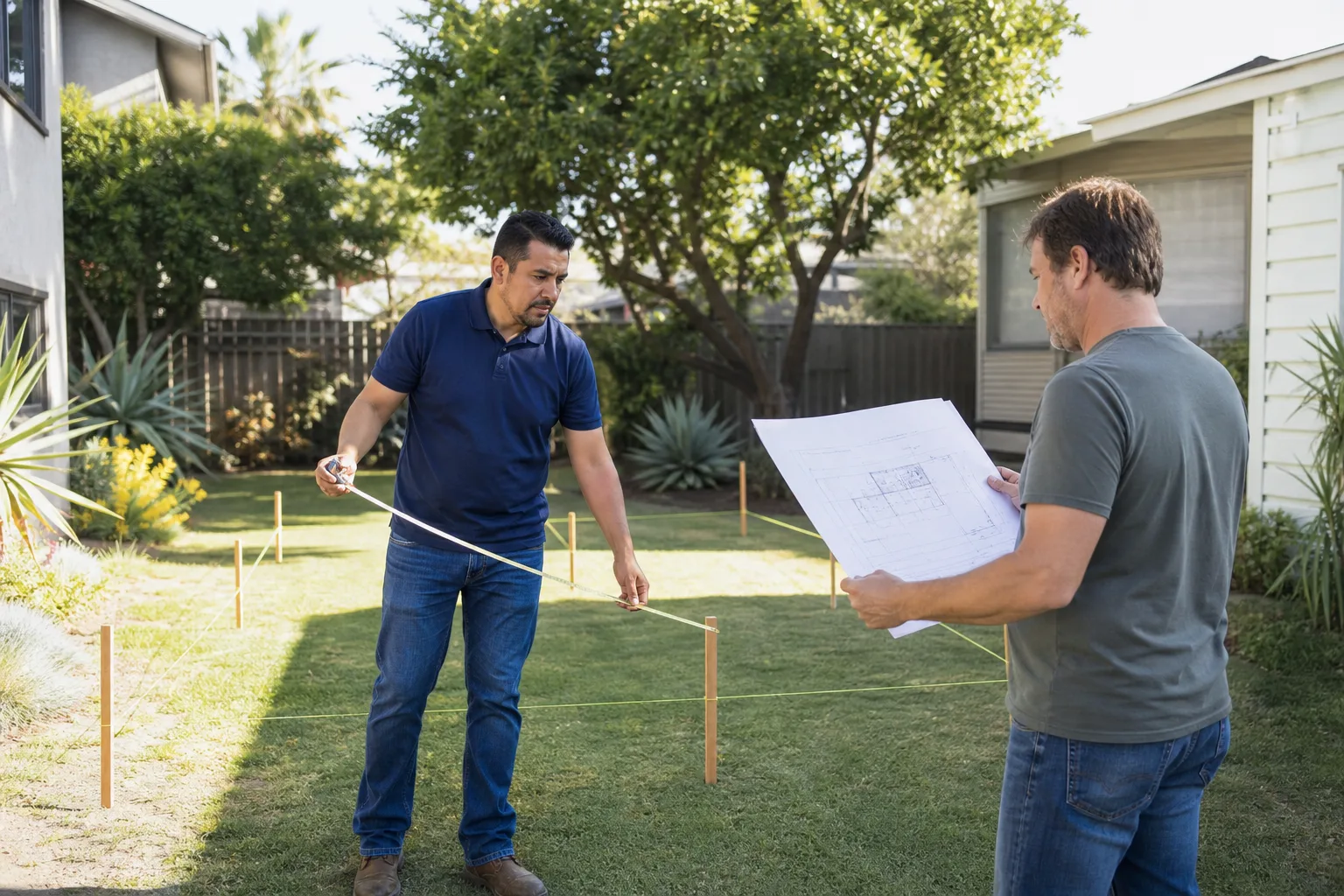
If you’ve already signed a contract and recognize any of the warning signs in this guide, you need a professional review before you make another payment. That means a Los Angeles construction attorney or a licensed contractor who will audit the contract, the permit status, and the lien picture without an agenda. If you haven’t signed yet and you’re comparing bids, invite a builder to walk your lot and put a written price in front of you. The number should come before any work starts, not after. Fielding our ADU Builders services offers free estimates in Los Angeles. Call (361) 315-4177 to schedule one. Ask the hard questions listed here. A builder who answers them directly is a builder you can work with.
Frequently Asked Questions
The biggest warning signs are a scope of work that fits on one page, a contractor who won’t walk you through the LADBS permit portal, a deposit due before the permit is issued, no written lien waiver process, and a guarantee that uses general language without naming systems or durations. Any one of these is a reason to pause. Two or more is a reason to walk away.
Go to the LADBS online portal, enter your address, and pull the permit history. Look for your ADU permit, check its status, and verify that every inspection is logged and the final inspection shows as passed. If the final hasn’t happened or the permit shows as open, contact the contractor or LADBS directly before making any final payment.
No. Los Angeles requires permits for all ADU construction, including garage conversions and prefab units. Building without a permit exposes you to stop-work orders, fines, exposure of covered work for inspection, and difficulty selling or refinancing. See our ADU Emergency Preparedness Guide for Los Angeles Homes for related risks. An unpermitted ADU may also need to be brought fully up to current code before it can be legalized.
A written one-year guarantee should name workmanship defects, waterproofing and weather sealing failures, and systems the contractor installed, with a stated process for correction. If the guarantee doesn’t specify what it covers, how long it runs, and how claims get resolved, it’s not a guarantee. It’s a sentence on a brochure.
A garage conversion in Los Angeles typically runs $120,000 to $220,000 depending on scope and finish level, while a detached new-build ADU runs $250,000 to $450,000 before permit fees. Prefab units from Abodu, Cover, or Dvele fall between those ranges depending on site work and utility distances. Call (361) 315-4177 for an exact written quote for your lot.
It shouldn’t. If your contract includes a written scope with a dated plan set and a defined list of what counts as an unforeseen condition, the number you approve at signing is the number on the final invoice. Price movement almost always comes from vague scope language. Get the price in writing before any work starts, and hold the contractor to it.
The Bottom Line
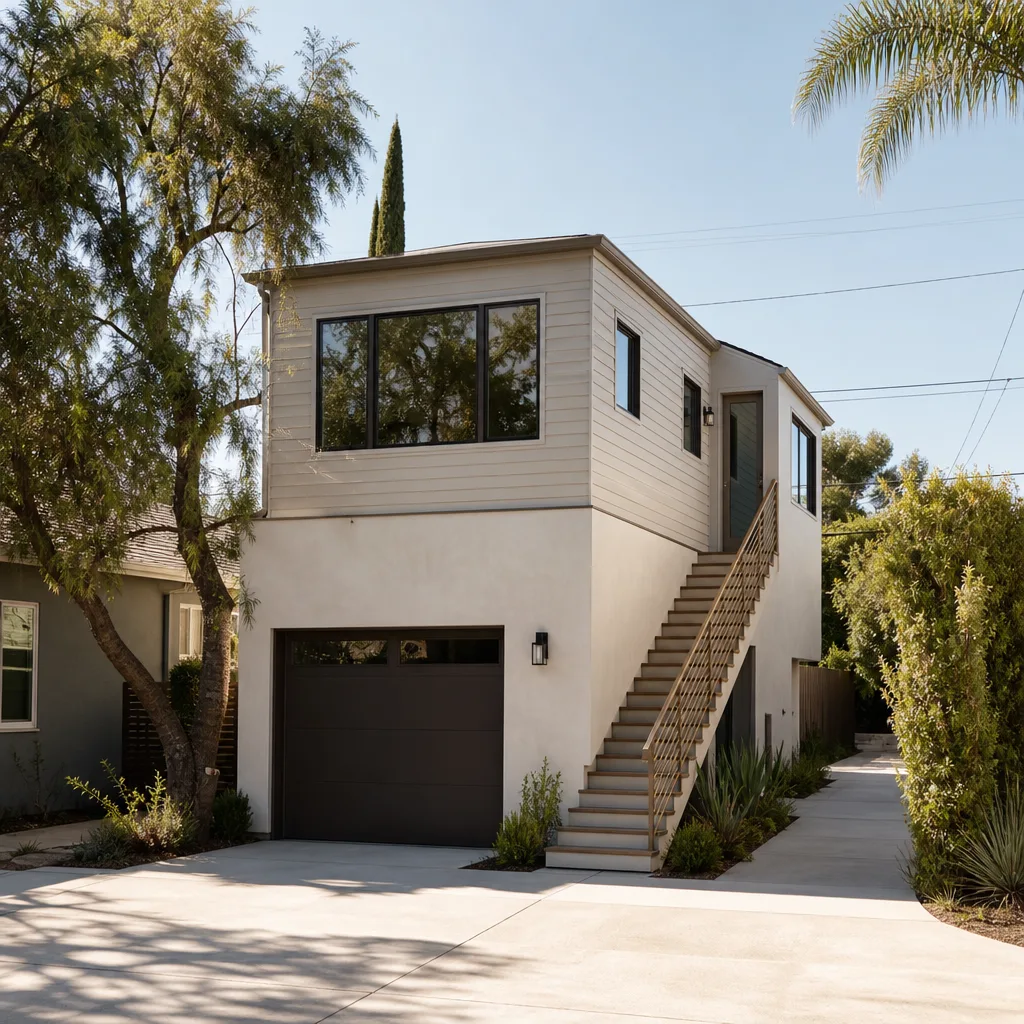
The ADU builder you should fear most is the one who finishes and leaves quietly. The permit stays open. The subs stay unpaid. The guarantee stays verbal. Years later, the cost of fixing it exceeds the original build. In Los Angeles, where the ADU market has matured and the city’s inspection system is available to any homeowner with an address and ten minutes, none of this needs to happen. Read the contract. Check the portal. Track the lien releases. Get the guarantee in writing. Then build. For more on how we approach every project from the first written price to the final LADBS sign-off, start at the ADU builders in Los Angeles page and see what a disciplined build looks like on paper.
Written by Reed Calloway, Owner at Fielding ADU Builders, serving Los Angeles since 2006.